

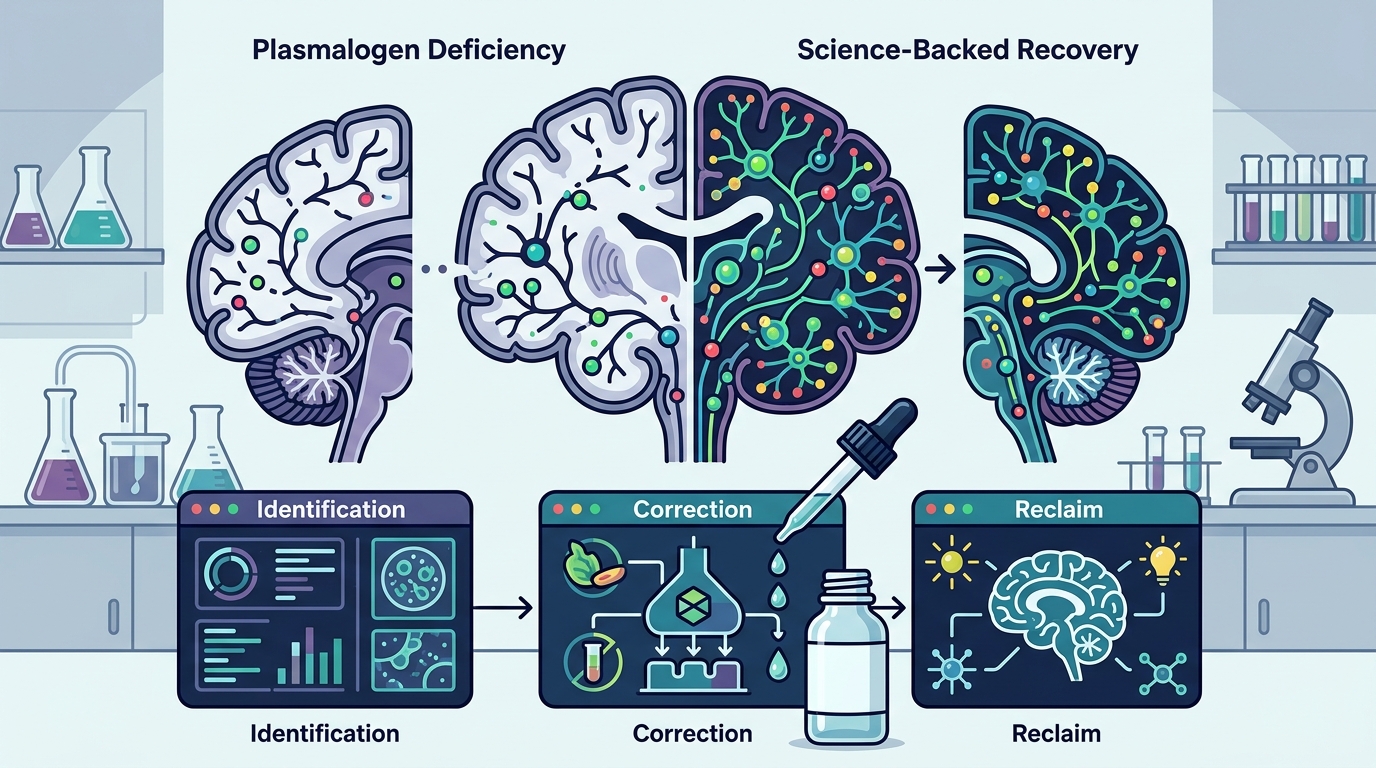
Your brain is roughly 60% fat by dry weight, and a surprising proportion of that fat belongs to a single lipid class most people have never heard of: plasmalogens. When these specialized molecules run low, the effects cascade through every neuron, synapse, and signaling pathway. Below is a practical, research-grounded plan for identifying and correcting a plasmalogen deficit so you can reclaim sharper thinking, stronger memory, and resilient brain health.
What Plasmalogens Actually Do in the Brain
Plasmalogens are a unique subclass of glycerophospholipids defined by a vinyl-ether bond at the sn-1 position of the glycerol backbone. That single structural feature gives them properties no other membrane lipid can replicate. They account for approximately 15–20 mol% of the phospholipid composition in human cell membranes, and concentrations are especially high in brain and heart tissue.
Inside your nervous system, plasmalogens perform at least four critical jobs:
- Membrane architecture — They influence how tightly lipid rafts pack together, directly affecting receptor signaling and ion channel activity.
- Endogenous antioxidant defense — The vinyl-ether bond scavenges reactive oxygen species (ROS) before they can damage neighboring polyunsaturated fatty acids.
- Synaptic transmission — They facilitate vesicle fusion and neurotransmitter release at nerve terminals.
- DHA reservoir — Many brain plasmalogens carry docosahexaenoic acid (DHA) at the sn-2 position, serving as a bioavailable pool of this essential omega-3 fatty acid.
When plasmalogen levels fall, each of these functions degrades. Research shows that a deficiency in plasmenyl ethanolamine leads to disturbances in myelin structure, synaptic neurotransmission, intracellular signaling, and even neuronal apoptosis and neuroinflammation.
Why Your Plasmalogen Levels Are Dropping
Most adults lose plasmalogens gradually — but some lose them much faster. Understanding the root causes is the first step toward correction.
1. Aging and Peroxisomal Decline
Plasmalogen biosynthesis begins in the peroxisome, a tiny organelle inside every cell. Peroxisomal function naturally declines with age. Decreased peroxisome function may be a key factor underlying the decrease in circulating plasmalogens with aging and with neurodegenerative diseases such as Alzheimer's disease.
2. Chronic Oxidative Stress
The very feature that makes plasmalogens protective — the vinyl-ether bond — also makes them expendable under oxidative pressure. Chronic inflammation, poor sleep, metabolic syndrome, and environmental toxin exposure all accelerate oxidative degradation of plasmalogens faster than your body can replace them.
3. Neurodegeneration Feedback Loop
In Alzheimer's disease, plasmalogen loss is both a cause and a consequence. Emerging evidence suggests a potential connection between plasmalogen deficiency and the pathogenesis of Alzheimer's disease. Oxidative stress depletes plasmalogens, and the resulting membrane dysfunction worsens tau pathology and amyloid-beta accumulation, which in turn generates more oxidative stress.
4. Dietary Gaps
While many animal-based foods contain plasmalogens, modern diets heavy in processed foods provide far less than ancestral diets. Organ meats, shellfish (especially scallops and mussels), and certain marine oils are the richest dietary sources — foods most people rarely eat.
Recognizing the Signs of Deficiency
Because plasmalogens operate at the cellular membrane level, symptoms are systemic but often show up first in the brain:
| Symptom Domain | What You May Notice |
|---|---|
| Memory | Difficulty recalling names, misplacing objects, losing conversational threads |
| Processing Speed | Slower reading comprehension, delayed responses in conversation |
| Mood & Motivation | Unexplained low mood, apathy, reduced drive |
| Physical | Reduced grip strength, slower gait — research links plasmalogen depletion to mobility changes as well |
| Fatigue | Persistent brain fog, especially after meals or upon waking |
Circulating plasmalogen levels are decreased in older individuals, and are further decreased in patients with Alzheimer's disease and Mild Cognitive Impairment (MCI). Severity of the decrease mirrors the severity of the dementia, which means catching it early is paramount.
How to Test Your Plasmalogen Status
Unlike cholesterol, plasmalogen testing is not yet part of standard blood panels — but specialized tests do exist.
- Serum ethanolamine plasmalogen panels — Offered by select laboratories, this blood test measures circulating PlsEtn levels. Research has shown that reduced indices of plasmalogen biosynthesis and remodeling are significantly correlated with elevated cerebrospinal fluid concentrations of total tau, a biomarker of neurodegeneration.
- Red blood cell plasmalogen analysis — Measures the lipid composition of red blood cell membranes, providing a longer-term snapshot of plasmalogen status (similar in principle to HbA1c for glucose).
- Comprehensive metabolomic panels — Some functional-medicine labs include plasmalogen fractions within broader lipid or peroxisomal health panels.
If testing is unavailable in your area, age over 50, a family history of dementia, or the presence of multiple symptoms above provides a reasonable clinical rationale for targeted supplementation while working with your healthcare provider.
The 5-Step Recovery Plan
Step 1: Start Targeted Plasmalogen Supplementation
Dietary sources alone rarely deliver enough plasmalogens to correct a meaningful deficit. Supplementation provides a concentrated, measurable dose.
Research shows two primary supplementation approaches:
- Plasmalogen precursors (DHA-AAG) — Alkyl-diacylglycerols bypass the peroxisomal bottleneck, allowing cells to assemble finished plasmalogens even when peroxisomal function is impaired. In an investigational clinical trial, oral DHA-AAG supplementation at doses from 900 to 3,600 mg/day over four months significantly increased DHA plasmalogen levels in the blood, improved antioxidant markers, and benefited cognition in a subset of participants.
- Scallop-derived plasmalogens — Clinical trials in Japan have demonstrated that supplemental plasmalogen can improve memory function in patients with mild Alzheimer's disease, particularly in women and younger patients.
Prodrome's plasmalogen supplements — ProdromeGlia and ProdromeNeuro — use lab-synthesized plasmalogen precursor technology to deliver 900 mg of omega-3 plasmalogen oil per serving, offering a high-potency option that does not depend on shellfish sourcing. This matters for consistency, purity, and allergen avoidance.
Step 2: Optimize Peroxisomal Function
Since peroxisomes are the starting point of plasmalogen synthesis, keeping them healthy amplifies the benefit of every supplement you take.
- Exercise — Aerobic activity stimulates peroxisome proliferator-activated receptors (PPARs), upregulating the enzymes that build plasmalogens.
- Intermittent fasting — Caloric restriction and time-restricted eating have been shown to enhance peroxisomal biogenesis in animal models.
- Avoid peroxisomal toxins — Chronic alcohol use, certain industrial solvents, and high-fructose diets are all associated with peroxisomal stress.
Step 3: Build an Anti-Inflammatory, DHA-Rich Diet
Plasmalogens cannot function optimally without adequate DHA supply. Prioritize:
- Wild-caught fatty fish (salmon, sardines, mackerel) — 2–3 servings per week
- Shellfish, especially scallops and mussels — among the richest direct plasmalogen food sources
- Organ meats (chicken heart, beef liver) — traditionally dense in membrane lipids
- Olive oil and avocados — omega-9 fatty acids play a supportive role in overall lipid health
- Dark leafy greens, berries, and turmeric — anti-inflammatory compounds reduce oxidative drain on plasmalogens
Step 4: Reduce Oxidative Load
Every time a plasmalogen molecule neutralizes a free radical, it is consumed and must be replaced. Reducing your oxidative burden directly conserves your plasmalogen pool.
- Sleep 7–9 hours per night — sleep deprivation is a major source of neuronal oxidative stress
- Manage blood sugar — insulin resistance increases systemic ROS production
- Limit processed seed oils high in omega-6 linoleic acid — excess omega-6 competes with DHA for membrane incorporation
- Consider supportive antioxidants: vitamin E, CoQ10, and N-acetylcysteine (NAC) work synergistically with plasmalogens
Step 5: Monitor, Adjust, Repeat
Recovery is not a one-time event. It requires ongoing measurement and dose adjustment.
- Retest serum plasmalogens at 3–4 month intervals
- Track cognitive benchmarks (e.g., Montreal Cognitive Assessment or digital cognitive testing apps)
- Keep a symptom journal — brain fog frequency, word-finding difficulty, energy levels
- Work with a practitioner who understands lipid biochemistry to titrate your regimen
What to Expect: A Realistic Timeline
| Timeframe | Typical Observations |
|---|---|
| Weeks 1–4 | Blood plasmalogen levels begin rising; some people notice improved energy and reduced brain fog |
| Months 2–3 | Cognitive improvements become more consistent; antioxidant markers normalize |
| Months 4–6 | Measurable gains in memory tests and processing speed for many individuals; mobility improvements possible |
| 6+ Months | Sustained levels with ongoing supplementation; continued neuroprotective benefits |
In published research, DHA plasmalogen levels increased with increasing dose and remained significantly elevated at all treatment doses and durations during a four-month supplementation period. However, individual response varies based on baseline deficit severity, age, and co-existing health conditions.
Key Takeaways
- Plasmalogens make up 15–20% of membrane phospholipids and are essential for memory, synaptic function, and antioxidant defense.
- Levels decline with age, accelerated by oxidative stress, inflammation, and peroxisomal dysfunction.
- Circulating plasmalogen levels correlate with cognitive status — lower levels track with greater cognitive impairment.
- Targeted supplementation with plasmalogen precursors like DHA-AAG can raise blood levels and improve cognitive and antioxidant outcomes.
- A multi-pronged strategy — supplementation, diet, exercise, fasting, and oxidative stress reduction — produces the best results.
- Prodrome's lab-synthesized plasmalogen supplements offer high-potency, shellfish-free options backed by the research of Dr. Dayan Goodenowe.
Frequently Asked Questions
What causes plasmalogen deficiency?
The primary causes are aging-related peroxisomal decline, chronic oxidative stress, neuroinflammation, and insufficient dietary intake of plasmalogen-rich foods like shellfish and organ meats. Decreased peroxisome function is considered a key factor in the age-related drop in circulating plasmalogens.
Can plasmalogen supplements improve Alzheimer's symptoms?
Clinical evidence is promising but still developing. A randomized, double-blind trial found that scallop-derived plasmalogens improved memory scores in female patients with mild Alzheimer's disease. Separately, DHA-AAG plasmalogen precursor supplementation improved cognition in a subset of cognitively impaired participants during a four-month trial. More large-scale studies are needed.
How long does it take for plasmalogen supplements to work?
Blood plasmalogen levels can begin rising within weeks of starting supplementation. In clinical research, DHA plasmalogen levels increased with increasing dose and remained elevated throughout a four-month treatment period. Noticeable cognitive improvements typically emerge between months two and four, depending on the individual's baseline deficit.
Are plasmalogen supplements safe?
Plasmalogens are natural components of cell membranes, and clinical trials have reported no serious adverse effects at recommended doses. Mild gastrointestinal discomfort has been noted occasionally. Individuals with shellfish allergies should choose lab-synthesized options like Prodrome's supplements rather than marine-derived products.
What foods are high in plasmalogens?
The richest dietary sources include scallops, mussels, chicken heart, beef liver, and other organ meats. Fatty fish like salmon and sardines also contribute. However, dietary intake alone typically provides modest amounts compared to therapeutic supplementation doses used in clinical studies.
How is Prodrome different from other plasmalogen supplements?
Prodrome's ProdromeGlia and ProdromeNeuro are lab-synthesized plasmalogen precursors rather than animal-derived extracts. Each serving delivers 900 mg of omega-3 plasmalogen oil, and the precursor design allows cells to build finished plasmalogens even when peroxisomal function is impaired — a critical advantage for aging individuals. They are also shellfish-free, making them suitable for people with marine allergies.