

Your brain depends on a substance most people have never heard of. Myelin — a lipid-rich sheath that wraps every nerve fiber in your white matter — is the difference between crisp, rapid cognition and a sluggish, foggy brain. When myelin degrades, signals misfire, processing speed drops, and the door to neurodegenerative decline opens wider.
But here is what makes this story hopeful: the adult brain maintains a built-in repair crew. Oligodendrocyte precursor cells (OPCs) stand ready to mature into myelin-producing oligodendrocytes throughout your entire life. The question is not whether repair is possible — it is whether you are giving those cells what they need to do their job.
This guide takes a cellular-first approach. Instead of listing generic health tips, we trace each strategy back to the specific biological mechanism it activates — from OPC proliferation and cholesterol synthesis to plasmalogen availability in glial membranes.
Understanding Myelin at the Molecular Level
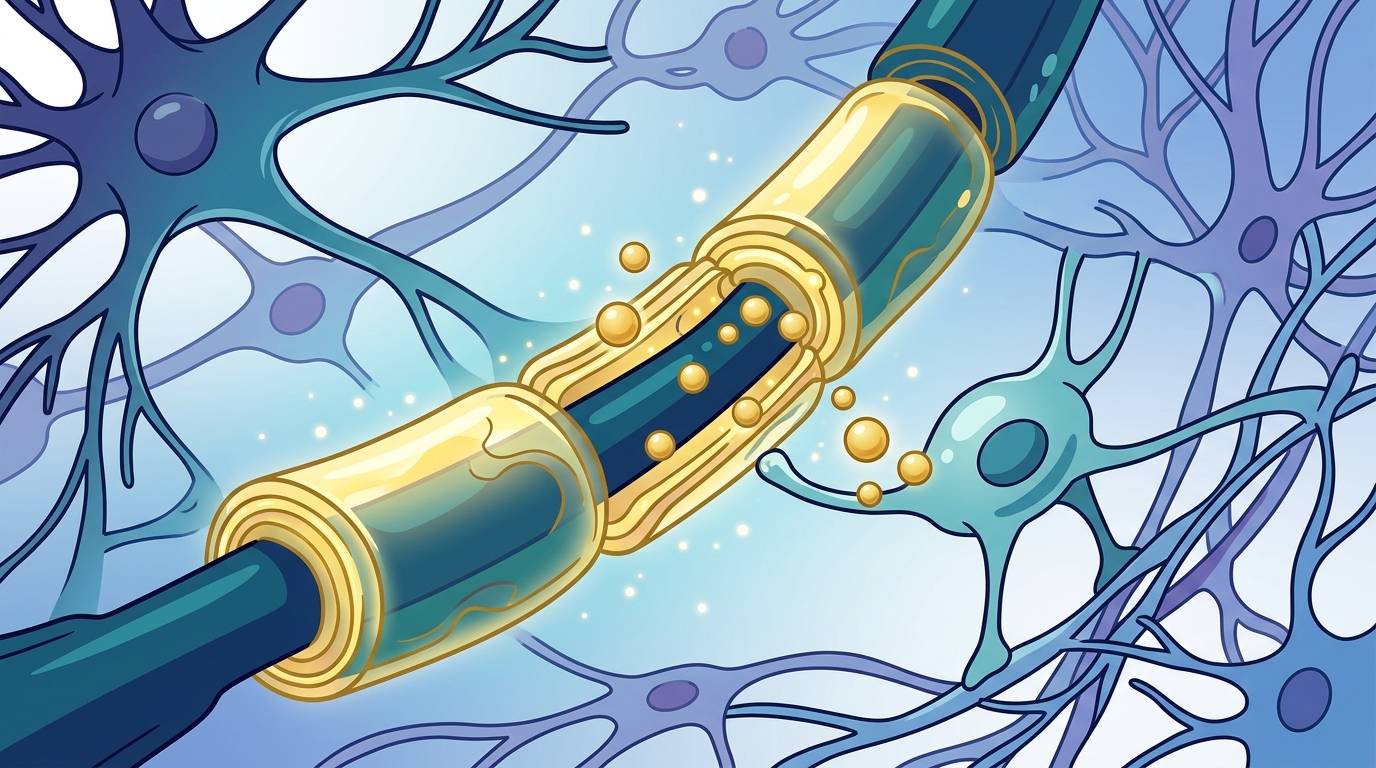
Myelin is not a simple coating. It is a highly specialized membrane produced by oligodendrocytes in the central nervous system. Its dry mass is roughly 70–85 percent lipid and 15–30 percent protein, with phospholipids, cholesterol, galactolipids, and plasmalogens present in an approximate molar ratio of 2:2:1:1. This lipid-heavy composition is what makes myelin such an effective electrical insulator — and why lipid nutrition is central to any repair strategy.
White matter — the brain tissue packed with myelinated axons — serves as the communication backbone connecting distant brain regions. When myelin is intact, neurons transmit signals with minimal energy loss. When it breaks down, neural pathways deteriorate, slowing communication and contributing to cognitive impairment, motor dysfunction, and even conditions like Alzheimer's disease.
Recent research published in Science (2025) has proposed rethinking Alzheimer's disease through the lens of myelin, suggesting that approaches to maintain myelin integrity throughout aging could delay Alzheimer's onset by preserving axonal health. This reframes myelin not as a secondary concern, but as a primary therapeutic target.
The OPC Repair System You Already Have
Your brain is not helpless against myelin loss. Oligodendrocyte precursor cells (OPCs) reside throughout the adult brain. When they receive demyelinating signals, OPCs proliferate, migrate to the injured region, and differentiate into mature oligodendrocytes capable of producing new myelin.
However, this process is not always successful. In chronic damage or persistent inflammation, the regenerative capacity of OPCs can become overwhelmed. The inflammatory environment can inhibit OPCs from differentiating into mature, myelin-producing cells. This is why a multi-pronged strategy is essential: you need to simultaneously support OPC proliferation, reduce inflammation, and provide the raw lipid materials myelin requires.
Lipid Building Blocks: Why Composition Matters
Because myelin is approximately 70 percent lipid by dry weight, the lipid building blocks available to your oligodendrocytes directly determine the quality and speed of myelin repair. Three categories deserve special attention:
- Cholesterol: Cholesterol is the rate-limiting compound required for myelin synthesis. Animal research demonstrates that cholesterol restores growth factor balance and supports remyelination. Without adequate cholesterol in the right cellular compartments, OPCs simply cannot finish the job.
- Phospholipids: Standard phospholipids form the bulk of the myelin bilayer, but not all phospholipids contribute equally.
- Plasmalogens: These specialized ether-linked phospholipids are disproportionately enriched in myelin and white matter. They are not optional extras — they are structural necessities.
A 2025 study found that sleep deprivation impairs myelin through cholesterol imbalance in oligodendrocytes, underscoring how tightly myelin health is coupled to lipid metabolism. Any serious restoration strategy must address lipid supply at the cellular level.
Plasmalogens — The Missing Piece in Myelin Support
Plasmalogens are a class of phospholipid found at remarkably high concentrations in myelin. Ethanolamine plasmalogens (PlsEtn) account for up to 70 percent of the ethanolamine glycerophospholipids in myelin sheath tissue. During the first year of life — when myelination is most rapid — PlsEtn levels in white matter increase eightfold per gram of brain tissue.
This is not a coincidence. The level of plasmalogens in brain tissue depends directly on the degree of myelination and increases rapidly during myelinogenesis. They provide unique biophysical properties to membranes, including optimal bilayer thickness and acyl chain packing, that standard phospholipids cannot replicate.
Healthy plasmalogen levels help maintain synaptic connections and protect the myelin sheath that insulates nerves. As people age, plasmalogen levels decline — and this decline correlates with increased risk of neurodegenerative conditions including Alzheimer's disease and multiple sclerosis.
Targeted Plasmalogen Supplementation
Because the body's endogenous plasmalogen synthesis slows with age and oxidative stress, supplementation with plasmalogen precursors offers a direct strategy for supporting myelin-rich tissue.
ProdromeGlia™ is an omega-9 (oleic acid) plasmalogen precursor developed to support plasmalogen availability in glial cell membranes — the very cells prominent in brain white matter, myelin, and other structurally demanding tissues. Oleic-acid–containing plasmalogens are especially important for the glial cells that surround and support neurons, providing the structural backbone that enables rapid signal conduction.
For comprehensive coverage, ProdromeGlia™ is often used alongside ProdromeNeuro™, an omega-3 (DHA) plasmalogen precursor formulated to support plasmalogen availability in neuronal cell membranes found in brain gray matter. Together, these two formulations address both white matter (myelin and glial tissue) and gray matter (neuronal membranes), creating a complementary nutritional approach to nervous system structure.
Built on over two decades of dedicated plasmalogen research by Dr. Dayan Goodenowe, Prodrome's patented plasmalogen precursors represent the most extensively researched and only validated method to restore plasmalogen levels in the body.
Omega-3 Fatty Acids and Oligodendrocyte Development
Omega-3 fatty acids, particularly DHA and EPA, are incorporated into myelin membranes and are required for both synthesis and repair. DHA supports oligodendrocyte survival and function, while EPA has anti-inflammatory properties that protect against cytokine-driven demyelination.
A landmark study from Duke-NUS Medical School showed that omega-3 fatty acids act as factors within the brain to direct oligodendrocyte development — a process critical for brain myelination. Animal models of demyelinating disease consistently show that omega-3 supplementation slows progression and supports remyelination.
Omega-3 intake also raises brain-derived neurotrophic factor (BDNF) levels, which in turn promote axonal growth, stimulate oligodendrocyte progenitor cells, and encourage myelin production. For myelin support, research suggests 2 to 3 grams per day of combined EPA and DHA from high-quality fish oil or algae oil as a reasonable target.
Importantly, standard omega-3 supplements deliver fatty acids in triglyceride or ethyl ester form. Plasmalogen-bound DHA — as found in ProdromeNeuro™ — delivers DHA in the specific molecular configuration that neuronal membranes actually use, potentially offering advantages for membrane incorporation over conventional fish oil.
Sleep: Your Brain's Myelin Factory Shift
Sleep is not merely rest — it is an active period of myelin production. Groundbreaking research from the University of Wisconsin, Madison, found that genes promoting myelin formation were turned on during sleep, while genes implicated in cell death and cellular stress were turned on during wakefulness.
Even more striking, the reproduction of oligodendrocyte precursor cells (OPCs) doubles during sleep, particularly during REM sleep. This means that every night of quality sleep is a night your brain spends manufacturing the raw cellular workforce needed for myelin repair.
Conversely, chronic sleep restriction leads to measurable damage. Electron microscopy studies have shown that chronic sleep loss can lead to decreased myelin thickness in callosal axons. A 2025 study identified cholesterol imbalance in oligodendrocytes as a novel mechanistic pathway through which sleep deprivation impairs myelin function and slows neural signal propagation.
Practical Sleep Targets for Myelin Health
- Aim for 7–9 hours of uninterrupted sleep per night
- Prioritize REM sleep by maintaining consistent sleep-wake schedules
- Address sleep apnea — patients with obstructive sleep apnea show white matter alterations that compound myelin loss
- Minimize blue light exposure 60–90 minutes before bed to protect circadian-driven melatonin release
Aerobic Exercise and Adaptive Myelination
Regular physical activity, especially aerobic exercise, supports white matter health by improving cerebral blood flow, delivering oxygen and nutrients to brain cells. Physical activity is associated with higher white matter integrity and less age-related atrophy.
These benefits are linked to the release of neurotrophic factors like BDNF, which supports the survival and growth of neurons and glial cells — including the oligodendrocytes responsible for myelination.
In Alzheimer's disease mouse models, a six-month aerobic exercise intervention demonstrated beneficial effects on myelin structural alterations and oligodendrocyte lineage cells. The concept of adaptive myelination — where oligodendrocytes dynamically adjust myelin thickness in response to neural activity — means that an active brain literally builds stronger insulation around its most-used circuits.
Exercise Guidelines for White Matter Support
- 150 minutes per week of moderate-intensity aerobic exercise (brisk walking, cycling, swimming)
- Include activities that challenge coordination and learning, as skill acquisition drives adaptive myelination in active circuits
- Consistency matters more than intensity — regular daily movement outperforms occasional intense sessions
Controlling Neuroinflammation
Inflammation is the single greatest barrier to successful remyelination. Even when OPCs are present in sufficient numbers, a chronically inflamed environment prevents them from differentiating into mature oligodendrocytes. Myelin damage can result from autoimmune responses, chronic systemic inflammation, or environmental factors.
Natural products and herbal medicine have shown considerable progress in the domain of myelin repair, with researchers noting their therapeutic potential alongside low side-effect profiles. Key anti-inflammatory strategies include:
- Curcumin: Prodrome offers ProdromeGlia-PC+™, which combines plasmalogen precursors with additional anti-inflammatory and antioxidant support including a highly concentrated form of bisdemethoxycurcumin
- Antioxidant-rich diet: Emphasize colorful vegetables, berries, green tea, and extra virgin olive oil
- Reduce ultra-processed food intake: Processed foods promote systemic inflammation that crosses the blood-brain barrier
- Glutathione support: Glutathione is found in the highest concentration in the brain, especially in glial cells — the very cells that produce myelin
Putting It All Together: A Practical Protocol
Myelin restoration is not a single-supplement solution. It requires a coordinated approach that addresses lipid supply, cellular signaling, inflammation, and lifestyle factors simultaneously. Here is a practical framework:
| Pillar | Action | Mechanism |
|---|---|---|
| Plasmalogen Support | ProdromeGlia™ (omega-9) + ProdromeNeuro™ (omega-3) daily | Restores plasmalogen levels in glial and neuronal membranes |
| Omega-3 Intake | 2–3 g combined EPA/DHA daily from quality sources | Supports oligodendrocyte development and reduces neuroinflammation |
| Sleep Optimization | 7–9 hours nightly; treat sleep apnea if present | Doubles OPC proliferation; activates myelin-related gene expression |
| Aerobic Exercise | 150 min/week moderate intensity | Increases BDNF, cerebral blood flow, and adaptive myelination |
| Anti-Inflammatory Nutrition | Mediterranean-style diet; curcumin; minimize processed foods | Removes inflammatory barriers to OPC differentiation |
| Cholesterol Awareness | Do not aggressively restrict dietary cholesterol without medical guidance | Cholesterol is rate-limiting for myelin synthesis |
Important: These strategies are designed to support your brain's natural repair processes. They are not intended to diagnose, treat, cure, or prevent any disease. Always consult with a healthcare professional before starting any new supplement or making significant lifestyle changes.
Key Takeaways
- Myelin is 70–85% lipid — lipid nutrition is non-negotiable for repair
- Plasmalogens make up the majority of ethanolamine phospholipids in myelin and decline with age
- OPCs can regenerate myelin throughout life, but need the right lipid supply and low-inflammation environment
- Sleep doubles OPC production; chronic sleep loss measurably thins myelin
- Omega-3s (especially DHA) directly support oligodendrocyte development and BDNF production
- ProdromeGlia™ and ProdromeNeuro™ deliver plasmalogen precursors in the specific molecular forms used by glial and neuronal membranes
- Aerobic exercise drives adaptive myelination — an active brain builds stronger insulation
Frequently Asked Questions
Can white matter and myelin actually regenerate in adults?
Yes. The adult brain contains oligodendrocyte precursor cells (OPCs) that can proliferate, migrate to damaged areas, and differentiate into mature myelin-producing oligodendrocytes. However, chronic inflammation or insufficient lipid building blocks can impair this process, which is why targeted nutritional and lifestyle support matters.
What are plasmalogens and why are they important for myelin?
Plasmalogens are a specialized class of phospholipid that make up a large portion of myelin membranes — up to 70% of ethanolamine glycerophospholipids in myelin sheath tissue. They provide unique biophysical properties essential for membrane insulation and decline with age, correlating with increased neurodegenerative risk.
How does sleep affect myelin production?
Research shows that genes promoting myelin formation are activated during sleep, while genes for cell death and stress activate during wakefulness. OPC reproduction doubles during sleep, particularly during REM sleep. Chronic sleep loss has been shown to reduce myelin thickness in key brain structures.
What is the difference between ProdromeGlia™ and ProdromeNeuro™?
ProdromeGlia™ is an omega-9 plasmalogen precursor designed to support glial cell membranes in brain white matter and myelin. ProdromeNeuro™ is an omega-3 (DHA) plasmalogen precursor that supports neuronal cell membranes in brain gray matter. Together, they provide complementary support for the two major tissue types in the brain.
Does exercise help repair myelin?
Yes. Aerobic exercise improves cerebral blood flow, triggers BDNF release, and promotes adaptive myelination — the process by which oligodendrocytes adjust myelin thickness in response to neural activity. Studies in Alzheimer's disease models show exercise benefits myelin structure and oligodendrocyte lineage cells.
Can omega-3 fatty acids support remyelination?
Research indicates that DHA supports oligodendrocyte survival and function, while EPA provides anti-inflammatory protection against demyelination. Animal models consistently show that omega-3 supplementation supports remyelination. A daily intake of 2–3 grams of combined EPA and DHA is a common research-supported target.