

From Blood Draw to Biological Clock: A Step-by-Step System for Testing Age-Reversal and Disease-Risk Biomarkers
Forget the single-number gimmick. A meaningful age-reversal testing program layers multiple marker types—lipid, epigenetic, proteomic, and metabolic—so you can see which organ systems are aging fastest and which interventions are actually working. This tutorial shows you exactly how to build that layered program, step by step.
Step 0: Understand Why You Need Layers, Not a Single Score
One of the biggest misconceptions in longevity testing is that a single biological-age number tells you everything. In reality, different testing methods frequently disagree with each other. One person tested on three different blood-panel platforms received biological-age estimates that varied by nearly eight years from the same blood data. The number you receive depends heavily on which algorithm performs the calculation.
Different biological systems age at different rates in different people. You can have epigenetically "young" DNA and metabolically "old" blood lipids at the same time. That is why a layered approach—combining epigenetic, lipid, proteomic, and standard blood markers—gives you far more actionable information than any individual test.
Step 1: Start With a Comprehensive Blood Biomarker Panel
What It Measures
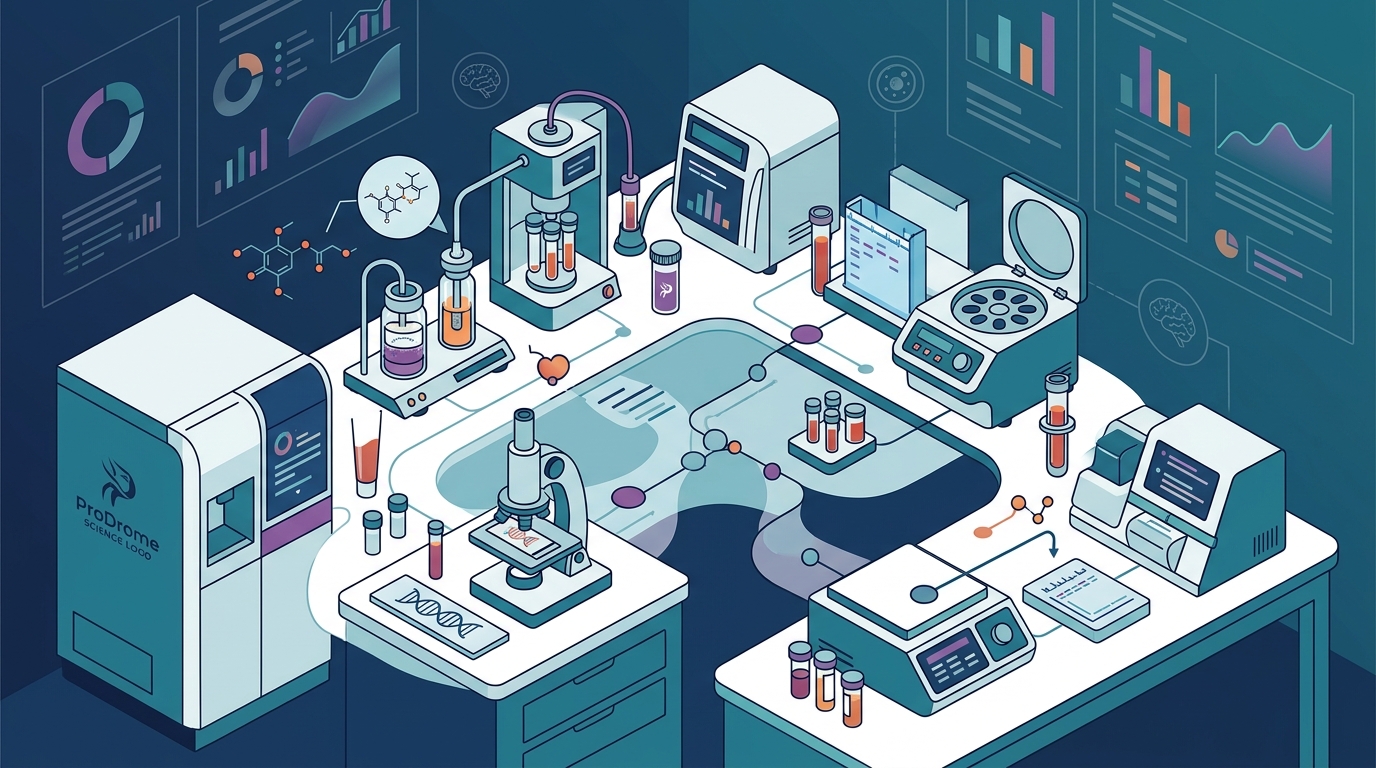
A longevity-oriented blood panel typically covers 100–160 biomarkers across metabolic, cardiovascular, liver, kidney, hormone, nutrient, and inflammatory categories. These panels form the foundation because they are affordable, widely available, and responsive to lifestyle changes within three to six months.
How to Get Tested
- Choose a longevity-focused lab service (examples include Function Health, Hundred Health, or ordering through your physician).
- Fast for 10–12 hours before the draw.
- Request markers beyond the standard metabolic panel: hsCRP (systemic inflammation), homocysteine (cardiovascular and neurological risk), fasting insulin (metabolic flexibility), ApoB (true atherogenic particle count), and vitamin D.
How to Interpret Results
Look at individual markers against optimal ranges—not just the lab's reference ranges, which are based on a general population that includes unhealthy individuals. A fasting insulin below 5 µIU/mL, an hsCRP below 0.5 mg/L, and an ApoB below 80 mg/dL signal robust metabolic and cardiovascular health.
Step 2: Add an Epigenetic Clock Test for Deep Aging Measurement
What It Measures
Epigenetic clocks analyze DNA methylation patterns—chemical tags on your DNA that regulate gene activity—and use algorithms to estimate how your biological age compares to your chronological age. There are several generations of these clocks, and they answer different questions:
- First-generation (Horvath clock): Estimates chronological age from methylation. Useful as a baseline but limited in predicting disease risk.
- Second-generation (GrimAge): Often called the "death clock," GrimAge is the most powerful predictor of mortality among epigenetic clocks. It was trained on DNA methylation surrogates of seven plasma proteins linked to disease and mortality, plus smoking history.
- Third-generation (DunedinPACE): Rather than estimating a static biological age, DunedinPACE estimates your rate of aging at the moment of sampling—years of biological aging per calendar year. A healthy person might score 0.9; an unhealthy one might score 1.2.
How to Get Tested
- Order an at-home kit from a provider such as TruDiagnostic (TruAge) or use a clinical lab that runs Illumina methylation arrays.
- Collect a blood sample (finger prick or venipuncture depending on provider).
- Results typically arrive within 4–6 weeks.
Which Clock Should You Use?
For tracking the effects of interventions over time, DunedinPACE offers the highest test-retest reliability (ICC value) of all aging clocks, meaning that small changes are more likely to reflect real biological shifts rather than statistical noise. If your primary concern is mortality risk prediction, GrimAge (updated to GrimAge2 in 2022 with additional protein surrogates) is the strongest single measure.
Step 3: Test Your Plasmalogen Levels—The Missing Lipid Layer
Why Plasmalogens Matter
Most longevity panels overlook one of the most consequential lipid classes: plasmalogens. These specialized phospholipids protect cell membranes from inflammation and oxidative damage. When plasmalogen levels decline—as they do with aging—cells operate less efficiently and produce more inflammation, triggering a cascade that contributes to chronic disease.
Research from the Rush University Memory and Aging Project found that higher blood plasmalogen levels are associated with a lower probability of developing dementia. Strikingly, a 95-year-old with high plasmalogen levels had the same likelihood of developing dementia as a 75-year-old with low plasmalogen levels, highlighting the powerful protective role these lipids may play in cognitive aging.
Dysfunctional plasmalogen levels have been scientifically linked to increased risk across a broad spectrum of conditions including Alzheimer's disease, Parkinson's disease, multiple sclerosis, heart disease, stroke, and diabetes.
How to Get Tested
- Request a plasmalogen panel through a specialized lab. Mass spectrometry assays (using quadrupole, time-of-flight, or orbitrap instruments) quantify specific plasmalogen species in your blood.
- A standard venous blood draw is sufficient.
- Results report levels of key plasmanyl glycerylphosphoethanolamines, which are compared to age- and sex-matched reference values.
Introducing the Plasmalogen Score
A 2024 study published in eBioMedicine developed and validated a Plasmalogen Score (Pls Score) as an independent, modifiable marker of metabolic health. The Pls Score was inversely related to cardiometabolic risk and all-cause mortality and was also associated with diet and lifestyle factors. Researchers noted that the Pls Score and the well-known Omega-3 Index might complement each other, providing a holistic view of cardiovascular health.
What to Do With Your Results
If your plasmalogen levels are low, targeted supplementation can help restore them. Prodrome's plasmalogen supplements are formulated based on peer-reviewed lipid biology research to replenish these critical molecules. Unlike generic brain-health supplements, Prodrome's products address a specific, testable biochemical deficit—making your plasmalogen test results directly actionable.
Step 4: Consider Organ-Level Proteomic Aging Tests
What They Measure
Plasma proteomics is an emerging approach that measures thousands of circulating proteins to estimate how fast individual organs are aging. Research published in Nature found that organ-specific aging signatures in blood proteins can predict disease with remarkable precision: individuals with accelerated heart aging showed a 250% increased risk of heart failure, while accelerated brain and vascular aging predicted Alzheimer's disease progression independently of—and as strongly as—plasma pTau-181, currently the best blood-based AD biomarker.
How to Get Tested
Proteomic aging panels are newer and less widely available than blood panels or epigenetic clocks. Some research-oriented services now offer organ-age estimates based on the SomaScan or Olink proteomics platforms. Ask your longevity physician about clinical access.
Why This Matters for Brain Health
Research shows that plasma-based brain-age acceleration was associated with an increased risk of Alzheimer's disease (HR 1.88) and stroke (HR 1.30). These effect sizes were larger than those of general organismal aging measures, suggesting that organ-specific proteomic testing can catch brain-disease risk earlier than conventional approaches.
Step 5: Optional—Add Glycan Analysis for Immune-System Age
GlycanAge analyzes glycans—sugar molecules attached to proteins—to estimate immune system age and chronic inflammation levels. While this test measures only one dimension of aging, it can be a useful complement to the other layers, particularly if you are focused on autoimmune conditions or systemic inflammation. Results are typically returned as a single "Immune Age" score.
Putting It Together: Your Quarterly Testing Calendar
| Quarter | Test | Purpose |
|---|---|---|
| Q1 (Baseline) | Comprehensive blood panel + Plasmalogen panel | Establish metabolic, lipid, and inflammatory baselines |
| Q1 (Baseline) | Epigenetic clock (DunedinPACE + GrimAge2) | Establish biological age and pace of aging |
| Q2 | Comprehensive blood panel | Track early response to interventions (diet, exercise, supplements like Prodrome plasmalogen supplements) |
| Q3 | Comprehensive blood panel + Plasmalogen panel | Verify plasmalogen repletion; assess metabolic trajectory |
| Q4 | Comprehensive blood panel + Epigenetic clock retest | Measure annualized pace-of-aging change |
| Annual | Proteomic organ-age panel (optional) | Organ-level deep dive; catch silent risk |
Key Takeaways
- No single biological age test is sufficient. Different tests measure different systems and frequently produce varying results because they use different algorithms and populations.
- Start with blood biomarkers for affordable, fast-responding data. Add epigenetic clocks for deeper aging measurement.
- Plasmalogen testing fills a critical gap that most longevity panels ignore. Low plasmalogens are linked to Alzheimer's, Parkinson's, cardiovascular disease, and metabolic syndrome.
- DunedinPACE is the best clock for tracking interventions because it measures your current rate of aging rather than a static age estimate, and it has the highest test-retest reliability.
- Test, intervene, retest. The value of biomarker testing is not the snapshot—it is the trajectory. Use supplements like Prodrome plasmalogens, dietary changes, and exercise, then confirm their impact with follow-up testing.
Frequently Asked Questions
What is the most accurate biological age test in 2026?
There is no single most accurate test because different methods measure different aspects of aging. Third-generation epigenetic clocks like GrimAge2 and DunedinPACE are considered the most scientifically validated for predicting mortality and tracking the pace of aging, respectively. Combining an epigenetic clock with a comprehensive blood panel and a plasmalogen test gives the most complete picture.
Can you test plasmalogen levels at home?
Plasmalogen testing currently requires a venous blood draw analyzed by mass spectrometry, which is performed in specialized laboratories. You can order a test through certain longevity-focused lab services or ask your physician to arrange one. At-home finger-prick collection is not yet standard for plasmalogen analysis.
How do plasmalogens relate to brain health and dementia risk?
Research from the Rush University Memory and Aging Project found that higher blood plasmalogen levels are associated with a significantly lower probability of developing dementia. Plasmalogens protect cell membranes from oxidative damage, support myelin maintenance, and enhance nerve plasticity. Supplementing with Prodrome's plasmalogen products is one evidence-based strategy for restoring depleted levels.
What is DunedinPACE and why is it considered the best clock for tracking interventions?
DunedinPACE (Pace of Aging Calculated from the Epigenome) measures your current rate of biological aging—expressed as years of biological aging per calendar year—rather than estimating a static age. It has the highest test-retest reliability of all epigenetic clocks, meaning changes you see between tests are more likely to reflect actual biological shifts rather than measurement noise.
How often should I retest my biological age markers?
Blood biomarker panels can be retested every three months to track response to interventions. Epigenetic clock tests are best retested annually, as meaningful methylation changes take longer to manifest. Plasmalogen panels are ideal at baseline and then every six months to confirm that supplementation is working.