

A single birthday candle tells you nothing about the state of your mitochondria, the integrity of your cell membranes, or the methylation patterns etched into your DNA. Science now offers dozens of measurable biochemical markers that can reveal whether your body is aging faster—or slower—than the calendar suggests. This ultimate guide maps every major marker category, explains exactly how each is tested, and helps you design a personal testing strategy that tracks real biological change over time.
Biological Age vs. Chronological Age: The Science Behind the Split
Chronological age counts the years since birth. Biological age reflects the actual physiological condition of your cells and organs. A 2025 review in Frontiers in Aging described the distinction clearly: biological age, unlike chronological age, reflects an individual's physiological state, offering a more accurate measure of health-span and age-related decline. That gap between the two numbers is where disease risk hides—and where intervention opportunities live.
An international expert panel convened in early 2025 agreed on 14 biomarkers of aging spanning physiology, inflammation, physical function, and DNA methylation as a consensus framework for evaluating anti-aging interventions. Understanding these markers is the first step toward meaningful self-assessment.
Domain 1: Epigenetic Clocks—Reading Your DNA's Aging Diary
Epigenetic clocks remain the gold standard for estimating biological age. They rely on modifications to DNA that change over time and regulate how genes are expressed—specifically, the accumulation of methyl groups on DNA molecules. Four generations of epigenetic clocks now exist. The earliest, such as Horvath and Hannum's clocks, were trained on chronological age. Second-generation clocks like PhenoAge and GrimAge incorporated biomarkers and lifestyle factors such as smoking, making them more predictive of mortality and morbidity.
How the Test Works
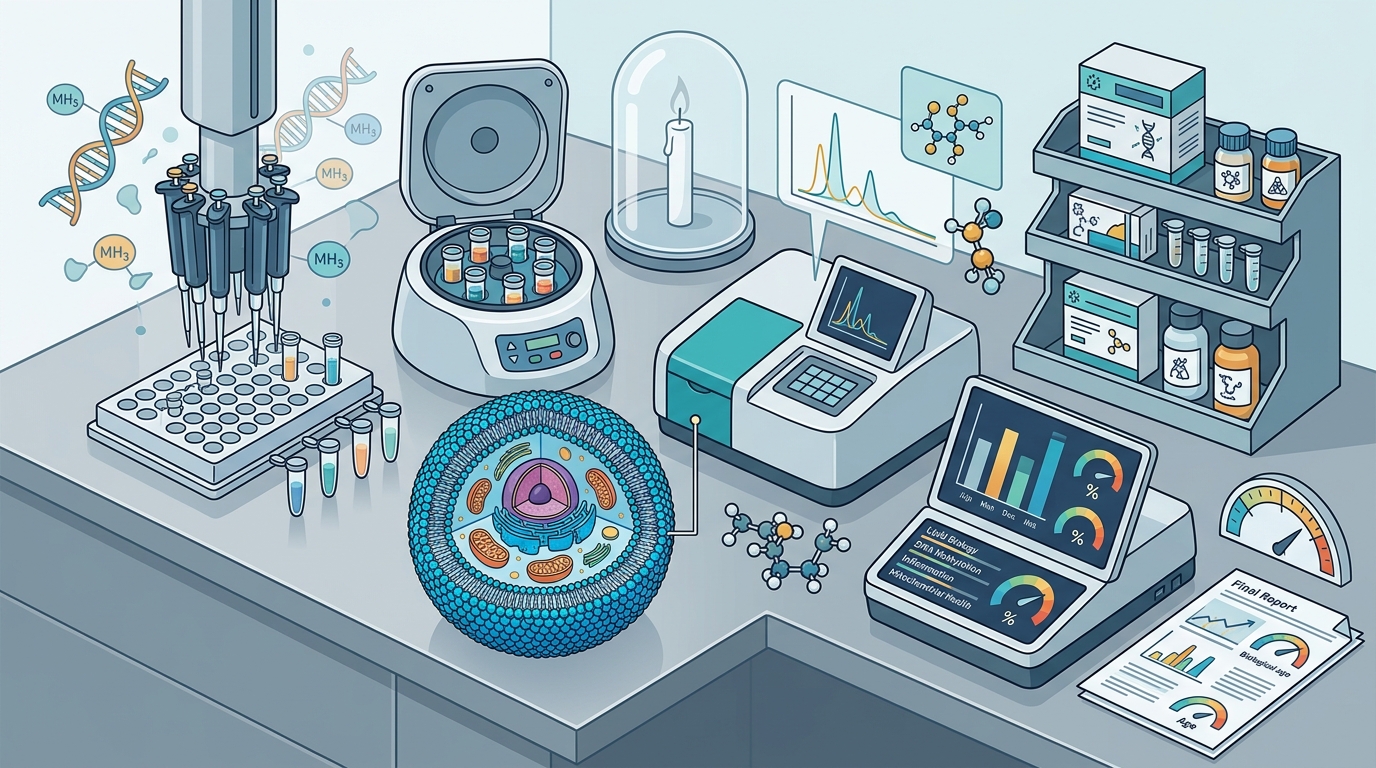
Most epigenetic age tests require a blood draw or, increasingly, a saliva sample. The DNA is extracted, processed on a methylation array (commonly the Illumina EPIC chip), and run through one or more clock algorithms. Results typically arrive within three to four weeks and report your estimated biological age alongside your chronological age.
What to Watch For
- GrimAge acceleration: A positive GrimAge gap (biological age older than chronological) is strongly associated with cardiovascular events and all-cause mortality.
- DunedinPACE: Measures the speed of aging rather than a single snapshot, making it ideal for tracking intervention effects over six to twelve months.
A 2025 randomized controlled trial at the Buck Institute demonstrated that therapeutic plasma exchange combined with intravenous immunoglobulin reversed biological age as measured by 15 epigenetic clocks, with an average reversal of 2.6 years compared to placebo. That study underscores how sensitive methylation-based markers are to real physiological change.
Domain 2: Inflammatory Markers—Detecting the Slow Burn
Chronic low-grade inflammation—sometimes called “inflammaging”—accelerates nearly every degenerative process. A 2025 review in Frontiers in Aging highlighted four key biochemical markers for tracking inflammation-driven aging: C-Reactive Protein (CRP), Insulin-like Growth Factor-1 (IGF-1), Interleukin-6 (IL-6), and Growth Differentiation Factor-15 (GDF-15).
Marker Breakdown
| Marker | What It Measures | Optimal Direction | Test Type |
|---|---|---|---|
| hs-CRP | Systemic inflammation | Below 1.0 mg/L | Standard blood panel |
| IL-6 | Pro-inflammatory cytokine | Lower is better | Serum immunoassay |
| GDF-15 | Cellular stress and mitochondrial dysfunction | Lower is better | Specialized blood test |
| IGF-1 | Growth signaling; U-shaped risk curve | Mid-range for age | Standard blood panel |
The expert consensus panel noted that high IL-6 levels are associated with heart disease and chronic inflammation, while IGF-1 can predict cardiovascular disease and metabolic disorders. Tracking these markers over time lets you measure whether anti-inflammatory strategies—diet, exercise, supplementation—are actually working at the molecular level.
Domain 3: Plasmalogen and Lipid Membrane Markers—The Brain Health Connection
This is where lipid biology meets longevity science, and it is especially relevant to brain health. Plasmalogens are specialized phospholipids found in cell membranes throughout the body, with particularly high concentrations in the brain and heart. They protect membranes from oxidative damage and support nerve plasticity and repair.
Why Plasmalogen Levels Matter
Plasmalogen levels decline with age, and the levels are abnormally low in the brains of people with age-related cognitive decline, dementia, or other neurodegenerative diseases. The relationship is not merely correlational. Research from the Rush University Memory and Aging Project found that a 95-year-old with high plasmalogen levels had the same likelihood of developing dementia as a 75-year-old with low plasmalogen levels—a striking 20-year protective offset.
Circulating serum ethanolamine plasmalogen levels are significantly decreased in patients with dementia, and the severity of the decrease mirrors the severity of the dementia. This makes serum plasmalogen testing a powerful early-warning signal for neurodegenerative risk. Furthermore, reduced levels are linked not only to Alzheimer's and Parkinson's but also to multiple sclerosis, several cancers, heart disease, stroke, and diabetes.
How Plasmalogen Testing Works
Plasmalogen levels are measured through a focused lipidomics blood panel. A patented mass spectrometry method using techniques such as Fourier transform ion cyclotron resonance or triple quadrupole mass spectrometry quantifies specific ethanolamine plasmalogen species and derives a plasmalogen biosynthesis value (PBV). This PBV score has been strongly associated with reduced dementia risk. Testing does not require fasting and uses a standard blood draw.
What You Can Do About Low Levels
Because plasmalogen depletion is both a marker and a potential driver of disease, restoring levels is an active area of intervention. Prodrome's plasmalogen supplements are specifically designed to replenish these critical lipids. The research supporting plasmalogen supplementation shows that oral ether phospholipid administration can increase plasma plasmalogen levels, offering a direct mechanism to address deficiency detected through testing. Optimal plasmalogen levels can even mitigate the increased APOE ε4 risk in Alzheimer's disease—carrying one copy of APOE4 doubles your Alzheimer's risk, but returning plasmalogen levels to normal can cut that back to baseline risk.
Domain 4: Proteomic Aging Signatures—Organ-Level Aging in a Blood Draw
Proteomics has emerged as a powerful layer of aging measurement. By analyzing the plasma proteome of UK Biobank participants, researchers identified 227 proteins involved in inflammation and regeneration pathways that were significantly associated with aging, with age-related shifts peaking at ages 41, 60, and 67.
Even more remarkable, organ-specific proteomic signatures now exist. A study published in Nature found that individuals with accelerated heart aging have a 250% increased heart failure risk, while accelerated brain and vascular aging predict Alzheimer's disease progression independently from—and as strongly as—plasma pTau-181, the current best blood-based biomarker for Alzheimer's.
Available Tests
Companies such as Generation Lab offer multi-organ aging assessments from a single blood sample. Their SystemAge platform has documented cases showing 5.5 to 13.6 year reductions in biological age through targeted interventions, including a 13.6-year reduction in brain aging through cognitive interventions and a 10.4-year improvement in immune system age through supplementation and lifestyle changes.
Domain 5: Metabolomic and Glycan Markers—The Emerging Frontier
A multiomics longitudinal study revealed nonlinear patterns in molecular markers of aging, with major dysregulation occurring at approximately age 44 and again around age 60. These inflection points suggest critical windows where testing and intervention may yield the greatest benefit.
Glycan Age
GlycanAge analyzes glycans—sugar molecules attached to proteins—to measure immune system age and inflammation levels. This approach captures a dimension of aging that DNA methylation and proteomics do not directly address, making it a valuable complementary test.
Metabolomic Panels
Broad metabolomic panels can detect shifts in amino acid ratios, lipid species (including plasmalogens), organic acids, and mitochondrial metabolites. When combined with proteomic and epigenetic data, metabolomics rounds out a true multi-omics aging profile.
Building Your Personal Age-Reversal Testing Protocol
No single marker tells the full story. The most informative approach combines markers from multiple domains. Here is a practical framework organized by priority and budget.
Tier 1: Foundational (Low Cost, Widely Available)
- hs-CRP and IL-6 for inflammation baseline
- Fasting glucose, HbA1c, and fasting insulin for metabolic health
- Standard lipid panel plus Lp(a)
- Complete blood count with differential
Tier 2: Targeted (Moderate Cost, High Signal)
- Plasmalogen blood panel (serum ethanolamine plasmalogens and PBV score)
- IGF-1 and GDF-15
- Homocysteine and vitamin D
- APOE genotype (one-time test)
Tier 3: Advanced (Higher Cost, Maximum Insight)
- Epigenetic clock test (GrimAge, DunedinPACE)
- Multi-organ proteomic aging panel
- GlycanAge immune aging assessment
- Full metabolomic profile
Testing Cadence
For most adults, a comprehensive baseline followed by retesting every six to twelve months provides the best balance of cost and insight. Interventions—whether dietary changes, exercise programs, or targeted supplementation like Prodrome plasmalogen supplements—need at least three to six months before biochemical markers will reflect meaningful change.
How to Interpret Your Results Without a PhD
Raw numbers are only useful in context. Follow these principles:
- Compare to your own baseline, not population averages. Your personal rate of change matters more than where you rank against strangers.
- Look for convergence across domains. If your epigenetic age, inflammatory markers, and plasmalogen levels all trend in the same direction, your confidence in the signal is high.
- Prioritize modifiable markers. Some markers (like APOE genotype) are fixed. Focus your energy on the ones you can move—CRP, plasmalogens, metabolic markers, and epigenetic pace of aging.
- Work with a practitioner familiar with longevity medicine. A qualified clinician can contextualize results within your medical history and help you avoid over-reacting to single data points.
Key Takeaways
- Biological age is measurable and, according to recent clinical trials, reversible by up to 2.6 years through targeted interventions.
- Five marker domains—epigenetic, inflammatory, lipid/plasmalogen, proteomic, and metabolomic—each capture different facets of aging.
- Plasmalogen blood levels are a uniquely actionable biomarker: low levels directly correlate with dementia severity, and supplementation can restore them.
- Multi-omics testing that combines several domains provides the most reliable picture of your true biological age and disease trajectory.
- Retesting every six to twelve months lets you track whether your interventions are producing real molecular change.
Frequently Asked Questions
- What is the most accurate test for biological age?
- Epigenetic clocks based on DNA methylation—particularly second-generation clocks like GrimAge and pace-of-aging measures like DunedinPACE—are currently the most validated tools. However, combining epigenetic testing with proteomic and lipid biomarker panels provides a more complete picture.
- Can I test my plasmalogen levels at home?
- Plasmalogen testing currently requires a blood draw processed through mass spectrometry in a specialized laboratory. At-home finger-prick kits are not yet available for this specific biomarker, but your physician can order the panel.
- How long does it take for supplements to change my biomarkers?
- Most biochemical markers require three to six months of consistent intervention before showing measurable shifts. Inflammatory markers like hs-CRP may respond faster, while epigenetic age changes typically need six to twelve months to become apparent.
- Are plasmalogen supplements backed by research?
- Yes. Multiple studies link low plasmalogen levels to increased Alzheimer's risk, and oral plasmalogen supplementation has been shown to increase plasma plasmalogen concentrations. Prodrome's supplements are formulated based on this research to support plasmalogen replenishment.
- What does GDF-15 tell me that CRP does not?
- GDF-15 reflects mitochondrial stress and cellular senescence, while CRP captures broader systemic inflammation. Elevated GDF-15 can signal aging-related decline even when CRP is normal, making it a valuable complementary marker.
- Is one blood draw enough for all these tests?
- In most cases, a single blood draw can supply samples for inflammatory markers, plasmalogen levels, metabolic panels, and proteomic analysis. Epigenetic testing may require a separate sample depending on the laboratory, but many longevity clinics coordinate all tests from one visit.