

Modern lipid science has shifted focus from isolated nutrient counting to understanding membrane dynamics. Research indicates that the structural integrity of cell membranes, particularly in the brain, relies on a delicate balance of specialized fats. While DHA and oleic acid are both essential, they serve fundamentally different roles in cellular resilience and neurological function. Understanding this distinction is vital for anyone seeking to optimize cognitive longevity and reduce oxidative stress. (Prodrome)
What Are Plasmalogens and Why Do They Matter?
Plasmalogens are a unique class of ether phospholipids found in high concentrations in the brain, heart, and immune cells. Plasmalogens are specialized lipids that protect cell membranes from oxidative damage and support cellular signaling. Unlike standard phospholipids, plasmalogens contain a vinyl-ether bond at the sn-1 position, which acts as a sacrificial antioxidant. This bond absorbs free radicals before they can damage the more vulnerable polyunsaturated fatty acids at the sn-2 position.
As we age, plasmalogen levels naturally decline. This decline is strongly correlated with neurodegenerative conditions, including Alzheimer's disease and cognitive impairment. According to data from the National Institutes of Health, low plasmalogen levels are often detected years before clinical symptoms of dementia appear. This makes the preservation and restoration of plasmalogen levels a critical frontier in longevity science.
Prodrome Science has dedicated over 30 years to researching these specific lipids. Their work, led by neuroscientist Dr. Dayan Goodenowe, highlights that plasmalogens are not just structural components but active participants in mitochondrial function and immune response. For more on the science behind these lipids, explore the Prodrome Science Blog.
The Role of DHA in Neuronal Structure
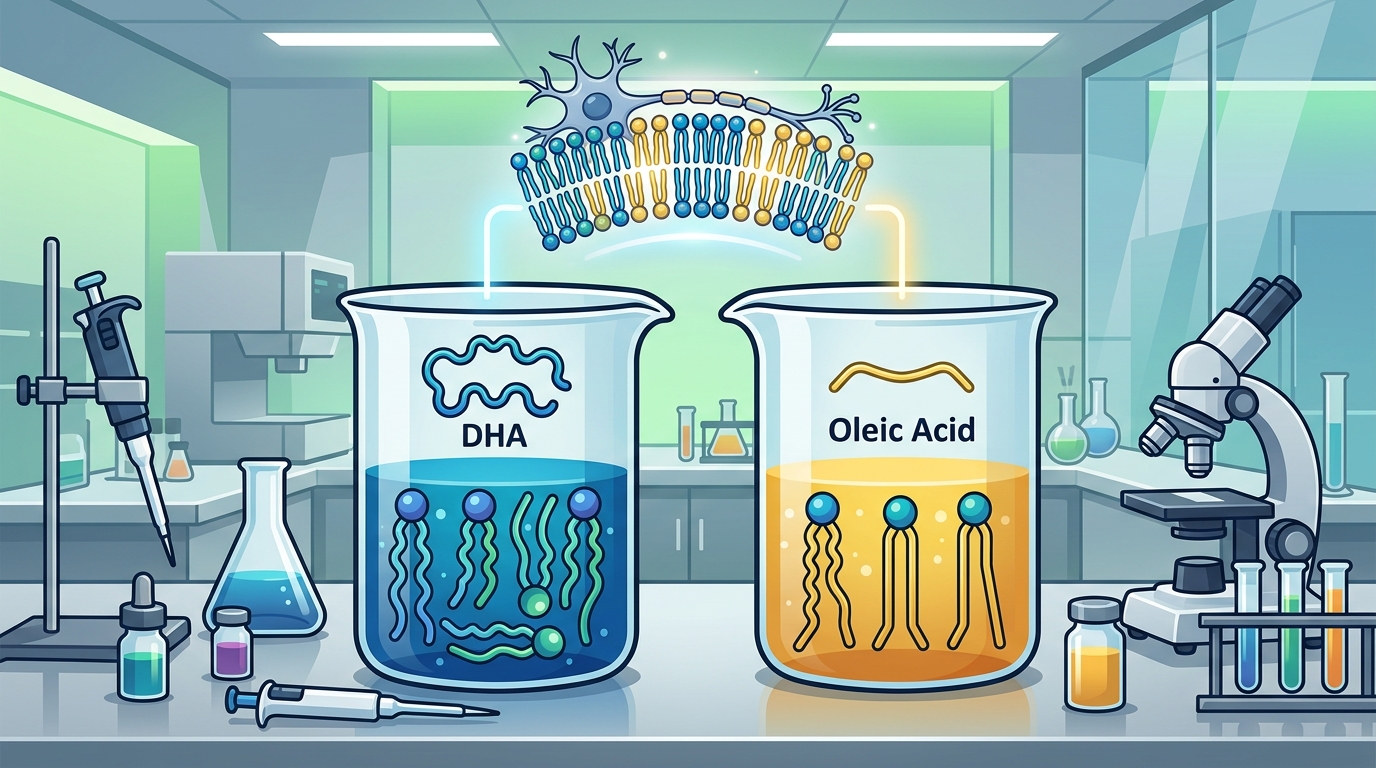
Docosahexaenoic acid (DHA) is an omega-3 fatty acid that is perhaps the most well-known lipid for brain health. It is a primary structural component of neuronal membranes. DHA is a polyunsaturated fatty acid that provides fluidity and flexibility to cell membranes. This fluidity is essential for the proper functioning of ion channels and receptors, which govern how neurons communicate.
DHA is particularly abundant in the grey matter of the brain. It supports synaptic plasticity, which is the brain's ability to adapt and form new connections. Without adequate DHA, neuronal membranes can become rigid, impairing signal transmission and cognitive processing speed. However, DHA is highly susceptible to oxidation. Because it contains multiple double bonds, it can easily be damaged by free radicals, leading to lipid peroxidation.
This is where the synergy with plasmalogens becomes critical. Plasmalogens protect DHA from oxidative degradation. Without sufficient plasmalogens, the DHA you consume may be destroyed before it can be incorporated into healthy cell membranes. This highlights why focusing on a single nutrient like DHA is often insufficient for long-term brain health.
The Role of Oleic Acid in Membrane Fluidity
Oleic acid is a monounsaturated omega-9 fatty acid. It is the primary component of olive oil and is found in many animal fats. Unlike DHA, oleic acid has a single double bond, making it much more stable and resistant to oxidation. Oleic acid is a monounsaturated fatty acid that enhances membrane stability and reduces inflammation.
In the context of brain health, oleic acid plays a supportive role. It helps maintain the structural integrity of cell membranes without the high oxidative risk associated with polyunsaturated fats. Some research suggests that oleic acid can cross the blood-brain barrier and influence the production of ceramides, which are important for neuronal signaling.
However, oleic acid cannot replace the unique functions of plasmalogens or DHA. It does not provide the same level of membrane fluidity required for rapid neuronal signaling, nor does it offer the same potent antioxidant protection. Instead, it serves as a stable foundation upon which more specialized lipids can operate. For a deeper dive into how different lipids interact, review the Prodrome Science articles.
The Plasmalogen Synthesis Connection
The relationship between DHA, oleic acid, and plasmalogens is not one of competition but of collaboration. Plasmalogen synthesis requires specific precursors and a healthy peroxisomal function. Peroxisomes are tiny organelles within cells that build the specialized ether bonds found in plasmalogens.
Research published in Nature Journals indicates that peroxisomal dysfunction is a key driver of plasmalogen deficiency. When peroxisomes fail, the body cannot produce enough plasmalogens, regardless of how much DHA or oleic acid is consumed. This is why supplementation with pre-formed plasmalogens, such as those found in Prodrome's plasmalogen products, is gaining traction in clinical settings.
Furthermore, the presence of adequate plasmalogens ensures that DHA remains intact within the membrane. Oleic acid, while stable, does not offer this protective capacity. Therefore, the most effective strategy for brain health involves supporting plasmalogen levels directly, rather than relying solely on precursor fatty acids like DHA or oleic acid.
Comparative Analysis of Lipid Functions
To clarify the distinct roles of these lipids, the following table summarizes their key characteristics and biological impacts.
| Lipid Type | Chemical Structure | Primary Brain Function | Oxidative Stability | Key Benefit |
|---|---|---|---|---|
| DHA | Polyunsaturated Omega-3 | Membrane fluidity and synaptic plasticity | Low (Highly susceptible to oxidation) | Supports cognitive processing speed |
| Oleic Acid | Monounsaturated Omega-9 | Membrane stability and inflammation reduction | High (Resistant to oxidation) | Provides structural foundation |
| Plasmalogens | Ether Phospholipid | Antioxidant defense and cellular signaling | High (Sacrificial antioxidant bond) | Protects DHA and supports longevity |
As shown above, each lipid plays a unique role. DHA drives function, oleic acid provides stability, and plasmalogens offer protection. Ignoring any one of these components can compromise the entire system.
Key Takeaways
- Plasmalogens Decline with Age: Levels drop significantly after age 50, correlating with increased risk of neurodegeneration.
- DHA Requires Protection: DHA is essential for brain structure but is easily destroyed by oxidative stress without plasmalogen support.
- Oleic Acid is Stable: Oleic acid offers membrane stability but lacks the specific antioxidant and signaling roles of plasmalogens.
- Synergy is Critical: Optimal brain health requires a balance of fluidity (DHA), stability (Oleic), and protection (Plasmalogens).
- Peroxisomal Health: The body's ability to produce plasmalogens depends on healthy peroxisomes, which can be compromised by aging and toxins.
- Testing Matters: Blood tests like ProdromeScan can measure plasmalogen levels to guide personalized supplementation.
- Direct Supplementation: Pre-formed plasmalogens bypass the need for complex synthesis, offering a more direct route to cellular support.
Frequently Asked Questions
Is DHA better than oleic acid for brain health?
DHA is more directly involved in neuronal structure and signaling, making it critical for cognitive function. However, oleic acid provides necessary stability. Neither is "better" in isolation; they serve different purposes.
Can I replace plasmalogens with DHA?
No. Plasmalogens act as antioxidants that protect DHA from damage. Without plasmalogens, DHA is less effective and more prone to oxidation. They work synergistically, not as substitutes.
What is the difference between plasmalogens and phospholipids?
Plasmalogens are a specific type of phospholipid with an ether bond at the sn-1 position. This unique structure gives them antioxidant properties that standard phospholipids lack.
How do I know if I have low plasmalogen levels?
Symptoms may include cognitive decline, fatigue, or increased oxidative stress markers. A blood test, such as the ProdromeScan, can provide precise measurements of your plasmalogen status.
Are plasmalogen supplements safe?
Plasmalogens are naturally occurring lipids in the human body. Supplementation is generally considered safe and is used to support cellular health. Always consult a healthcare provider before starting new supplements.
Does oleic acid help with inflammation?
Yes, oleic acid is known for its anti-inflammatory properties. It helps maintain membrane integrity and can reduce the production of pro-inflammatory cytokines.
Why are plasmalogens called the "missing link" in brain health?
Because they protect the very fats (like DHA) that build the brain, plasmalogens are essential for the longevity and function of neuronal membranes. Their decline is a key factor in aging-related cognitive loss.
Optimize Your Lipid Profile
Understanding the distinct roles of DHA, oleic acid, and plasmalogens is the first step toward optimizing brain health. While DHA and oleic acid are important building blocks, plasmalogens provide the protective framework that allows them to function effectively. As research continues to uncover the complexities of lipid biology, it becomes clear that a holistic approach is necessary.
If you are interested in exploring how plasmalogens can support your cellular health, visit the Prodrome Science Shop to learn more about their plasmalogen products. For personalized guidance, consider consulting with a health professional who understands lipid science.