

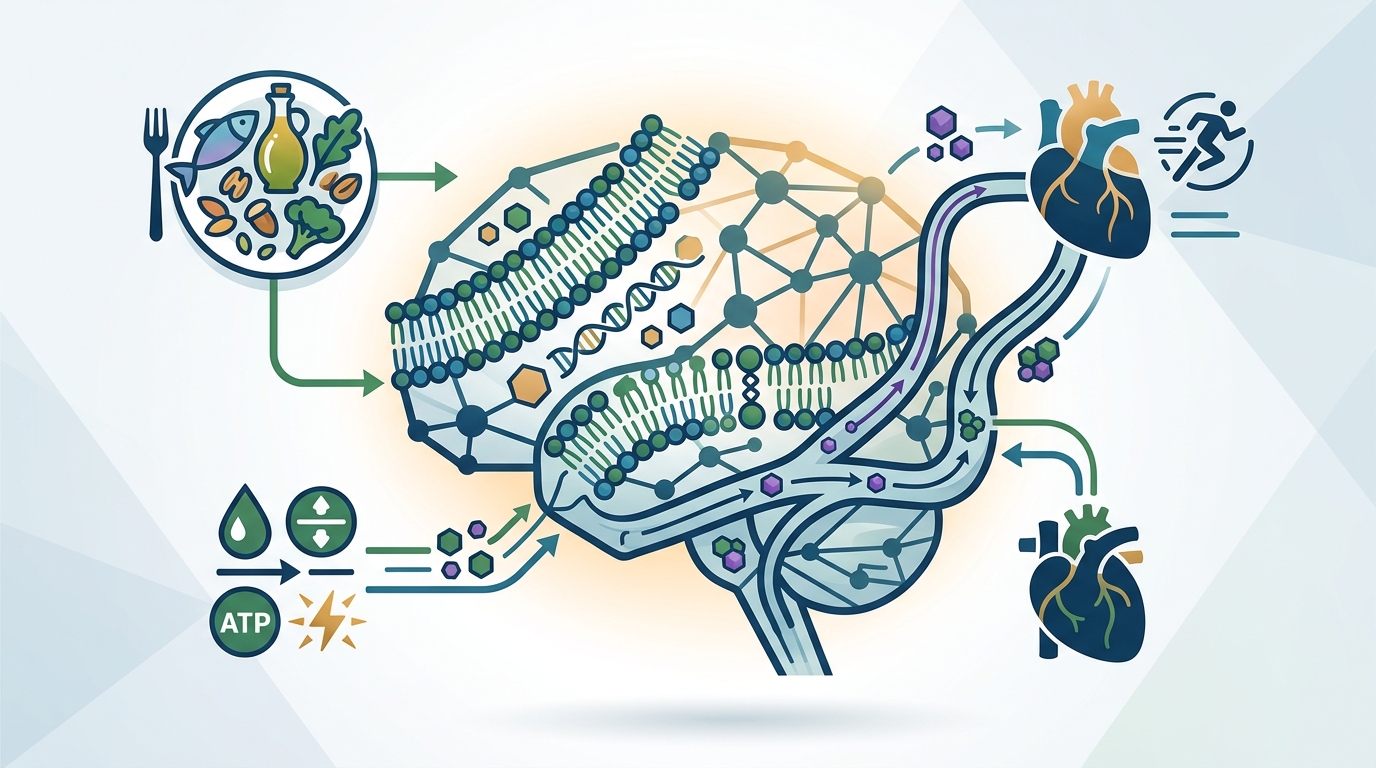
Supporting lipid biology in the aging brain involves maintaining healthy cell membrane structure, optimizing blood flow, and managing metabolic health. This guide covers the Mediterranean diet, vascular health, exercise, and metabolic management. It explains how these lifestyle factors interact with specialized lipids like plasmalogens to support cognitive resilience and cellular integrity.
The Mediterranean Diet and Brain Lipids
The Mediterranean diet is a dietary pattern rich in vegetables, fruits, whole grains, legumes, and healthy fats like olive oil. This diet provides the raw materials necessary for synthesizing complex lipids in the brain. Brain tissue is approximately 60% fat by dry weight, making dietary lipid intake critical for structural maintenance.
Omega-3 Fatty Acids and Membrane Fluidity
Docosahexaenoic acid (DHA) is a long-chain omega-3 fatty acid that is a primary component of neuronal membranes. DHA helps maintain membrane fluidity, which is essential for efficient signal transmission between neurons. As we age, the brain's ability to synthesize DHA from shorter-chain precursors often declines, making dietary intake more important.
Phospholipid Sources
Phospholipids are the building blocks of cell membranes. Egg yolks are a natural source of phosphatidylcholine, a key phospholipid. While plant-based sources exist, animal-derived phospholipids often have a fatty acid profile that more closely matches human brain tissue. Incorporating these sources supports the structural integrity of cellular membranes.
Blood Vessel Health and Membrane Integrity
Blood vessel health is the delivery system for all nutrients reaching the brain. Healthy endothelial function ensures that lipids, oxygen, and other nutrients can efficiently cross the blood-brain barrier. The integrity of the vascular system directly influences the lipid composition of brain tissue.
Endothelial Function and Lipid Transport
The endothelium is the inner lining of blood vessels. It plays a crucial role in regulating the transport of lipids into the brain. When vascular health declines, the efficiency of lipid transport may decrease, potentially affecting the maintenance of specialized lipids like plasmalogens in neural tissue.
Plasmalogens and Vascular Support
Plasmalogens are a unique class of ether phospholipids found in high concentrations in brain cell membranes. They are particularly abundant in white matter and myelin. These lipids help maintain membrane stability and may support the structural environment required for efficient neural communication. Learn more about plasmalogens to understand their role in cellular health.
Exercise and Lipid Metabolism
Regular physical activity is a powerful modulator of lipid metabolism. Exercise influences the expression of genes involved in lipid synthesis and transport. It also improves insulin sensitivity, which is vital for maintaining healthy cellular energy levels.
Aerobic Exercise and Brain Blood Flow
Aerobic exercise increases blood flow to the brain, enhancing the delivery of nutrients and oxygen. This increased perfusion supports the metabolic demands of neurons, which are highly energy-intensive. Consistent aerobic activity helps maintain the structural and functional health of brain tissue.
Resistance Training and Metabolic Health
Resistance training builds muscle mass, which is a major site for glucose disposal. By improving metabolic health, resistance training helps maintain stable energy levels for the brain. This supports the overall cellular environment in which lipid metabolism occurs.
Metabolic Management and Cellular Energy
Metabolic management involves maintaining stable blood sugar levels and healthy mitochondrial function. The brain relies heavily on glucose for energy, but it also utilizes ketones and fatty acids under certain conditions. Efficient metabolic processes ensure that cells have the energy they need to maintain their structural integrity.
Mitochondrial Function and Lipid Synthesis
Mitochondria are the powerhouses of the cell, and they are also involved in the synthesis of certain lipids. Healthy mitochondria support the production of plasmalogens and other specialized lipids. Maintaining mitochondrial health is therefore a key component of supporting lipid biology in the brain.
Monitoring Lipid Health
Understanding your individual lipid profile can provide insights into your cellular health. ProdromeScan is a biomarker test that measures various aspects of lipid health, including plasmalogen levels. This tool helps individuals and practitioners understand where to focus their efforts in supporting cellular integrity.
Key Takeaways
- The Mediterranean diet provides essential fatty acids and phospholipids for brain membrane maintenance.
- Healthy blood vessels ensure efficient delivery of lipids and nutrients to the brain.
- Regular exercise improves lipid metabolism and brain blood flow.
- Metabolic management supports mitochondrial function and lipid synthesis.
- Plasmalogens are specialized lipids that help maintain membrane stability in the brain.
- Monitoring lipid health can provide personalized insights for supporting cellular integrity.
- Combining lifestyle factors with targeted nutrition offers a comprehensive approach to brain health.
Frequently Asked Questions
What are plasmalogens?
Plasmalogens are a unique class of ether phospholipids found in high concentrations in brain cell membranes. They help maintain membrane stability and support cellular communication.
How does the Mediterranean diet support brain health?
The Mediterranean diet provides healthy fats, antioxidants, and anti-inflammatory compounds that support vascular health and lipid metabolism in the brain.
Can exercise improve lipid levels in the brain?
Yes, regular exercise improves blood flow to the brain and enhances the efficiency of lipid transport and metabolism.
What is the role of phosphatidylcholine in the brain?
Phosphatidylcholine is a key phospholipid that builds cell membranes and supports neurotransmitter production in the brain.
How can I monitor my lipid health?
You can use biomarker tests like ProdromeScan to measure various aspects of lipid health, including plasmalogen levels.
Are plasmalogen supplements safe?
Plasmalogen supplements are generally well-tolerated. However, it is always recommended to consult with a healthcare professional before starting any new supplement regimen.
Conclusion
Supporting lipid biology in the aging brain requires a holistic approach that includes diet, exercise, and metabolic management. By focusing on these key areas, you can help maintain the structural and functional integrity of your brain cells. Prodrome offers science-based supplements and tools to support this journey. Remember, these statements have not been evaluated by the Food and Drug Administration. This product is not intended to diagnose, treat, cure, or prevent any disease.