

How to Fix Plasmalogen Deficiency to Improve Cognitive Function
Plasmalogen deficiency is one of the most overlooked contributors to cognitive decline, yet research increasingly links low plasmalogen levels to poor memory, brain fog, and neurodegenerative conditions like Alzheimer's disease. The good news is that plasmalogen levels can be measured and restored through targeted strategies. In this guide, you will learn what plasmalogens are, why they decline, how to test for deficiency, and the most effective steps to rebuild your levels and support long-term brain health. Every recommendation here is rooted in published research and clinical-grade science.
What Are Plasmalogens and Why Do They Matter?
Plasmalogens are a specialized type of phospholipid found within cell membranes throughout the body. They are especially concentrated in the brain, heart, and lungs, where they support membrane structure, antioxidant defense, and cellular signaling.
In the brain, plasmalogens play a critical role in both gray matter and white matter. Gray matter plasmalogens support neurotransmitter release, receptor activity, and signaling between neurons. White matter plasmalogens maintain the myelin sheath, the protective insulation that enables efficient nerve conduction.
Research published in PMC confirms that plasmalogens are reduced in both the brain and blood of patients with Alzheimer's disease. People with high blood plasmalogen levels were found to be 80% less likely to experience dementia.
Signs and Causes of Plasmalogen Deficiency
Plasmalogen deficiency is a measurable decline in plasmalogen concentrations in blood and tissue. It does not happen overnight. Levels naturally decrease with age, and that decline accelerates under conditions of chronic oxidative stress, poor diet, and sedentary lifestyles.
Common Signs
- Brain fog and difficulty concentrating
- Memory lapses, especially short-term recall
- Fatigue and low mental energy
- Reduced coordination or balance
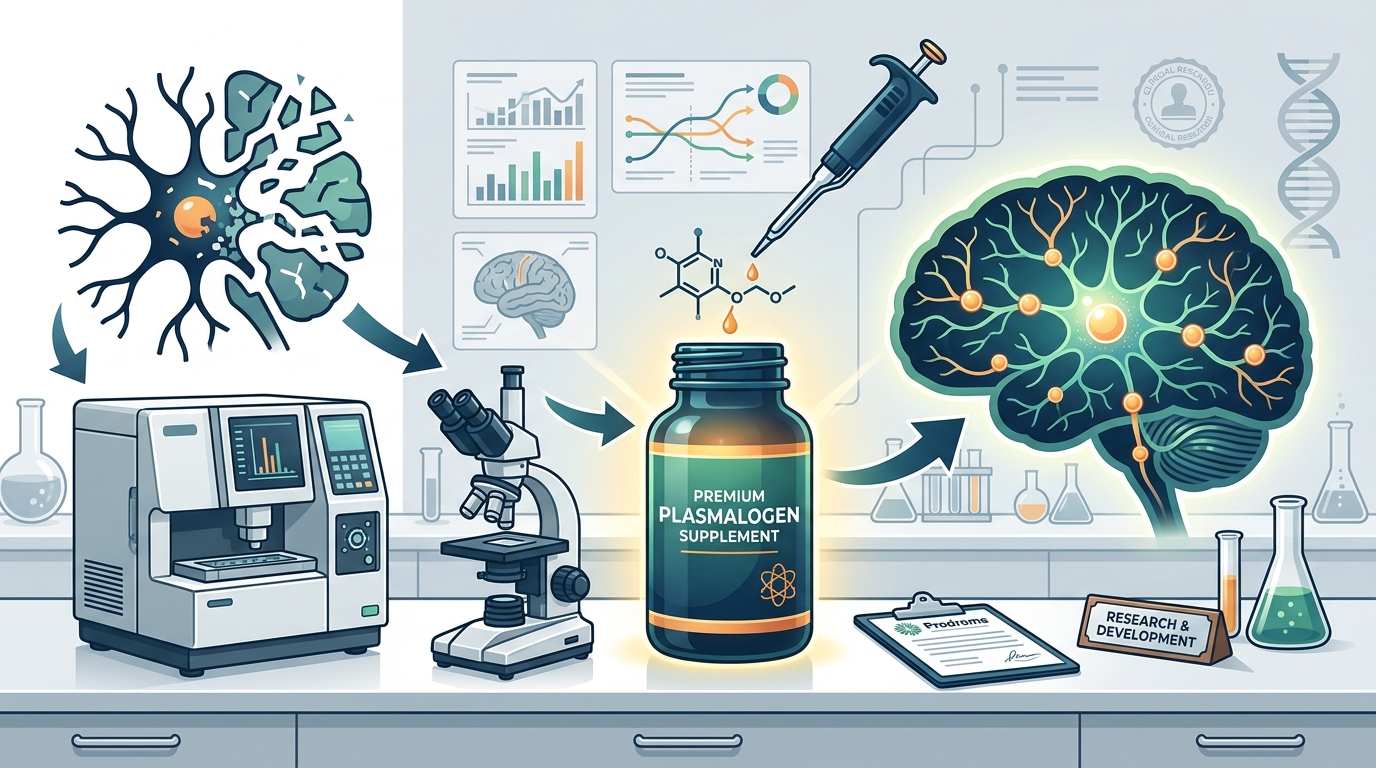
Key Causes
- Aging (levels drop progressively after age 40)
- Chronic inflammation and oxidative damage
- Peroxisomal dysfunction (plasmalogens are synthesized in peroxisomes)
- Nutrient-poor diets lacking DHA and omega-9 fatty acids
Circulating plasmalogen levels are decreased in older individuals and further decreased in those with Alzheimer's disease and mild cognitive impairment, according to research from Rowan University.
Step 1: Test Your Plasmalogen Levels
Before you can fix a deficiency, you need to confirm and quantify it. A lipidomic blood test is the most reliable way to measure plasmalogen status and identify which specific types are low.
The ProdromeScan blood test analyzes core phospholipids including plasmalogens, phosphatidylcholines, sphingomyelins, ceramides, and inflammation markers. It was developed by Dr. Dayan Goodenowe, a neuroscientist with over 30 years of lipid and metabolomic research.
Testing gives you a personalized baseline, helps determine which plasmalogen precursor supplement is right for you, and allows you to track progress over time. No guesswork involved.
Step 2: Use Targeted Plasmalogen Supplementation
Targeted plasmalogen supplementation is the most direct way to restore deficient levels. However, not all plasmalogen supplements are equal. The key factors are bioavailability, concentration, and whether the product delivers true plasmalogen precursors.
Omega-3 (DHA) Plasmalogens for Gray Matter
ProdromeNeuro is an omega-3 (DHA) plasmalogen precursor that targets gray matter in the brain, supporting neurons, synaptic function, and cognitive processes. DHA plasmalogens play a foundational role in cell membrane structure and signaling efficiency.
Omega-9 (Oleic Acid) Plasmalogens for White Matter
ProdromeGlia is an omega-9 plasmalogen precursor designed to support glial cell membranes, myelin, and white matter in the nervous system. Many practitioners pair it with ProdromeNeuro for comprehensive neural membrane support.
Clinical Evidence
A peer-reviewed study published in Frontiers in Cell and Developmental Biology found that targeted plasmalogen supplementation produced statistically significant improvements in cognition and mobility in cognitively impaired individuals. Oxidative stress biomarkers also improved and correlated with higher DHA-plasmalogen levels.
Step 3: Support Plasmalogens With Lifestyle Changes
Supplementation works best alongside lifestyle practices that protect and promote plasmalogen biosynthesis. These strategies support the peroxisomes, the cellular organelles responsible for manufacturing plasmalogens.
- Exercise regularly: Physical activity supports peroxisomal health and has been linked to higher plasmalogen levels.
- Eat DHA-rich foods: Fatty fish, algae-based omega-3 sources, and egg yolks provide building blocks for plasmalogen synthesis.
- Reduce chronic inflammation: Anti-inflammatory diets and stress management protect existing plasmalogens from oxidative degradation.
- Consider complementary nutrients: ProdromeBDMC curcuminoid supplements offer potent anti-inflammatory support that can complement a plasmalogen protocol.
Comparing Plasmalogen Supplement Types
| Feature | ProdromeNeuro (Omega-3) | ProdromeGlia (Omega-9) | Generic Scallop-Derived |
|---|---|---|---|
| Target Area | Gray matter, neurons, synapses | White matter, myelin, glial cells | General |
| Plasmalogen Per Serving | 900 mg | 900 mg | Typically 1-2 mg |
| Precursor Format | Yes (optimized for absorption) | Yes (optimized for absorption) | No (intact plasmalogens) |
| Vegan Option | Oil format is vegan | Oil format is vegan | No |
| Clinically Studied | Yes | Yes | Limited |
As explained on the Prodrome Science blog, most plasmalogen supplements on the market are not true plasmalogens and lack the concentration needed to meaningfully restore levels.
Key Takeaways
- Plasmalogen deficiency is a measurable condition linked to cognitive decline, dementia risk, and aging.
- Testing with a lipidomic panel like ProdromeScan provides a personalized baseline for action.
- Targeted supplementation with precursor-based formulas like ProdromeNeuro and ProdromeGlia is the most effective restoration strategy.
- Omega-3 DHA plasmalogens target brain gray matter while omega-9 plasmalogens target white matter and myelin.
- Peer-reviewed research shows statistically significant cognitive improvements from targeted plasmalogen supplementation.
- Lifestyle factors such as exercise, DHA-rich nutrition, and inflammation control support natural plasmalogen biosynthesis.
- Not all plasmalogen supplements deliver adequate dosing or true precursor formats.
Frequently Asked Questions
What is a plasmalogen deficiency?
Plasmalogen deficiency is a condition where the concentration of plasmalogens in blood and tissue falls below optimal levels. It is associated with aging, neurodegenerative disease, and increased oxidative stress.
How do I know if I have low plasmalogen levels?
The most reliable method is a blood-based lipidomic test such as the ProdromeScan. Symptoms like brain fog, memory issues, and fatigue may also suggest low levels.
Can plasmalogen supplements really improve cognition?
Yes. A study in Frontiers in Cell and Developmental Biology (2022) reported statistically significant improvements in cognition and mobility following targeted plasmalogen supplementation.
What is the difference between ProdromeNeuro and ProdromeGlia?
ProdromeNeuro is an omega-3 DHA plasmalogen precursor targeting brain gray matter and neurons. ProdromeGlia is an omega-9 oleic acid precursor targeting white matter, myelin, and glial cells. They are often used together.
Are Prodrome plasmalogen supplements vegan?
The oil formats of ProdromeNeuro and ProdromeGlia are vegan. The softgel capsules contain gelatin and are not vegan.
How long does it take to restore plasmalogen levels?
Individual results vary. Retesting with ProdromeScan after a supplementation period helps track measurable changes. Many practitioners recommend consistent daily use alongside a healthy lifestyle.
Do diet and exercise affect plasmalogen levels?
Yes. Exercise, DHA-rich nutrition, fasting, and anti-inflammatory diets all support the peroxisomal pathways responsible for plasmalogen biosynthesis.
Who founded Prodrome Science?
Prodrome Science was founded by Dr. Dayan Goodenowe, a neuroscientist and synthetic organic biochemist whose research spans over 30 years in lipid metabolism and brain health.
Your Next Step
If you suspect plasmalogen deficiency may be affecting your cognitive health, start with data. Order a ProdromeScan blood test to measure your current levels, then explore ProdromeNeuro and ProdromeGlia to begin a targeted restoration plan backed by real science.