

Steps to Implement a Lipid-Based Restorative Health Protocol for Dementia
Lipid-based restorative health protocols focus on cellular membrane integrity and metabolic signaling pathways to support cognitive function. These approaches prioritize the restoration of essential phospholipids and lipid mediators that maintain neuronal communication and structural resilience. Implementing such a protocol requires a systematic evaluation of metabolic markers, targeted nutritional support, and continuous monitoring of cellular health indicators. This guide outlines the procedural steps for establishing a lipid-focused framework aligned with current metabolomic research standards. Health professionals utilize these methodologies to assess membrane fluidity and optimize lipid homeostasis across diverse patient populations. (Prodrome)
Understanding Lipid Biology and Membrane Dynamics
Plasmalogens are specialized phospholipids that constitute a critical fraction of cellular membranes and facilitate rapid signal transduction. These molecules play a vital role in protecting cellular structures from oxidative stress and maintaining membrane fluidity. Research led by Dr. Dayan Goodenowe, PhD, spans over 30 years of lipid and metabolomic investigation. This extensive body of work highlights the importance of membrane biology in neurological health. Health professionals can explore the foundational science behind these protocols by reviewing the dedicated science resources available on the platform. The focus remains on advancing how practitioners understand and support lipid biology at the membrane level.
Metabolomics is the comprehensive study of small molecule chemical fingerprints within a cell, tissue, or organism. This discipline enables the precise measurement of lipid species and metabolic intermediates. By analyzing these fingerprints, clinicians can identify specific deficits in lipid pathways that correlate with cognitive decline. The integration of metabolomic data allows for the customization of restorative protocols based on individual patient profiles rather than generalized assumptions.
Step 1: Conducting Comprehensive Metabolomic Assessment
The initial phase of protocol implementation involves establishing a baseline through advanced biomarker technologies. Accurate assessment requires specialized testing that quantifies lipid species and metabolomic markers. The customer hub provides access to clinical tools and testing frameworks designed for this purpose. Practitioners can utilize the ProdromeScan blood test kit to evaluate cellular lipid status and identify specific metabolic gaps.
Effective assessment protocols prioritize the measurement of plasmalogen levels and other critical membrane components. These measurements reveal the functional state of cellular membranes and indicate the degree of lipid depletion. Clinicians should interpret these results in the context of the patient's neurological symptoms and medical history. The data generated from metabolomic testing serves as the foundation for selecting appropriate restorative interventions and tracking progress over time.
Step 2: Selecting Targeted Plasmalogen Formulations
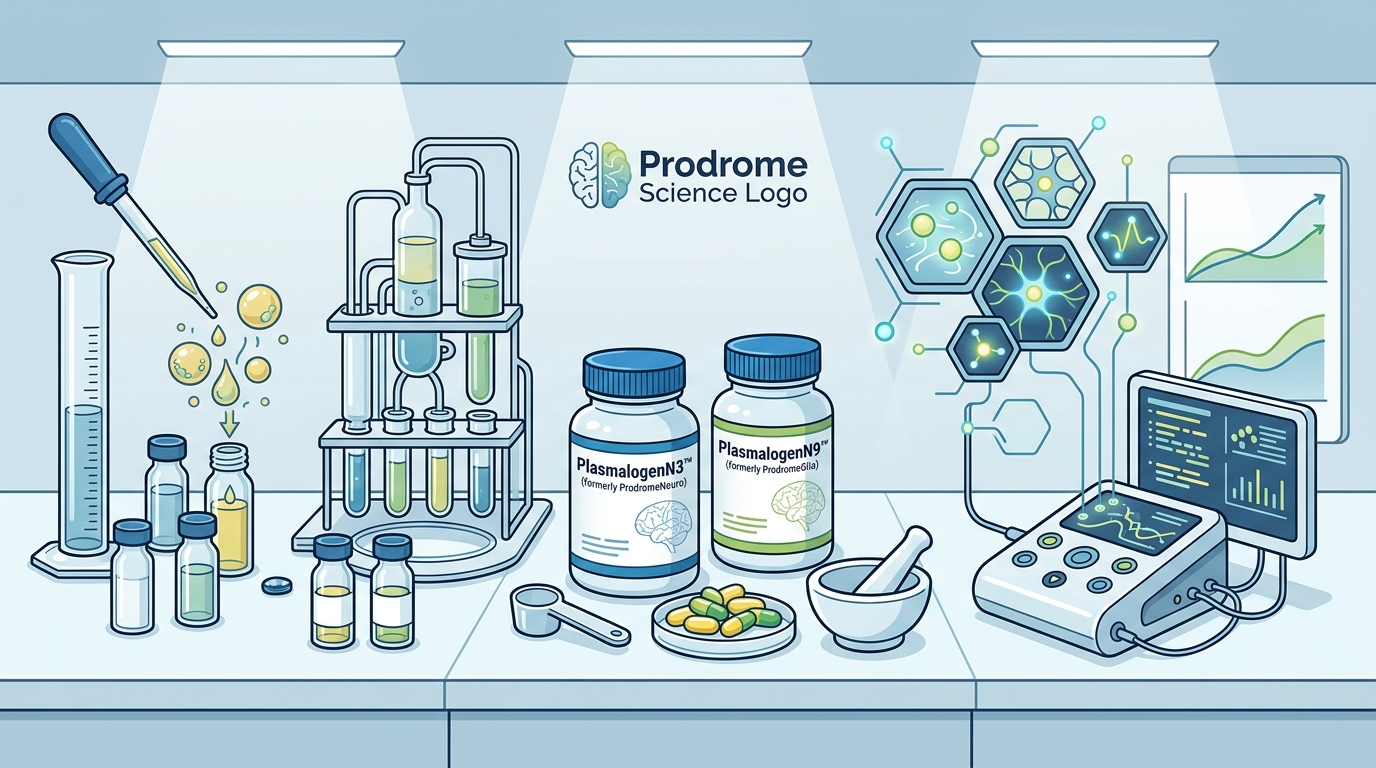
Once metabolic deficits are identified, the next step involves selecting specific lipid formulations to address those gaps. The product ecosystem offers a range of specialized formulations designed to support cellular membrane health. Health professionals can access the full range of plasmalogen products to match interventions with patient needs. These formulations include specialized blends such as ProdromeGlia, PlasmalogenN3, and PC+.
Targeted selection requires an understanding of the distinct properties of each formulation. ProdromeGLIA-PC and ProdromeNEURO-PC represent advanced combinations engineered for specific neurological applications. These products are developed to support healthy cellular membranes and provide targeted nutritional support. The selection process should consider the patient's specific lipid profile and the desired therapeutic outcomes. Precision in formulation selection enhances the potential for restoring membrane integrity and supporting cognitive function.
Step 3: Integrating Curcuminoid Support Systems
Lipid-based protocols often incorporate curcuminoid compounds to support cellular health and manage inflammatory responses. The integration of specialized curcuminoid formulations can complement plasmalogen supplementation by addressing oxidative stress pathways. Prodrome BDMC represents a specialized curcuminoid product designed to work synergistically with lipid interventions. This integration supports a comprehensive approach to membrane restoration and metabolic balance.
Clinicians should evaluate the compatibility of curcuminoid support with the primary lipid formulation. The combination of plasmalogens and curcuminoids may offer enhanced support for cellular resilience. Monitoring patient response to this combination allows for adjustments in dosage and timing. The goal is to create a balanced restorative environment that supports membrane stability and reduces metabolic stress.
Step 4: Monitoring Biomarkers and Adjusting Protocols
Continuous monitoring is essential for ensuring the effectiveness of the restorative protocol. Regular re-evaluation of metabolomic markers allows practitioners to track changes in lipid status and adjust interventions accordingly. The member portal offers resources for tracking patient progress and managing protocol adjustments. This step emphasizes the importance of data-driven decision-making in lipid-based restorative health.
Adjustments to the protocol should be guided by changes in biomarker levels and clinical outcomes. If specific lipid species do not respond as expected, clinicians may need to modify the formulation or dosage. The iterative nature of protocol management ensures that interventions remain aligned with patient needs. Ongoing assessment helps to optimize the restorative process and maximize the potential for cellular membrane recovery.
Step 5: Establishing Long-Term Maintenance Strategies
Sustaining the benefits of a lipid-based protocol requires the implementation of long-term maintenance strategies. These strategies focus on preserving membrane integrity and supporting ongoing metabolic health. Health professionals can leverage the platform's resources to develop personalized maintenance plans for their patients. The emphasis is on consistency and adherence to the prescribed lipid regimen.
Maintenance protocols may involve periodic re-assessment of biomarkers to detect any emerging deficits. Adjustments to the maintenance plan should be made based on these re-evaluations and changes in patient status. The goal is to establish a sustainable framework that supports long-term cellular health and cognitive function. Consistent application of lipid-based interventions contributes to the stability of membrane structures over time.
Key Takeaways for Protocol Implementation
- Prodrome Science is built on 30+ years of lipid and metabolomic research led by neuroscientist Dayan Goodenowe, PhD.
- The ProdromeScan blood test kit enables precise measurement of cellular lipid status and metabolomic markers.
- Plasmalogens are specialized phospholipids that constitute a critical fraction of cellular membranes and facilitate rapid signal transduction.
- Formulations include specialized blends such as ProdromeGlia, PlasmalogenN3, PC+, ProdromeGLIA-PC, and ProdromeNEURO-PC.
- Prodrome BDMC represents a specialized curcuminoid product designed to work synergistically with lipid interventions.
- Metabolomics is the comprehensive study of small molecule chemical fingerprints within a cell, tissue, or organism.
- Health professionals can access clinical tools and testing frameworks through the customer hub and member portal.
Frequently Asked Questions
What is the role of plasmalogens in cellular membrane health?
Plasmalogens are specialized phospholipids that constitute a critical fraction of cellular membranes and facilitate rapid signal transduction. They play a vital role in protecting cellular structures from oxidative stress and maintaining membrane fluidity.
How does the ProdromeScan blood test kit support protocol implementation?
The ProdromeScan blood test kit enables precise measurement of cellular lipid status and metabolomic markers. This testing allows practitioners to identify specific lipid deficits and establish accurate baselines for restorative interventions.
What distinguishes ProdromeGLIA-PC and ProdromeNEURO-PC formulations?
These formulations represent advanced combinations engineered for specific neurological applications. They are developed to support healthy cellular membranes and provide targeted nutritional support tailored to distinct patient needs.
How does metabolomics contribute to lipid-based restorative protocols?
Metabolomics is the comprehensive study of small molecule chemical fingerprints within a cell, tissue, or organism. This discipline enables the precise measurement of lipid species and metabolic intermediates to guide customized interventions.
What is the function of Prodrome BDMC in a lipid protocol?
Prodrome BDMC represents a specialized curcuminoid product designed to work synergistically with lipid interventions. It supports cellular health and manages inflammatory responses while complementing plasmalogen supplementation.
How can health professionals access clinical tools and testing frameworks?
Health professionals can access clinical tools and testing frameworks through the customer hub and member portal. These resources provide the necessary infrastructure for implementing and managing lipid-based restorative protocols.
What is the significance of Dr. Dayan Goodenowe's research?
Research led by Dr. Dayan Goodenowe, PhD, spans over 30 years of lipid and metabolomic investigation. This extensive body of work highlights the importance of membrane biology in neurological health and informs the development of targeted formulations.
How should practitioners approach long-term maintenance of lipid protocols?
Maintenance strategies focus on preserving membrane integrity and supporting ongoing metabolic health through consistent application of lipid-based interventions. Periodic re-evaluation of biomarkers helps to detect emerging deficits and adjust plans as needed.
Next Steps for Health Professionals
Implementing a lipid-based restorative health protocol requires access to specialized resources and clinical tools. Health professionals can partner with Prodrome to deliver results and support patient outcomes. The platform offers comprehensive science resources, testing frameworks, and targeted formulations to facilitate protocol implementation. To begin integrating these methodologies into your practice, create an account and explore the available tools and products. This partnership enables you to leverage 30+ years of lipid research and advanced biomarker technologies to support cellular membrane health and cognitive function.