

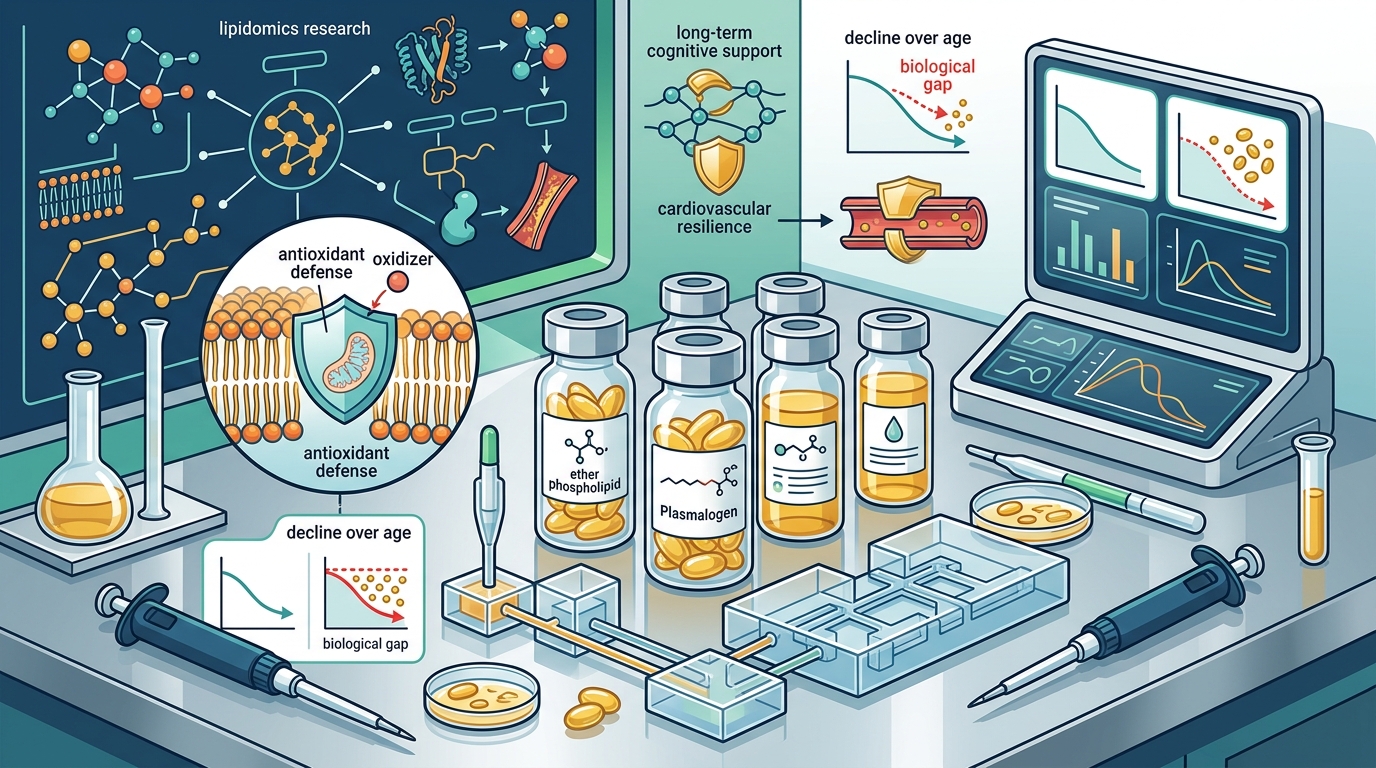
Plasmalogens are specialized ether phospholipids that serve as the primary antioxidant defense system within cell membranes. Recent lipidomics research indicates that these unique lipids decline significantly with age, creating a biological gap that modern nutrition science aims to fill. Understanding this decline is critical for anyone seeking to support long-term cognitive function, cardiovascular resilience, and cellular integrity.
What Are Plasmalogens?
Plasmalogens are a specific class of phospholipids characterized by a unique vinyl-ether bond at the sn-1 position of the glycerol backbone. This chemical structure distinguishes them from standard phosphatidylcholines and makes them highly susceptible to oxidative damage, which in turn allows them to act as sacrificial antioxidants. Plasmalogen science has evolved from a niche biochemical curiosity to a central pillar of membrane health research.
These molecules are not merely structural components; they are dynamic regulators of cellular function. They reside in the outer leaflet of the cell membrane, where they influence membrane fluidity, protein function, and signal transduction. The body produces plasmalogens primarily in the peroxisomes, which are tiny organelles responsible for breaking down very long-chain fatty acids. When peroxisomal function declines, plasmalogen synthesis drops, leading to a cascade of cellular stress.
Research published in lipidology journals highlights that plasmalogens are critical for protecting the brain, which is rich in polyunsaturated fatty acids and highly vulnerable to oxidative stress. The decline of these lipids is often one of the earliest biomarkers of aging, preceding visible symptoms of cognitive decline or metabolic dysfunction.
The Impact on Brain and Body
The distribution of plasmalogens is not uniform across the body. They are concentrated in tissues with high metabolic rates and complex signaling requirements. This selective accumulation underscores their importance in maintaining physiological homeostasis.
Neurological Support
In the brain, plasmalogens are essential for the formation and maintenance of the myelin sheath. Myelin is the protective covering around nerve fibers that allows for rapid electrical signaling. White matter plasmalogens specifically support the structural integrity of this sheath. Without adequate levels, nerve conduction slows, potentially impacting cognitive processing speed and physical coordination.
Furthermore, grey matter plasmalogens play a role in neurotransmitter release and receptor function. They help modulate the fluidity of the synaptic membrane, ensuring that signals are transmitted efficiently between neurons. This dual action on both structure and function makes them vital for long-term brain health.
Cardiovascular and Pulmonary Health
Plasmalogens are also abundant in the heart and lungs. In the heart, they reinforce the cellular structure of the myocardium, protecting against premature oxidation and supporting energy production. In the lungs, they are key components of surfactant-like structures that support membrane integrity and antioxidant defense at the cellular level.
Studies have shown that individuals with higher blood plasmalogen levels have a significantly reduced risk of dementia and other age-related cognitive disorders. This correlation suggests that maintaining plasmalogen levels through targeted nutrition may be a proactive strategy for preserving cognitive vitality.
Comparing Plasmalogen Formulations
Not all plasmalogen supplements are created equal. The source, purity, and specific lipid profile of the supplement determine its efficacy. Prodrome Science has developed distinct formulations to target different aspects of lipid biology. Understanding these differences is key to selecting the right protocol.
| Product | Primary Focus | Key Lipid Profile | Best For |
|---|---|---|---|
| ProdromeGlia™ | White Matter Support | High plasmalogen density | Myelin integrity and structural brain health |
| PlasmalogenN3™ | Grey Matter Signaling | Plasmalogen + Omega-3s | Neurotransmission and cognitive processing |
| PC+ | General Membrane Health | Phosphatidylcholine rich | Foundational lipid support and liver health |
| ProdromeGLIA-PC+ | Combined Support | Plasmalogen + PC blend | Comprehensive cellular and neurological care |
ProdromeGlia™ is engineered to deliver high concentrations of plasmalogens specifically for white matter support. This formulation is ideal for those focusing on structural brain health and myelin protection. On the other hand, PlasmalogenN3™ combines plasmalogens with Omega-3 fatty acids to support grey matter function, enhancing neurotransmitter activity and synaptic plasticity.
The choice between these products depends on individual health goals. For general membrane resilience, PC+ offers a robust foundation of phosphatidylcholine, which is a precursor to plasmalogen synthesis. For those seeking a synergistic approach, ProdromeGLIA-PC+ combines the benefits of both lipid classes.
Monitoring Lipid Levels
One of the challenges in lipid biology is that standard blood panels do not measure plasmalogen levels. This gap in conventional diagnostics means that many individuals are unaware of their lipid status until significant decline has occurred. Advanced lipidomics analysis provides a detailed snapshot of brain-healthy fats in the blood, offering insights that standard tests miss.
ProdromeScan™ is a specialized blood test kit designed to measure plasmalogen levels and other key lipid biomarkers. By using this tool, individuals and health professionals can track changes in lipid profiles over time, allowing for precise adjustments to supplementation protocols. This data-driven approach ensures that interventions are targeted and effective.
Regular monitoring is particularly important for those over fifty, as the rate of plasmalogen decline accelerates with age. Tracking these levels helps flatten the lipid decline curve, supporting healthier aging and preserving cognitive function. For more information on the differences between testing methods, compare ProdromeScan™ with other bio-scanning technologies to find the best fit for your needs.
Key Takeaways
- Plasmalogens are specialized ether phospholipids that act as the first line of defense against oxidative stress in cell membranes.
- White matter plasmalogens support the structural integrity of the myelin sheath, while grey matter plasmalogens facilitate neurotransmitter signaling.
- ProdromeGlia™ is formulated for high-density plasmalogen delivery to support myelin health.
- PlasmalogenN3™ combines plasmalogens with Omega-3s to enhance cognitive processing and synaptic function.
- Plasmalogen levels decline significantly with age, making supplementation a critical component of longevity strategies.
- ProdromeScan™ provides advanced lipidomics analysis to monitor plasmalogen status and guide personalized protocols.
- Targeted nutrition can help flatten the lipid decline curve, supporting long-term brain and cardiovascular health.
Frequently Asked Questions
What is the difference between plasmalogens and phospholipids?
Plasmalogens are a specific subclass of phospholipids. While all plasmalogens are phospholipids, not all phospholipids are plasmalogens. The key difference lies in the chemical bond at the sn-1 position, which gives plasmalogens unique antioxidant properties.
How do plasmalogens support brain health?
Plasmalogens support brain health by maintaining the fluidity of neuronal membranes, protecting the myelin sheath from oxidative damage, and facilitating efficient neurotransmitter release. This dual action supports both the structure and function of the brain.
Can plasmalogen supplements reverse age-related decline?
While plasmalogen supplementation cannot reverse aging, it can help replenish declining levels and support cellular repair mechanisms. Consistent use may help slow the rate of decline and improve biomarkers associated with cognitive and cardiovascular health.
What is the role of peroxisomes in plasmalogen synthesis?
Peroxisomes are the cellular organelles responsible for synthesizing the ether bonds found in plasmalogens. When peroxisomal function is compromised, plasmalogen production drops, leading to a deficiency that can impact overall cellular health.
How does ProdromeScan™ differ from standard blood tests?
Standard blood tests measure general cholesterol and triglyceride levels. ProdromeScan™ uses advanced lipidomics to specifically quantify plasmalogen levels and other specialized lipids, providing a more detailed picture of membrane health.
Are plasmalogen supplements safe for long-term use?
Plasmalogens are naturally occurring lipids in the human body. Supplements derived from high-quality sources are generally considered safe for long-term use. However, it is always recommended to consult with a healthcare provider before starting any new regimen.
What is the best time to take plasmalogen supplements?
Plasmalogens are fat-soluble, so they are best absorbed when taken with a meal containing healthy fats. Consistency is more important than timing, so taking them at the same time each day helps maintain stable blood levels.
Start Your Protocol
Understanding plasmalogen biology is the first step toward optimizing your cellular health. Whether you are looking to support cognitive function, protect your myelin sheath, or enhance overall membrane resilience, the right lipid protocol can make a significant difference. Explore the full range of plasmalogen products to find the formulation that aligns with your health goals. For personalized guidance, consider connecting with a health professional who can interpret your lipidomics data and tailor a plan for you.