

White matter makes up nearly half of your brain. It is the internal cabling system that connects every region, enabling coordinated thought, movement, and learning. The protective myelin sheath that wraps each nerve fiber is what keeps signals fast and accurate. When myelin breaks down due to aging, inflammation, or oxidative stress, the consequences range from brain fog and slower processing speed to serious cognitive decline. The good news is that your brain has a natural capacity for repair. This guide walks you through the science-backed strategies for supporting white matter health and restoring myelin integrity, from lifestyle changes to targeted nutritional supplementation.
What Is White Matter and Why Does It Matter?
White matter is the brain's high-speed communication network, made up of bundles of nerve fibers called axons wrapped in a fatty, insulating layer known as myelin. Myelin is a lipid-rich membrane that helps support efficient nerve signal conduction and overall nervous system function. Without healthy myelin, electrical signals slow down or stall entirely, impacting everything from memory to motor coordination.
A fatty material called myelin protects the fibers and gives white matter its color. White matter connects different brain regions, ensuring the integration of information needed for coordinated thought, movement, and learning. Damage to these pathways can have profound consequences for cognition and quality of life.
How Myelin Breaks Down With Age
Myelin is especially vulnerable to inflammation, oxidative stress, ischemia, and the natural aging process. After age 50, plasmalogen levels in the brain begin to decline notably, and this decline accelerates in individuals experiencing neurodegenerative conditions. White matter lesions visible on MRI become more common in people 60 and older and in those with cardiovascular disease.
Common Causes of Myelin Loss
| Factor | How It Affects Myelin |
|---|---|
| Aging | Gradual decline in plasmalogen levels and oligodendrocyte function |
| Chronic inflammation | Damages myelin-producing cells and inhibits repair |
| Oxidative stress | Attacks lipid-rich myelin membranes |
| Poor blood flow (ischemia) | Starves oligodendrocytes of oxygen and nutrients |
| Sedentary lifestyle | Reduces cerebral blood flow and neurotrophic factors |
| Nutrient deficiencies | Limits raw materials for myelin synthesis (B12, iron, zinc) |
Research from Mayo Clinic suggests that consuming high levels of saturated fat combined with a sedentary lifestyle can reduce myelin-forming cells, but exercise can help reverse the process.
Your Brain's Natural Remyelination Process
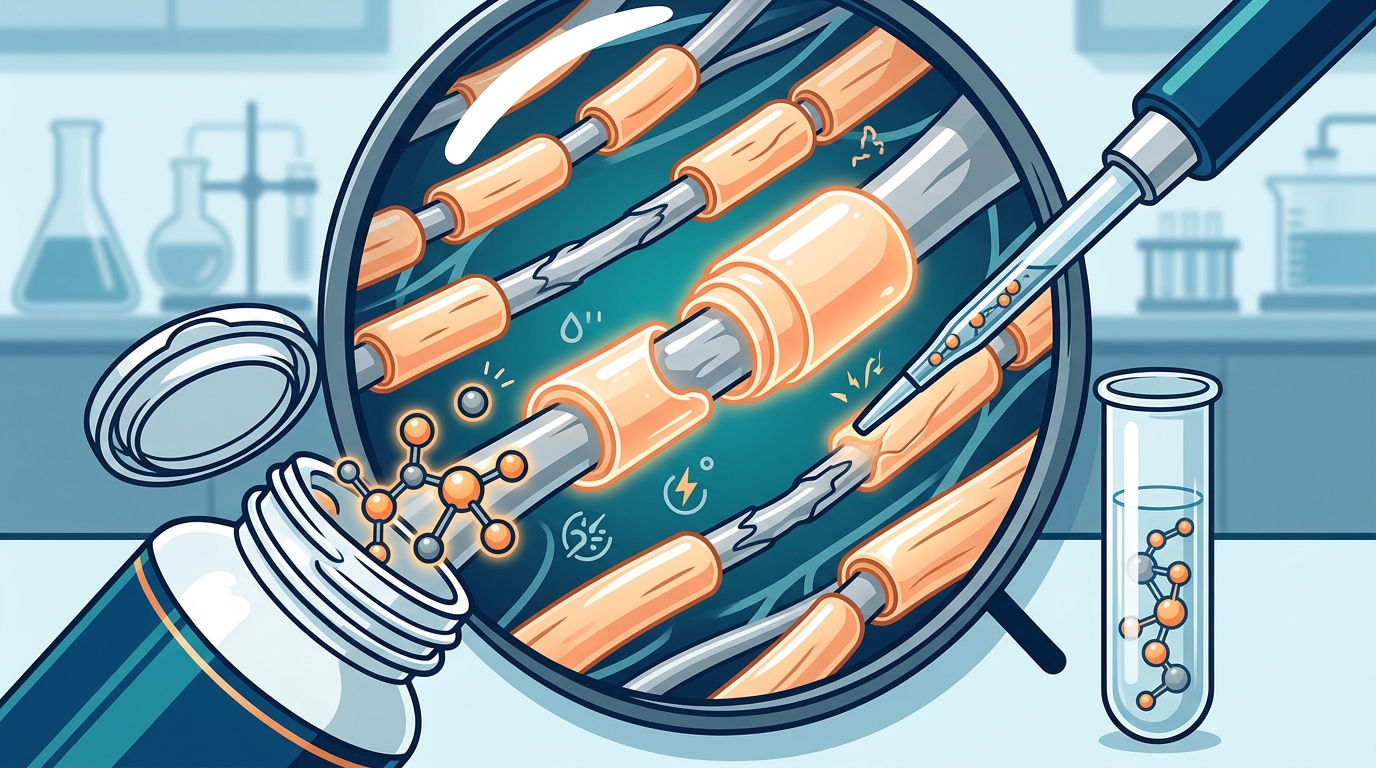
Remyelination is the biological process by which your brain repairs damaged myelin sheaths. The brain accomplishes this through oligodendrocyte precursor cells (OPCs), which differentiate into mature, myelin-producing oligodendrocytes. Research from Stanford's Wu Tsai Neurosciences Institute identified a key driver of myelination called SRF, and found that boosting SRF activity may promote myelination or even restore it during aging and disease.
However, in cases of chronic damage or persistent inflammation, the regenerative capacity of OPCs can become overwhelmed. That is why external strategies, from exercise to targeted nutrition, play a critical role in supporting your brain's restorative mechanisms.
Lifestyle Strategies That Support Myelin Repair
Exercise
Regular physical activity, especially aerobic exercise, supports white matter health by improving cerebral blood flow and releasing brain-derived neurotrophic factor (BDNF). Research shows that long-term exercise improves memory by increasing and restoring myelin, and running has been shown to delay the progression of demyelination and Alzheimer's disease.
Sleep
Sleep is not optional for myelin repair. Research has found that sleep increases myelination and the production of oligodendrocyte precursor cells. One study found that OPC production doubled in mice during sleep, particularly during deep REM sleep. Getting at least 7 hours of quality sleep each night supports this repair cycle.
Stress Management
Sustained stress places increased demands on glial cells that support myelin structure. Managing stress through mindfulness, adequate rest, and social connection helps preserve the cellular environment needed for remyelination.
Key Nutrients for Myelin and White Matter
The myelin sheath is composed of lipids and proteins, making specific nutrients essential for its maintenance and repair.
Critical Micronutrients
| Nutrient | Role in Myelin Support | Food Sources |
|---|---|---|
| Vitamin B12 | Deficiency causes demyelination; supports sheath formation | Meat, eggs, dairy |
| Iron | Required for oligodendrocyte function and myelin production | Red meat, spinach, lentils |
| Zinc | Needed for myelin proteins; deficiency reduces myelin formation | Oysters, seeds, nuts |
| Vitamin C | Supports collagen synthesis linked to myelin formation | Peppers, citrus, broccoli |
| Omega-3 fatty acids (DHA) | Structural component of neuronal membranes | Fatty fish, algae |
| Omega-9 plasmalogens | Essential for glial cell membranes and white matter | Supplementation required |
Diet alone is not an effective way to increase plasmalogen levels, as intact plasmalogens are broken down during digestion. That is why targeted plasmalogen supplementation has become a focus of advanced brain health strategies.
The Role of Plasmalogens in Myelin Integrity
Plasmalogens are a unique class of phospholipids that serve as essential structural components of cell membranes throughout the body, with especially high concentrations in the brain, heart, and nervous system. In the brain, ethanolamine plasmalogens are the most abundant phospholipids in white matter, and they provide both structural stability and protection against oxidative stress.
How Plasmalogens Protect Myelin
Research published on ResearchGate demonstrates that plasmalogen phospholipids protect internodal myelin from oxidative damage. Plasmalogens also contribute to membrane fluidity, cell signaling, and the body's anti-inflammatory response. As we age, particularly after age 50, plasmalogen levels decline significantly, and this reduction is even more pronounced in those with neurodegenerative conditions.
ProdromeGlia: Targeted White Matter Support
ProdromeGlia is a dietary supplement formulated as an omega-9 (oleic acid) plasmalogen precursor, developed to support plasmalogen availability in glial cell membranes that are prominent in brain white matter and myelin. White matter is largely made up of myelin, which requires high levels of omega-9 plasmalogens to function properly.
For comprehensive brain support, ProdromeNeuro (omega-3 DHA plasmalogen precursor) and ProdromeGlia are often used together. ProdromeNeuro targets gray matter and synaptic function, while ProdromeGlia focuses on white matter and myelin-rich tissues. This combination provides whole-brain plasmalogen support. You can learn more about how plasmalogens differ on the Prodrome Science blog.
To determine your individual plasmalogen status, Prodrome offers the ProdromeScan blood test, a specialized assessment developed by Dr. Dayan Goodenowe to measure your levels and guide supplementation decisions.
Key Takeaways
- White matter is your brain's communication network, and myelin is the protective sheath that keeps nerve signals fast and accurate.
- Myelin naturally degrades with age, inflammation, oxidative stress, and poor lifestyle habits.
- Your brain can repair myelin through remyelination, but this process needs support from sleep, exercise, and proper nutrition.
- Vitamins B12 and C, iron, zinc, and omega-3 fatty acids are all critical for myelin maintenance.
- Plasmalogens are the most abundant phospholipids in white matter and decline significantly with age.
- ProdromeGlia provides targeted omega-9 plasmalogen precursors specifically designed to support glial cells, white matter, and myelin integrity.
- Combining ProdromeGlia with ProdromeNeuro offers complementary support for both white and gray matter.
Frequently Asked Questions
What is myelin and why is it important?
Myelin is a fatty, protective sheath that wraps around nerve fibers. It insulates neurons so they can send electrical signals faster and more efficiently, which is essential for cognitive function, coordination, and overall nervous system health.
Can you naturally rebuild myelin?
Yes. Your brain has a natural capacity for remyelination through oligodendrocyte precursor cells. Supporting this process with exercise, quality sleep, proper nutrition, and plasmalogen supplementation can enhance myelin repair.
What foods help repair myelin?
Foods rich in vitamin B12, omega-3 fatty acids, iron, zinc, and vitamin C support myelin health. However, dietary plasmalogens are broken down during digestion, making supplementation with targeted precursors like ProdromeGlia a more effective strategy for restoring plasmalogen levels.
How does exercise support white matter health?
Aerobic exercise improves cerebral blood flow, increases BDNF production, and has been shown to increase myelination while delaying demyelination progression. Walking, running, and resistance training are all beneficial.
What are plasmalogens?
Plasmalogens are a vital class of phospholipids that are essential structural components of cell membranes, especially concentrated in the brain, heart, and nervous system. They support membrane integrity, cell signaling, and antioxidant defense.
Why do plasmalogen levels decline with age?
After age 50, the body's ability to produce plasmalogens decreases as part of the normal aging process. This decline is accelerated by chronic inflammation, oxidative stress, and neurodegenerative disease, which can overwhelm the body's repair systems.
What is the difference between ProdromeGlia and ProdromeNeuro?
ProdromeNeuro is an omega-3 (DHA) plasmalogen precursor that targets neuronal cell membranes in brain gray matter. ProdromeGlia is an omega-9 (oleic acid) plasmalogen precursor that targets glial cell membranes in brain white matter and myelin. They are designed to be used together for comprehensive nervous system support.
How can I test my plasmalogen levels?
Prodrome offers the ProdromeScan blood test, developed by Dr. Dayan Goodenowe, which measures your plasmalogen levels and helps guide personalized supplementation decisions. You can learn more on the Prodrome FAQ page.
Take the Next Step for Your Brain Health
Supporting white matter and myelin integrity is one of the most important investments you can make in long-term brain health. Start by optimizing your lifestyle with regular exercise, quality sleep, and nutrient-dense food. Then consider targeted plasmalogen support with ProdromeGlia to give your glial cells and myelin the building blocks they need. Explore the full range of Prodrome plasmalogen supplements today.