

DHA vs. Oleic Acid Plasmalogens for Memory Support: Which Is Better?
If you are exploring plasmalogen supplements for cognitive health, you have likely encountered two distinct types: DHA (omega-3) plasmalogens and oleic acid (omega-9) plasmalogens. Both play critical roles in brain biology, but they target different structures and functions. Understanding how each type works can help you make a more informed decision about which supplement, or combination, best supports your memory goals. This guide compares the science, applications, and practical benefits of DHA and oleic acid plasmalogens so you can choose with confidence.
What Are Plasmalogens?
Plasmalogens are a vital class of phospholipids crucial for building cell membranes throughout the body. Their unique vinyl-ether bond at the sn-1 position of the glycerol backbone gives them special properties essential for the nervous system. They make up roughly 20% of brain tissue and serve as both structural components and powerful antioxidants.
As we age, the body's ability to produce plasmalogens declines. Research published in Frontiers in Cell and Developmental Biology shows that low plasmalogen levels are strongly associated with Alzheimer's disease and that this decline begins years before clinical symptoms appear. This is why targeted supplementation has become a growing area of scientific interest.
How DHA Plasmalogens Support Memory
DHA plasmalogens are a type of ethanolamine plasmalogen enriched with docosahexaenoic acid (DHA), a long-chain omega-3 fatty acid. DHA is the most abundant polyunsaturated fatty acid in brain gray matter and is essential for synaptic signaling and neuronal communication.
Gray Matter and Synaptic Function
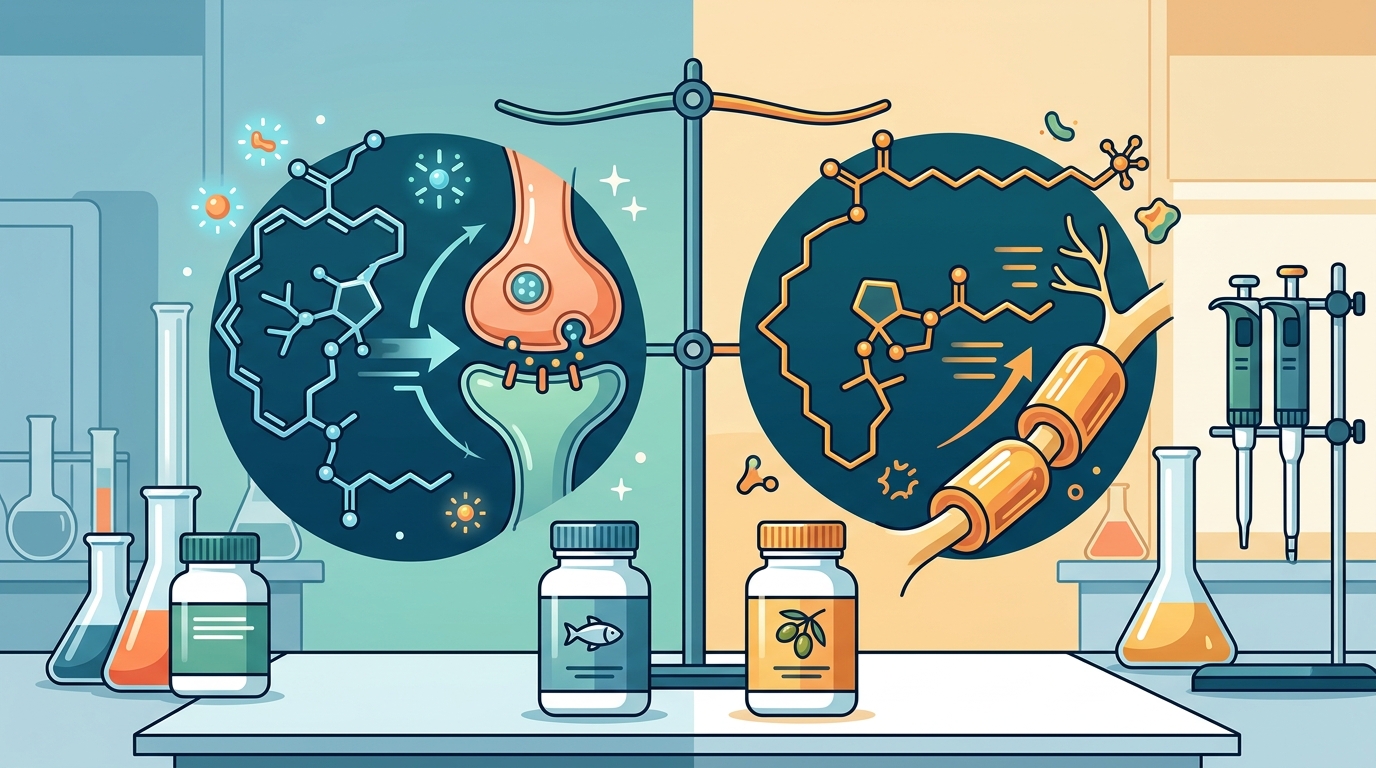
DHA-rich plasmalogens concentrate in gray matter, the region responsible for processing information, forming memories, and executing higher-order thinking. PlasmalogenN3 from Prodrome delivers omega-3 plasmalogen precursors specifically designed to support these neuronal membranes.
Neuroprotection and Cognition
A clinical trial published in the Journal of Alzheimer's Disease evaluated DHA-AAG plasmalogen precursors in 22 cognitively impaired individuals. The study used escalating oral doses from 900 to 3,600 mg per day over four months and measured changes in blood plasmalogen levels, oxidative stress biomarkers, cognition, and mobility. Results showed that DHA-AAG supplementation dose-dependently increased blood DHA plasmalogen levels and demonstrated favorable tolerability.
How Oleic Acid Plasmalogens Protect Brain Structure
Oleic acid plasmalogens are omega-9 plasmalogen precursors that target a completely different set of brain cells. Oleic acid is the primary monounsaturated fatty acid in the omega-9 family and plays a central role in white matter health.
White Matter and Myelin Support
White matter is largely made up of myelin, the insulating sheath that enables rapid nerve signaling. ProdromeGlia provides omega-9 plasmalogen precursors designed to nourish glial cells, including oligodendrocytes and Schwann cells responsible for building and maintaining myelin.
Structural Resilience Under Stress
Oleic acid plasmalogens are especially important for cells involved in stabilizing the neural signaling environment. By supporting glial membrane integrity, they help maintain balanced neural function during periods of physiological stress. The oleic acid used in ProdromeGlia Oil is extracted and purified from plant-based triglycerides and manufactured in a cGMP facility in the USA.
Side-by-Side Comparison
| Feature | DHA (Omega-3) Plasmalogens | Oleic Acid (Omega-9) Plasmalogens |
|---|---|---|
| Primary fatty acid | Docosahexaenoic acid (DHA) | Oleic acid |
| Brain region targeted | Gray matter (neurons, synapses) | White matter (myelin, glial cells) |
| Key function | Synaptic signaling, memory formation | Myelin insulation, structural support |
| Cell types supported | Neurons, neuromuscular junctions | Oligodendrocytes, Schwann cells, myocytes |
| Prodrome product | PlasmalogenN3 / ProdromeNeuro | ProdromeGlia |
| Source | Algae-derived omega-3 | Plant-based triglycerides |
| Clinical evidence | Human trial in cognitively impaired persons | Human trial showing reduced fatigue and improved concentration |
What the Clinical Evidence Shows
Both forms of plasmalogen precursors use 1-O-alkyl-2-acyl glycerol (AAG) oils, a delivery format that bypasses the weakened DHA and plasmalogen synthesis pathways that decline with age. This approach was described in peer-reviewed research as offering significant advantages over other approaches to restoring plasmalogen levels.
Animal studies have demonstrated that DHA-enriched plasmalogen supplementation increased hippocampal plasmalogen levels and improved learning and memory. In humans, a controlled trial showed that oral plasmalogens influenced concentration, reduced fatigue and irritability, and enhanced cognitive markers. These findings suggest that both DHA and oleic acid plasmalogens contribute to cognitive support through complementary mechanisms.
How to Choose the Right Plasmalogen
When to Prioritize DHA Plasmalogens
If your primary concern is memory recall, cognitive sharpness, or neuromuscular performance, DHA plasmalogens may be the better starting point. They directly support the neuronal membranes involved in information processing and synaptic transmission. Explore the full ProdromeNeuro collection for omega-3 options.
When to Prioritize Oleic Acid Plasmalogens
If your concerns center around nerve signaling speed, myelin health, or overall structural resilience, oleic acid plasmalogens address the glial and structural support cells that keep your nervous system functioning smoothly.
Why Many People Use Both
Because DHA and oleic acid plasmalogens target different brain structures, many health professionals recommend using both. Prodrome offers a complete plasmalogens collection that includes both types, and ProdromeScan blood testing can help identify which plasmalogen levels may need the most support.
Key Takeaways
- DHA plasmalogens target gray matter neurons and support memory formation, synaptic signaling, and cognitive performance.
- Oleic acid plasmalogens target white matter glial cells and support myelin integrity, nerve insulation, and structural resilience.
- Both types use AAG oil delivery to bypass age-related declines in plasmalogen synthesis.
- Clinical trials show favorable tolerability and measurable increases in blood plasmalogen levels with targeted supplementation.
- Diet alone cannot effectively restore plasmalogen levels because the body's synthesis pathways slow with age.
- Combining both DHA and oleic acid plasmalogens addresses the full spectrum of brain health needs.
- Blood testing through ProdromeScan can help personalize your supplementation strategy.
Frequently Asked Questions
What is the difference between DHA and oleic acid plasmalogens?
DHA plasmalogens contain docosahexaenoic acid and target gray matter neurons involved in memory and cognition. Oleic acid plasmalogens contain the omega-9 fatty acid oleic acid and target white matter glial cells responsible for myelin and nerve insulation. They serve complementary roles in brain health.
Can I take both DHA and oleic acid plasmalogens together?
Yes. Because they support different brain structures, many practitioners recommend taking both. Prodrome manufactures both ProdromeNeuro and ProdromeGlia for this purpose.
Are plasmalogen supplements safe?
Plasmalogens have been shown to be well-tolerated in human studies. All Prodrome products are manufactured in a cGMP facility in the USA. As with any supplement, consult your healthcare provider before starting.
Why can I not get enough plasmalogens from food?
While foods like olive oil provide oleic acid and fatty fish provide DHA, they do not supply the active plasmalogen form. The body must build the complete plasmalogen structure itself, and this process slows significantly with age and stress.
How long does it take to see results from plasmalogen supplements?
Clinical trials have evaluated dosing over periods of four months. Individual responses vary, and it is best to work with a healthcare professional to monitor your progress, potentially using tools like ProdromeScan.
What are plasmalogens made of?
Plasmalogens are a class of glycerophospholipids characterized by a vinyl-ether bond at the sn-1 position. They contain fatty acids at the sn-2 position, which can be DHA, oleic acid, arachidonic acid, or other fatty acids depending on the tissue type.
Who founded Prodrome Science?
Prodrome Science was founded by Dr. Dayan Goodenowe, a neuroscientist and synthetic organic biochemist whose research has focused on the role of plasmalogens in cellular membranes and human health.
Is there a way to test my plasmalogen levels?
Yes. Prodrome offers ProdromeScan, a blood test that analyzes core phospholipids including plasmalogens, phosphatidylcholines, ceramides, and other biomarkers to help guide supplementation decisions.
Start Supporting Your Brain at the Membrane Level
Whether you choose DHA plasmalogens, oleic acid plasmalogens, or both, targeted supplementation can address the age-related decline that diet alone cannot fix. Visit the Prodrome plasmalogens collection to explore your options and take the first step toward comprehensive brain support backed by real science.