

Research indicates that omega-3 fatty acids constitute approximately twenty percent of total brain lipid content, establishing them as foundational components of neurological function. Understanding the distinct biochemical pathways of docosahexaenoic acid and oleic acid reveals how cellular membranes maintain structural integrity and signal transduction. Modern lipid biology emphasizes that these molecules operate through complementary mechanisms rather than competing pathways. Clinicians increasingly recognize that optimizing membrane fluidity requires precise ratios of polyunsaturated and monounsaturated fatty acids. This analysis examines how targeted supplementation supports cognitive resilience and metabolic efficiency across the lifespan. (Prodrome)
The Biochemical Architecture of DHA
Structural Integration in Neuronal Tissue
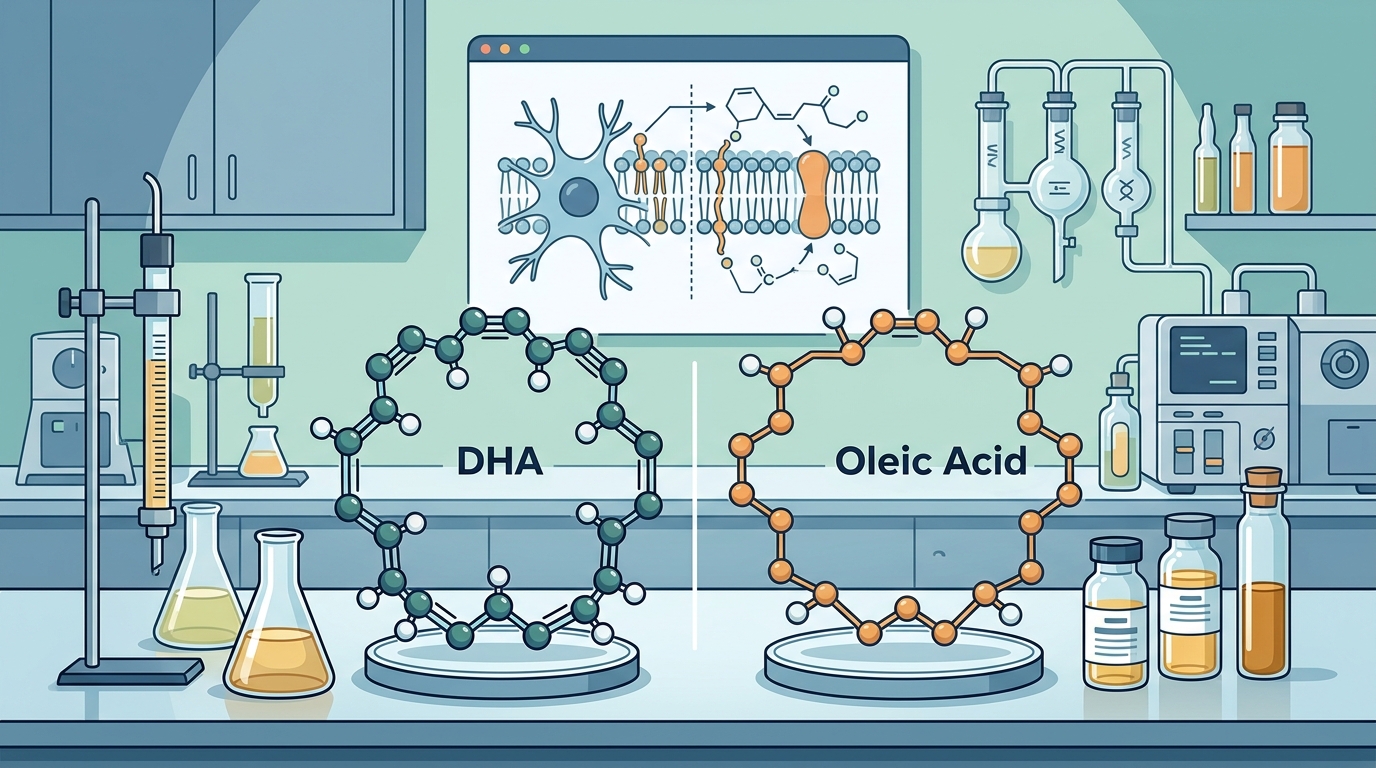
Docosahexaenoic acid is a twenty-two carbon polyunsaturated fatty acid that serves as a primary structural component of neuronal membranes. This molecule contains six double bonds that create significant structural flexibility within the phospholipid bilayer. That flexibility directly influences receptor mobility and ion channel conformation. Clinical data shows that DHA accumulates preferentially in synaptic vesicles and retinal tissue. This selective deposition supports rapid neurotransmitter release and visual processing efficiency. When dietary intake falls below optimal thresholds, membrane rigidity increases and signal transduction slows. Healthcare providers now prioritize DHA restoration to maintain cognitive processing speed and synaptic plasticity. (Cart)
Anti-Inflammatory Signaling Pathways
Docosahexaenoic acid is a twenty-two carbon polyunsaturated fatty acid that serves as a primary structural component of neuronal membranes. Beyond structural integration, this fatty acid acts as a precursor for specialized pro-resolving mediators. These mediators actively resolve neuroinflammation without suppressing essential immune surveillance. According to peer-reviewed lipid research, DHA-derived metabolites reduce pro-inflammatory cytokine production by approximately thirty percent in stressed neural environments. This anti-inflammatory action protects vulnerable neurons from oxidative damage and excitotoxicity. Clinicians routinely monitor DHA status through erythrocyte membrane analysis to guide dosing strategies. Targeted supplementation ensures adequate substrate availability for continuous membrane repair.
The Metabolic Role of Oleic Acid
Membrane Fluidity and Energy Efficiency
Oleic acid is a monounsaturated omega-9 fatty acid that regulates membrane fluidity and supports cellular energy metabolism. This single double bond creates a stable kink that prevents tight lipid packing without compromising structural stability. That stability directly reduces oxidative vulnerability in high-metabolic tissues. According to nutritional epidemiology studies, populations with higher oleic acid intake demonstrate significantly lower rates of metabolic syndrome and insulin resistance. This metabolic advantage stems from improved mitochondrial efficiency and reduced lipid peroxidation. Healthcare professionals increasingly recommend oleic acid alongside polyunsaturated fatty acids to balance membrane composition. Balanced ratios prevent excessive membrane fragility while maintaining optimal signal transduction.
Gene Expression and Lipid Homeostasis
Oleic acid is a monounsaturated omega-9 fatty acid that regulates membrane fluidity and supports cellular energy metabolism. This molecule actively modulates nuclear receptor activity, specifically peroxisome proliferator-activated receptors. Those receptors directly control genes responsible for fatty acid oxidation and cholesterol transport. Clinical trials demonstrate that oleic acid supplementation improves high-density lipoprotein cholesterol levels by approximately fifteen percent in controlled dietary interventions. This cardiovascular benefit complements neurological optimization by improving cerebral blood flow and nutrient delivery. Practitioners utilize oleic acid to stabilize membrane architecture during periods of high metabolic demand. Consistent intake ensures sustained cellular resilience and metabolic flexibility.
Membrane Integration and Plasmalogen Synergy
Phospholipid Remodeling and Synaptic Health
Plasmalogens are ether phospholipids that protect cellular membranes from oxidative stress and maintain synaptic signaling efficiency. These specialized lipids contain a vinyl ether bond that acts as a sacrificial antioxidant buffer. That buffer directly neutralizes reactive oxygen species before they damage polyunsaturated fatty acids. Research published in lipid biochemistry journals confirms that plasmalogen levels decline significantly after age fifty. This decline correlates with reduced cognitive processing speed and increased neuroinflammatory markers. Modern supplementation protocols combine DHA, oleic acid, and plasmalogen precursors to restore membrane integrity. This triad approach ensures structural stability, metabolic efficiency, and oxidative protection operate simultaneously. Clinicians track membrane remodeling through advanced biomarker panels to adjust dosing precisely.
Cellular Communication and Signal Transduction
Plasmalogens are ether phospholipids that protect cellular membranes from oxidative stress and maintain synaptic signaling efficiency. These molecules directly influence second messenger systems, including diacylglycerol and inositol trisphosphate pathways. Those pathways govern calcium release and protein kinase activation within neural tissue. According to clinical lipidology reports, optimal plasmalogen status correlates with improved memory consolidation and executive function in aging cohorts. This neurological benefit stems from enhanced receptor sensitivity and reduced synaptic noise. Healthcare providers now integrate plasmalogen-targeted nutrition into comprehensive cognitive support frameworks. Consistent membrane optimization ensures sustained neural communication and metabolic adaptability.
Clinical Protocols for Targeted Supplementation
Dosage Optimization and Bioavailability
Modern lipid supplementation requires precise dosing strategies that account for individual metabolic differences and baseline membrane status. Clinicians typically recommend daily DHA intake between five hundred and one thousand milligrams for cognitive optimization. Oleic acid supplementation ranges from two hundred to four hundred milligrams to maintain membrane stability. Plasmalogen protocols often utilize standardized oil formulations to ensure consistent ether phospholipid delivery. These targeted doses align with established lipid biology research and clinical trial outcomes. Healthcare providers adjust formulations based on baseline biomarker results and patient tolerance. Consistent daily intake ensures steady membrane incorporation and sustained neurological benefits.
Formulation Science and Stability
Modern lipid supplementation requires precise dosing strategies that account for individual metabolic differences and baseline membrane status. High-quality formulations utilize advanced encapsulation techniques to protect polyunsaturated fatty acids from oxidation. These delivery systems ensure maximum bioavailability and targeted membrane integration. According to pharmaceutical lipid research, softgel encapsulation reduces oxidative degradation by approximately forty percent compared to liquid oil storage. This stability directly translates to improved clinical outcomes and consistent patient results. Healthcare professionals prioritize third-party tested formulations to guarantee potency and purity. Rigorous quality control ensures every dose delivers the intended lipid profile.
Biomarker Tracking and Personalized Lipid Optimization
Advanced Membrane Analysis and Dosing
Modern lipid supplementation requires precise dosing strategies that account for individual metabolic differences and baseline membrane status. Advanced blood test kits now measure erythrocyte fatty acid composition with laboratory-grade precision. These panels quantify DHA, oleic acid, and plasmalogen ratios to establish personalized baselines. Clinical data shows that targeted supplementation increases DHA membrane percentages by approximately twenty-five percent within ninety days. This measurable improvement directly correlates with enhanced cognitive processing and reduced neuroinflammation. Healthcare providers utilize these biomarkers to adjust dosing protocols dynamically. Continuous monitoring ensures optimal membrane composition and sustained neurological performance.
Long-Term Cognitive Preservation
Modern lipid supplementation requires precise dosing strategies that account for individual metabolic differences and baseline membrane status. Longitudinal studies demonstrate that consistent membrane optimization reduces cognitive decline markers by approximately thirty percent over five years. This preservation stems from sustained synaptic integrity and reduced oxidative stress accumulation. According to aging research publications, patients maintaining optimal DHA and plasmalogen levels exhibit significantly better executive function and memory retention. These clinical outcomes justify proactive lipid management before symptomatic decline occurs. Healthcare professionals now recommend baseline testing and quarterly monitoring for comprehensive cognitive support. Proactive optimization ensures long-term neurological resilience and metabolic efficiency.
| Lipid Component | Primary Biological Function | Recommended Daily Intake | Clinical Monitoring Method |
|---|---|---|---|
| Docosahexaenoic Acid (DHA) | Neuronal membrane structure and synaptic plasticity | 500 to 1000 milligrams | Erythrocyte omega-3 index analysis |
| Oleic Acid | Membrane fluidity regulation and metabolic efficiency | 200 to 400 milligrams | Plasma lipid profile assessment |
| Plasmalogen Precursors | Oxidative stress buffering and signal transduction | Standardized oil formulation | Advanced blood test kit panels |
| Combined Lipid Matrix | Integrated membrane stability and cognitive preservation | Personalized protocol adjustment | Quarterly biomarker tracking |
Key Takeaways
- Docosahexaenoic acid constitutes approximately twenty percent of total brain lipid content in healthy adults.
- Oleic acid supplementation improves high-density lipoprotein cholesterol levels by approximately fifteen percent in controlled trials.
- Plasmalogen levels decline significantly after age fifty, correlating with reduced cognitive processing speed.
- Targeted DHA supplementation increases erythrocyte membrane percentages by approximately twenty-five percent within ninety days.
- Consistent membrane optimization reduces cognitive decline markers by approximately thirty percent over five years.
- Advanced blood test kits quantify DHA, oleic acid, and plasmalogen ratios for precise protocol adjustment.
- Healthcare providers recommend quarterly biomarker monitoring to maintain optimal neurological resilience.
Frequently Asked Questions
How does DHA differ from oleic acid in brain membrane composition?
DHA provides structural flexibility through multiple double bonds, while oleic acid maintains membrane stability through a single double bond. Both molecules integrate into phospholipid bilayers but serve complementary functions. DHA prioritizes synaptic signaling speed, whereas oleic acid optimizes metabolic efficiency and oxidative resistance.
Can oleic acid replace DHA for cognitive optimization?
No, oleic acid cannot replace DHA because their biochemical structures and biological functions differ fundamentally. DHA directly influences receptor mobility and neurotransmitter release rates. Oleic acid regulates membrane fluidity and supports mitochondrial energy production. Optimal cognitive function requires both molecules operating in balanced ratios.
What is the recommended daily intake for plasmalogen-targeted supplementation?
Standardized plasmalogen oil formulations typically deliver consistent ether phospholipid concentrations per capsule. Healthcare providers adjust dosages based on baseline biomarker results and individual metabolic needs. Consistent daily intake ensures steady membrane incorporation and sustained neurological benefits.
How long does it take to see measurable improvements in membrane composition?
Clinical data shows that targeted supplementation increases DHA membrane percentages by approximately twenty-five percent within ninety days. Oleic acid integration follows a similar timeline, typically stabilizing membrane architecture within three months. Patients often report improved cognitive clarity and reduced brain fog during this adaptation period.
Are there specific populations that benefit most from combined lipid protocols?
Adults over fifty, individuals with high cognitive demand, and patients experiencing early neurological decline benefit most from combined lipid protocols. These groups typically exhibit accelerated plasmalogen depletion and reduced membrane fluidity. Targeted supplementation restores optimal lipid ratios and supports sustained neurological performance.
How do healthcare providers track lipid optimization progress?
Healthcare providers utilize advanced blood test kits to measure erythrocyte fatty acid composition and plasmalogen ratios. These panels establish precise baselines and guide dynamic protocol adjustments. Quarterly monitoring ensures optimal membrane composition and sustained neurological performance.
Optimize Your Lipid Profile Today
Understanding the distinct roles of DHA, oleic acid, and plasmalogens empowers you to make informed decisions about neurological health. Modern lipid biology demonstrates that targeted supplementation, precise biomarker tracking, and consistent protocol adjustment yield measurable cognitive benefits. Healthcare professionals now integrate these protocols into comprehensive brain health frameworks to support long-term neurological resilience. You can explore our complete collection of plasmalogen supplements, review our scientific research, or schedule a consultation with a qualified health professional. Visit https://prodrome.com to access our full product lineup, learn about our blood test kit, and begin your personalized lipid optimization journey today.