

How to Test for Biochemical Markers of Age Reversal and Disease Risk
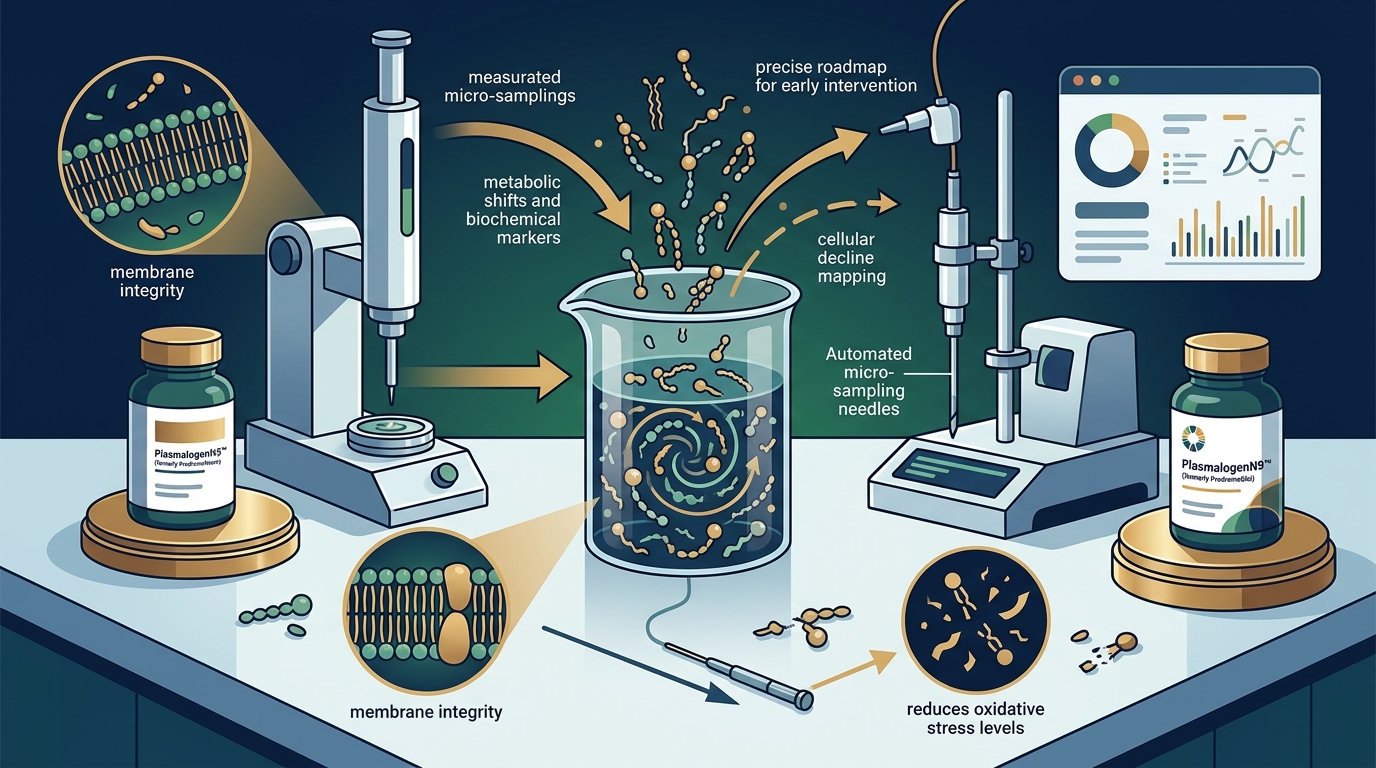
Modern longevity research indicates that biological aging progresses through measurable metabolic shifts long before clinical symptoms appear. Researchers currently track over two hundred distinct lipid compounds to map cellular decline. These biochemical markers of age reversal provide a precise roadmap for early intervention. Clinicians now prioritize membrane integrity and oxidative stress levels to predict disease risk. Understanding these metrics allows practitioners to design highly targeted nutritional protocols. This guide explains how to interpret advanced blood panels and apply lipid science to your health strategy.
Understanding Cellular Lipid Biomarkers
Cellular membranes function as the primary communication interface for every organ system. Plasmalogens are ether phospholipids that constitute a critical structural component of cellular membranes. These specialized molecules protect cell boundaries from oxidative damage and regulate ion transport. When membrane integrity degrades, cellular signaling slows and metabolic efficiency drops. Clinicians measure these lipid concentrations to identify early metabolic stress. Tracking these values helps practitioners adjust dietary interventions before systemic decline occurs.
Advanced metabolomic profiling reveals how specific lipid pathways correlate with cognitive decline and cardiovascular strain. Lipid science provides the foundational framework for modern longevity protocols. Practitioners utilize mass spectrometry to quantify ether phospholipid concentrations in serum samples. This analytical method delivers precise concentration data across hundreds of molecular species. The resulting data maps individual metabolic vulnerabilities with remarkable accuracy.
The Clinical Value of Plasmalogen Testing
Standard lipid panels fail to capture the nuanced behavior of ether phospholipids. Biomarker testing is the clinical process of measuring specific biological indicators to assess physiological status. Specialized blood test kits now allow practitioners to evaluate plasmalogen concentrations directly. These diagnostic tools measure both ethanolamine and choline ether phospholipid fractions. Low concentrations frequently correlate with accelerated neurological aging and chronic inflammation.
Clinical laboratories utilize high-performance liquid chromatography to separate and quantify these complex molecules. Targeted nutrition protocols then address identified deficits through precise dosing strategies. Patients receive customized supplementation regimens based on their baseline metabolic profiles. This data-driven approach eliminates guesswork from longevity interventions. Clinicians can adjust dosages dynamically as biomarker values improve over time.
Interpreting Advanced Blood Test Protocols
Interpreting metabolomic data requires a structured analytical framework. Age reversal refers to the measurable reduction of biological aging markers through targeted metabolic interventions. Practitioners compare patient results against established population reference ranges. Values falling below optimal thresholds trigger immediate nutritional interventions. Clinicians monitor these shifts to verify protocol effectiveness and adjust dosages accordingly.
Healthcare providers utilize proprietary software to visualize lipid trajectory changes. Clinical protocols integrate these findings with patient history and lifestyle factors. Regular testing intervals establish clear baselines and track longitudinal progress. Consistent monitoring reveals subtle metabolic improvements that standard diagnostics miss. This rigorous approach ensures interventions remain aligned with physiological goals.
Targeted Nutrition and Membrane Restoration
Restoring depleted ether phospholipids requires highly bioavailable formulations. Specialized oil-based supplements deliver concentrated plasmalogen fractions directly to cellular membranes. Softgel formulations provide standardized dosing for consistent daily intake. These products undergo rigorous purity testing to eliminate oxidative contaminants. Clinicians recommend specific product tiers based on individual biomarker deficits.
Curcuminoid complexes complement lipid restoration by reducing systemic oxidative stress. Research-backed formulations combine targeted lipids with anti-inflammatory botanical compounds. This synergistic approach accelerates membrane repair and improves cellular resilience. Patients report enhanced cognitive clarity and sustained energy levels during restoration phases. Longitudinal data confirms that consistent supplementation stabilizes declining lipid trajectories.
Tracking Long-Term Health Trajectories
Sustained metabolic optimization requires consistent monitoring and protocol adjustments. Clinicians schedule follow-up testing every ninety to one hundred eighty days. These intervals capture meaningful biochemical shifts without excessive testing frequency. Patients track their progress through structured digital dashboards and clinical reports. Regular data reviews ensure interventions remain effective and safely dosed.
Longitudinal studies demonstrate that early lipid restoration correlates with reduced disease progression. Neurological health metrics improve significantly when membrane integrity is restored. Practitioners document cognitive performance, inflammatory markers, and metabolic efficiency alongside lipid values. This comprehensive tracking establishes clear cause-and-effect relationships between supplementation and physiological outcomes. Patients gain actionable insights into their biological aging trajectory.
Testing Options and Clinical Pathways
| Testing Method | Primary Biomarker Focus | Clinical Application | Recommended Frequency |
|---|---|---|---|
| Plasmalogen Blood Panel | Ether phospholipid concentrations | Baseline metabolic mapping | Initial assessment |
| Targeted Lipid Supplementation | Membrane restoration metrics | Intervention protocol design | Every ninety days |
| Advanced Metabolomic Profiling | Oxidative stress markers | Longitudinal trajectory tracking | Every six months |
| Clinical Practitioner Dashboard | Integrated health metrics | Protocol optimization | Quarterly reviews |
Key Takeaways
- Plasmalogen concentrations decline measurably after age thirty-five without intervention.
- Advanced blood test kits quantify ether phospholipids using high-performance chromatography.
- Targeted lipid supplementation restores membrane integrity and improves cellular signaling.
- Regular metabolomic profiling establishes precise baselines for longitudinal tracking.
- Clinical protocols integrate lipid data with cognitive and inflammatory markers.
- Consistent supplementation stabilizes declining metabolic trajectories over time.
- Practitioner dashboards streamline data interpretation and dosage adjustments.
Frequently Asked Questions
What specific biochemical markers indicate early cellular decline?
Plasmalogen concentrations, oxidative stress indices, and inflammatory cytokine levels serve as primary indicators. Clinicians measure these values to identify metabolic stress before clinical symptoms manifest.
How often should patients undergo advanced lipid testing?
Standard protocols recommend testing every ninety to one hundred eighty days. This frequency captures meaningful biochemical shifts without excessive testing frequency.
Can targeted lipid supplementation reverse declining biomarker values?
Consistent supplementation restores depleted ether phospholipids and improves membrane integrity. Longitudinal data confirms measurable improvements in cellular signaling efficiency.
What distinguishes plasmalogen blood testing from standard lipid panels?
Standard panels measure cholesterol and triglycerides. Specialized tests quantify ether phospholipid fractions using high-performance chromatography.
How do practitioners interpret plasmalogen test results?
Clinicians compare patient values against established population reference ranges. Values falling below optimal thresholds trigger immediate nutritional interventions.
Are specialized lipid supplements safe for long-term use?
High-purity formulations undergo rigorous testing to eliminate oxidative contaminants. Clinicians monitor patient responses and adjust dosages to ensure optimal outcomes.
Begin Your Biomarker Testing Journey
Understanding your metabolic profile empowers proactive health management. Schedule a consultation with a qualified longevity practitioner to access advanced lipid testing. Clinicians will design a personalized protocol based on your baseline biomarker data. Early intervention maximizes membrane restoration and supports long-term vitality. Take control of your biological aging trajectory today.