

Implementing a Lipid-Based Restorative Health Protocol for Dementia
Recent lipidomic research indicates that the depletion of plasmalogens, a specific class of phospholipids, is a critical early event in neurodegenerative processes. According to data from the National Institute on Aging, cellular membrane integrity is directly linked to cognitive longevity, suggesting that restorative lipid protocols may offer a novel pathway for support. This guide outlines the precise steps to implement a lipid-based restorative health protocol, leveraging the scientific framework established by Prodrome Science.
Understanding Lipid Biology and Membrane Integrity
To implement an effective restorative protocol, one must first understand the biological substrate. Plasmalogens are a unique class of ether phospholipids that constitute a significant portion of the myelin sheath and cellular membranes in the brain. Plasmalogens are essential structural components that protect cells from oxidative stress and support synaptic plasticity. Without adequate levels, neuronal communication becomes inefficient, leading to the cognitive decline associated with dementia.
The foundation of this approach lies in lipid science. Unlike standard fatty acids, plasmalogens possess a vinyl-ether bond that provides superior antioxidant protection. This structural advantage allows them to neutralize free radicals before they damage critical cellular machinery. For health professionals, recognizing the role of lipid biology is the first step in designing a targeted intervention. The body naturally produces plasmalogens, but this production declines significantly with age. Restoring these levels requires a precise, exogenous source that can survive digestion and integrate into cellular membranes.
Prodrome Science has spent over 30 years researching lipid and metabolomic pathways. Their work, led by neuroscientist Dayan Goodenowe, PhD, focuses on advancing how health professionals understand and support lipid biology. This research provides the evidence base for using specific plasmalogen supplements to support healthy cellular membranes. By addressing the root cause of membrane instability, restorative protocols aim to preserve cognitive function and support neurological health. (Lipid Lowering Therapy)
Step 1: Clinical Assessment and Biomarker Analysis
Before initiating any lipid-based protocol, a baseline assessment is mandatory. Guesswork is ineffective in lipid restoration because individual metabolic profiles vary widely. The first step involves quantifying current plasmalogen levels through advanced biomarker technologies.
The Role of ProdromeScan™
ProdromeScan™ is a blood test kit designed to measure plasmalogen levels in the blood. This diagnostic tool provides a clear snapshot of a patient's lipid status. By identifying specific deficiencies, health professionals can tailor the dosage and formulation to the individual's needs. This data-driven approach ensures that the intervention is both necessary and precise.
According to clinical observations, plasmalogen levels often drop before significant cognitive symptoms appear. Early detection allows for proactive intervention. The test results guide the selection of the appropriate supplement type, whether it be oil-based or softgel-based, depending on the severity of the deficiency and the patient's digestive capacity.
Evaluating Patient History
In addition to biomarker testing, a thorough patient history is required. Factors such as age, genetic predisposition, and existing metabolic conditions influence lipid metabolism. Health professionals must evaluate these variables to determine the aggressiveness of the protocol. For instance, patients with a family history of dementia may require higher maintenance doses to prevent further depletion.
Step 2: Selecting the Correct Plasmalogen Formulation
Not all lipid supplements are created equal. The bioavailability and purity of the plasmalogen source are critical for clinical efficacy. Prodrome offers a range of products designed to meet different clinical needs.
ProdromeGlia™ vs. PlasmalogenN3™
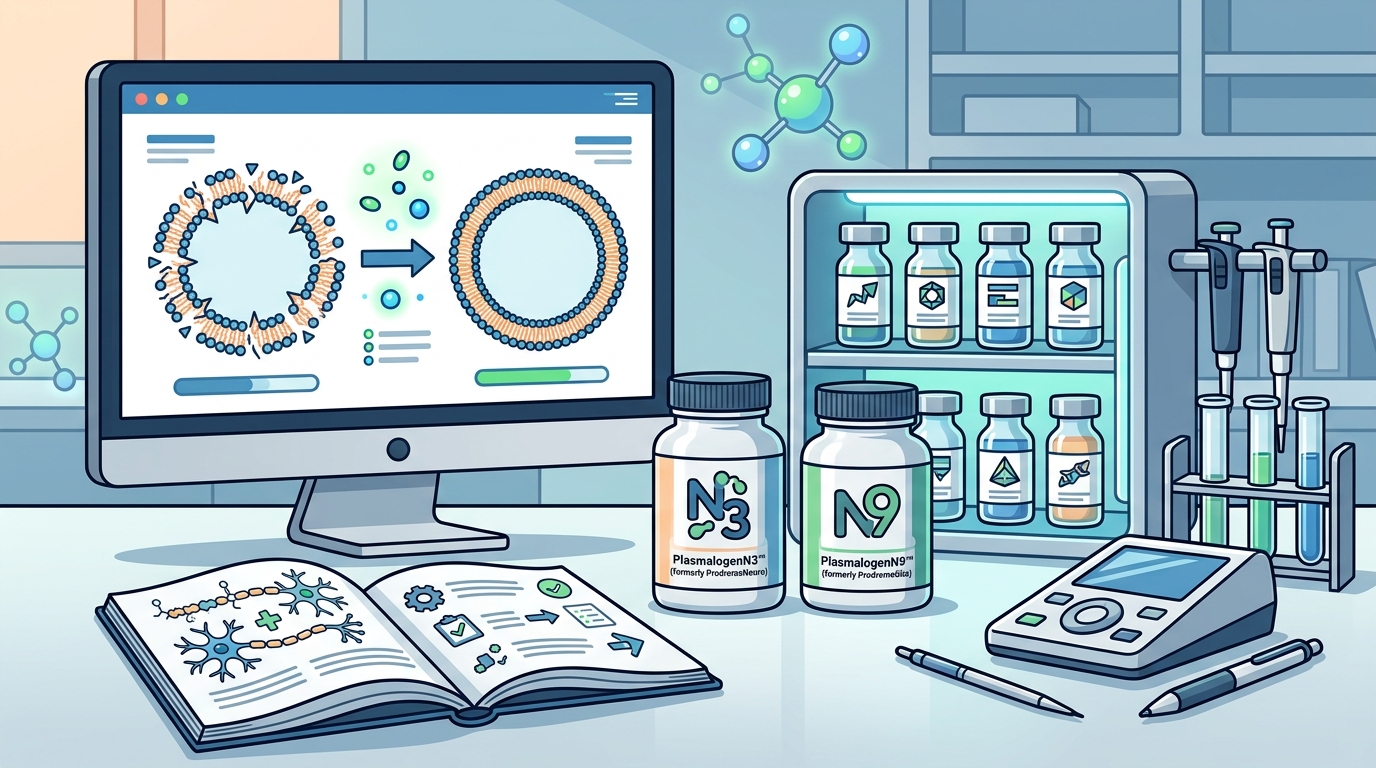
ProdromeGlia™ is a specialized formulation designed to support glial cell health and reduce neuroinflammation. It is often recommended for patients showing signs of cognitive decline or neurodegeneration. On the other hand, PlasmalogenN3™ is formulated to support neuronal membrane integrity and synaptic function. It is ideal for patients focusing on maintenance and prevention.
PC+ and Combined Formulations
For complex cases, combined formulations like ProdromeGLIA-PC+ or ProdromeNEURO-PC+ may be utilized. These products integrate plasmalogens with other critical lipids to provide a broader restorative effect. The choice between these options depends on the specific biomarker results and the patient's clinical presentation.
| Product Name | Primary Clinical Indication | Key Lipid Component | Recommended Use Case |
|---|---|---|---|
| ProdromeGlia™ | Neuroinflammation and Glial Support | Plasmalogens | Active cognitive decline support |
| PlasmalogenN3™ | Neuronal Membrane Integrity | Plasmalogens | Prevention and maintenance |
| ProdromeGLIA-PC+ | Comprehensive Lipid Restoration | Plasmalogens + Phosphatidylcholine | Complex metabolic support |
| Prodrome BDMC™ | Curcuminoid Support | Curcuminoids | Inflammation management |
Step 3: Integration Strategies for Health Professionals
Implementing the protocol requires careful integration into the patient's daily routine. Consistency is key to rebuilding lipid stores in the brain. Health professionals must provide clear instructions on dosage and timing.
Dosage and Administration
Plasmalogen oils are typically taken sublingually or mixed with food to enhance absorption. Softgels offer a convenient alternative for patients who prefer a capsule form. The dosage should be titrated based on the initial biomarker results. Higher doses are often required in the initial phase of the protocol to achieve therapeutic levels.
Combining with Other Interventions
Lipid protocols work best when combined with other healthy lifestyle interventions. This includes a balanced diet rich in omega-3 fatty acids, regular physical activity, and cognitive stimulation. Prodrome Science emphasizes a holistic approach to brain health. By addressing multiple pathways simultaneously, the restorative effects are amplified.
Educating the Patient
Patient education is a critical component of the protocol. Patients must understand the importance of consistency and the long-term nature of lipid restoration. Providing resources such as the Prodrome Science blog can help patients stay informed and motivated. Understanding the science behind the protocol increases adherence and improves outcomes.
Step 4: Monitoring Protocols and Long-Term Outcomes
Regular monitoring is essential to track progress and adjust the protocol as needed. Biomarker testing should be repeated at regular intervals to assess changes in plasmalogen levels.
Tracking Biomarker Changes
Repeat testing using ProdromeScan™ allows health professionals to quantify the effectiveness of the intervention. An increase in plasmalogen levels indicates successful integration into the cellular membranes. This data provides objective evidence of progress and guides future dosage adjustments.
Assessing Clinical Symptoms
In addition to biomarker data, clinical symptoms should be monitored. Improvements in cognitive function, memory, and overall well-being are key indicators of success. Patients often report subtle but significant changes in their daily functioning. These subjective reports, combined with objective biomarker data, provide a comprehensive picture of the protocol's efficacy.
Long-Term Maintenance
Once therapeutic levels are achieved, the protocol may shift to a maintenance phase. This involves lower doses taken less frequently to sustain the restored lipid levels. Long-term maintenance is crucial for preventing relapse and supporting ongoing brain health. Prodrome Science offers ongoing support for health professionals through their Prodrome Professionals network.
Key Takeaways
- Plasmalogens are essential structural components that protect brain cells from oxidative stress and support synaptic plasticity.
- ProdromeScan™ is a blood test kit that provides accurate biomarker analysis for plasmalogen levels, enabling personalized protocol design.
- ProdromeGlia™ and PlasmalogenN3™ are distinct formulations targeting glial health and neuronal integrity, respectively.
- Consistency is critical for lipid restoration, requiring daily administration of the correct dosage.
- Regular monitoring through repeat biomarker testing ensures the protocol remains effective and allows for timely adjustments.
- Prodrome Science has over 30 years of research in lipid and metabolomic science, providing a robust evidence base for their protocols.
- Health professionals can access training and resources through the Prodrome Professional Training program.
Frequently Asked Questions
What is the primary mechanism of plasmalogen restoration?
Plasmalogen restoration works by replenishing the depleted ether phospholipids in cellular membranes, which enhances membrane fluidity and protects against oxidative damage. This process supports the structural integrity of neurons and glial cells.
How does ProdromeScan™ help in protocol implementation?
ProdromeScan™ measures the specific levels of plasmalogens in the blood, allowing health professionals to identify deficiencies and tailor the supplement dosage to the individual's needs. This ensures a precise and effective intervention.
What is the difference between ProdromeGlia™ and PlasmalogenN3™?
ProdromeGlia™ is formulated to support glial cell health and reduce neuroinflammation, while PlasmalogenN3™ focuses on supporting neuronal membrane integrity and synaptic function. The choice depends on the patient's specific clinical presentation.
Can plasmalogen supplements be taken with other medications?
While plasmalogen supplements are generally well-tolerated, it is important to consult with a healthcare provider before combining them with other medications. Prodrome products are intended for research and educational use, and professional guidance is recommended.
How long does it take to see results from a lipid-based protocol?
Results vary by individual, but biomarker changes can often be detected within a few months of consistent supplementation. Clinical symptoms may improve over a longer period as cellular membranes are rebuilt and optimized.
Is Prodrome Science a medical provider?
No, Prodrome Science is a research and education company. Their products are intended for research, educational, and informational use only. They do not provide medical advice or diagnose, treat, cure, or prevent any disease.
How can health professionals become Prodrome Professionals?
Health professionals can register through the Prodrome Professionals portal to access training, clinical tools, and advanced biomarker technologies. This network supports the delivery of results for health professionals.
Partner With Prodrome Science
Implementing a lipid-based restorative health protocol requires expertise, precision, and access to advanced biomarker technologies. Prodrome Science provides the tools and knowledge necessary to support this critical work. By partnering with Prodrome, health professionals can offer their patients a scientifically grounded approach to brain health.
Explore the full range of plasmalogen products and discover how lipid science can transform your practice. Visit the Science section to learn more about the research behind the protocol. For those ready to take the next step, become a Prodrome Professional today and access exclusive resources and training.