

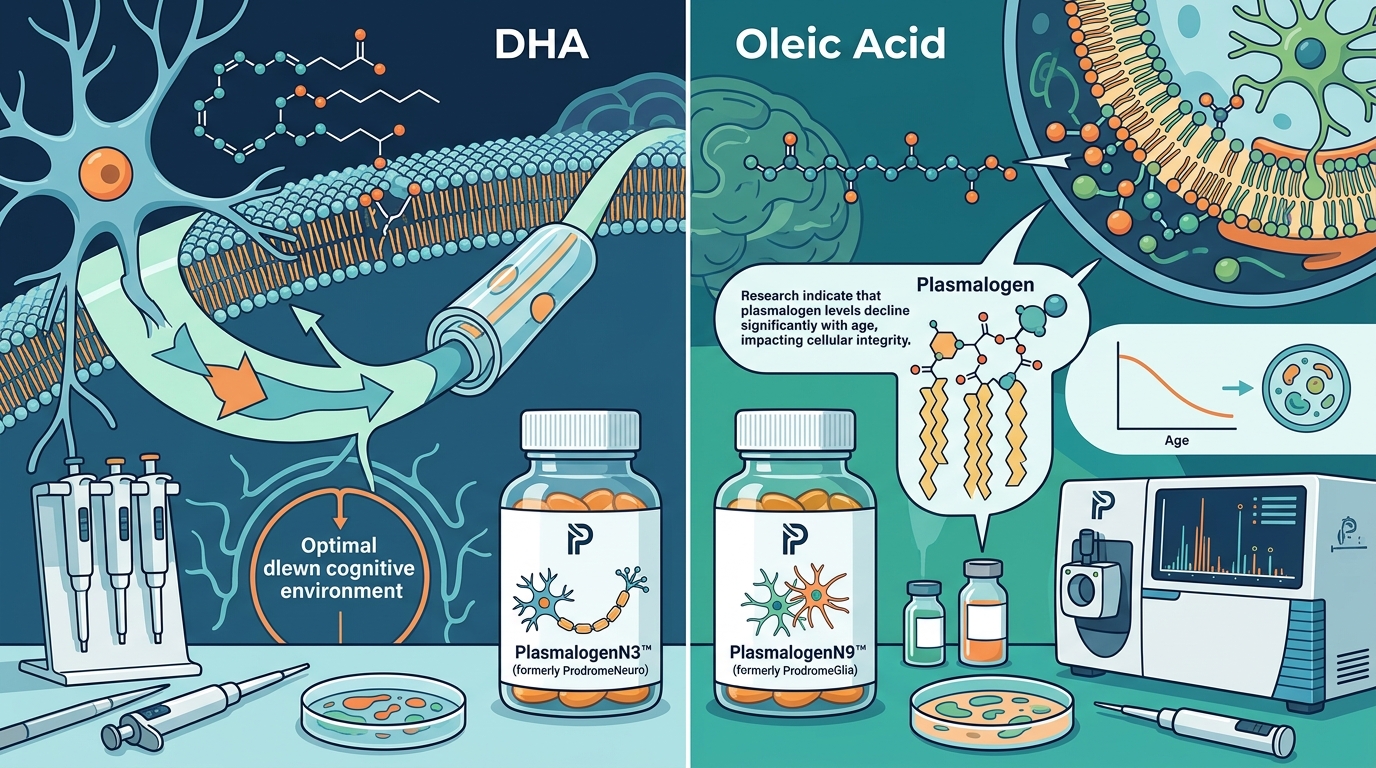
Cellular health is not determined by a single nutrient but by the complex interplay of specialized lipids. Research indicates that plasmalogen levels decline significantly with age, impacting everything from cognitive function to cellular integrity. Understanding the distinct roles of different fatty acids is critical for anyone seeking to optimize their biological resilience. This analysis compares Docosahexaenoic Acid (DHA) and Oleic Acid, two powerful compounds that support brain health through fundamentally different mechanisms. (Prodrome Plasmalogen Supplements for)
What Are DHA and Oleic Acid?
To understand how to support cellular health, we must first define the building blocks. DHA is a long-chain omega-3 fatty acid. It is a primary structural component of the human brain, retina, and sperm. Oleic acid is a monounsaturated omega-9 fatty acid. It is the most abundant fatty acid in olive oil and is found in many animal and plant fats. While both are fats, their biological behaviors are distinct.
DHA is often categorized as an essential fatty acid because the body cannot produce it in sufficient quantities. Oleic acid is considered non-essential because the body can synthesize it from other fats. However, both play critical roles in maintaining the integrity of cell membranes. The difference lies in how they interact with oxidative stress and cellular signaling.
DHA: The Architect of Brain Structure
DHA is renowned for its role in neurobiology. It is highly concentrated in the gray matter of the brain. This concentration is not accidental. DHA provides the physical structure for neuronal membranes. It allows these membranes to remain flexible. Flexibility is crucial for the rapid transmission of electrical signals between neurons.
Without adequate DHA, cell membranes can become rigid. This rigidity impairs the function of receptors and channels embedded in the membrane. Consequently, communication between brain cells slows down. This is why DHA is often associated with cognitive performance and memory retention.
Furthermore, DHA is involved in the production of neuroprotectin D1. This compound protects brain cells from oxidative damage. It helps to reduce inflammation in neural tissues. This anti-inflammatory action is vital for long-term brain health. It supports the maintenance of healthy neuronal connections.
However, DHA is highly susceptible to oxidation. Because it has multiple double bonds, it can easily degrade when exposed to heat or light. This instability means that protecting DHA within the body is a complex biological challenge. The body must carefully manage its storage and utilization to prevent lipid peroxidation.
Oleic Acid: The Guardian of Membrane Fluidity
Oleic acid offers a different type of support. As a monounsaturated fat, it has a single double bond. This structure makes it more stable than polyunsaturated fats like DHA. Oleic acid is critical for maintaining membrane fluidity without the high risk of oxidation.
Fluidity is the ability of the cell membrane to flow and change shape. This property is essential for nutrient transport and waste removal. Oleic acid helps to keep membranes fluid. It ensures that the cell can function efficiently under various conditions.
Recent research highlights the role of oleic acid in supporting mitochondrial function. Mitochondria are the powerhouses of the cell. They generate the energy required for all cellular processes. Oleic acid helps to maintain the integrity of mitochondrial membranes. This support is crucial for sustained energy production.
Additionally, oleic acid has been shown to have anti-inflammatory properties. It can help to modulate the immune response. This makes it valuable for overall systemic health. It supports the body's ability to manage stress and recover from injury.
The Plasmalogen Synergy: Why Both Matter
The true power of lipid biology lies in synergy. Plasmalogens are a specialized class of phospholipids. They are found in high concentrations in the brain and heart. Plasmalogens provide antioxidant protection. They protect other lipids, including DHA, from oxidative damage.
Without plasmalogens, DHA would degrade much faster. Plasmalogens act as sacrificial antioxidants. They absorb free radicals before they can damage critical cellular structures. This protection allows DHA to perform its structural functions effectively.
Oleic acid also plays a role in this ecosystem. It helps to maintain the structural integrity of the membranes where plasmalogens reside. A stable membrane environment allows plasmalogens to function optimally. This creates a positive feedback loop. Healthy membranes support plasmalogen function. Plasmalogens protect DHA. DHA supports neuronal health.
This synergy is why focusing on a single nutrient is often insufficient. A comprehensive approach to lipid health requires supporting the entire membrane system. This includes providing the building blocks for structure and the protectants for stability.
Comparison of Lipid Functions
| Feature | DHA (Docosahexaenoic Acid) | Oleic Acid (Omega-9) | Plasmalogens |
|---|---|---|---|
| Primary Role | Structural component of neuronal membranes | Maintains membrane fluidity and stability | Antioxidant defense and signaling |
| Stability | Low (Highly susceptible to oxidation) | High (Monounsaturated structure) | High (Sacrificial antioxidant) |
| Key Benefit | Supports cognitive function and neuroplasticity | Supports mitochondrial energy and heart health | Protects against lipid peroxidation |
| Source | Fatty fish, algae | Olive oil, avocados | Endogenous synthesis (declines with age) |
Key Takeaways
- DHA is structural: It forms the physical basis of brain cell membranes, enabling rapid signal transmission.
- Oleic acid is stabilizing: It maintains membrane fluidity without the oxidative risk associated with polyunsaturated fats.
- Plasmalogens are protective: They act as the first line of defense against oxidative stress, preserving DHA integrity.
- Synergy is essential: No single lipid works in isolation. The combination of structure, stability, and protection is key.
- Aging impacts lipids: Plasmalogen levels decline with age, making supplementation and dietary support increasingly important.
- Testing matters: Blood tests can reveal plasmalogen levels, providing insight into individual lipid health status.
- Quality counts: The source and stability of lipids determine their biological efficacy and safety.
Frequently Asked Questions
Is DHA better than oleic acid for brain health?
DHA is more directly involved in brain structure. However, oleic acid supports the environment in which DHA functions. Both are necessary for optimal cognitive health.
Can I get enough oleic acid from my diet?
Yes, oleic acid is abundant in olive oil and avocados. Most people consume adequate amounts through a balanced diet.
Why are plasmalogens important if I take DHA?
Plasmalogens protect DHA from oxidation. Without this protection, DHA can degrade and lose its benefits.
Do plasmalogen levels decline with age?
Yes, plasmalogen levels naturally decline as we age. This decline is linked to various age-related health issues.
What is the difference between gray and white matter plasmalogens?
Gray matter plasmalogens support neuronal signaling. White matter plasmalogens support the myelin sheath that insulates nerves.
Are plasmalogen supplements safe?
Plasmalogen supplements are generally considered safe. They are derived from natural sources and are intended for research and educational use.
How can I test my plasmalogen levels?
Blood tests are available to measure plasmalogen levels. These tests provide valuable insights into lipid health.
Optimize Your Lipid Profile
Understanding the distinct roles of DHA and oleic acid is the first step toward better cellular health. However, true optimization requires a holistic approach. Supporting your plasmalogen levels is equally critical. These specialized lipids provide the protection needed for other fats to function effectively.
Prodrome Science offers advanced solutions for lipid health. Their products are designed to support the entire membrane system. From plasmalogen supplements to comprehensive blood testing, they provide the tools you need. Explore their Plasmalogen Collection to find the right protocol for your needs. You can also learn more about their Science Blog to deepen your understanding of lipid biology.
For health professionals, Prodrome offers a Professional Program. This program provides training and resources to help practitioners support their clients. Visit the Customer Hub to access your account and manage your orders. Start your journey toward optimized lipid health today.