

Membrane phospholipids are the structural foundation of every neuron, directly influencing how fast and accurately your brain processes information. By maintaining the fluidity and integrity of cell membranes, these lipids ensure that electrical signals travel efficiently and that chemical messages are released correctly. At Prodrome, we focus on the lipid biology that underpins these critical cellular functions, helping you understand how the physical architecture of your brain supports daily mental performance.
The Structural Foundation of Neural Communication
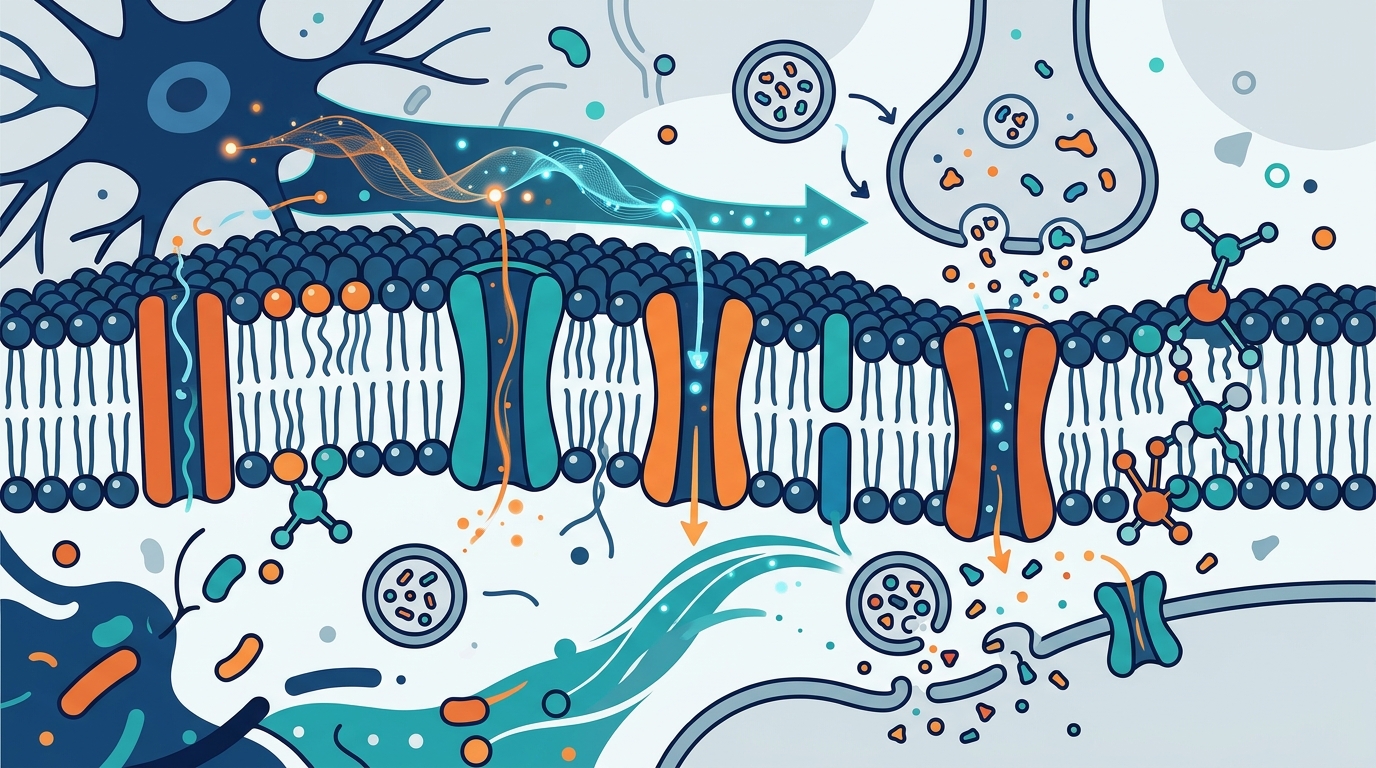
Neurons do not communicate in a vacuum; they rely on the physical properties of their outer boundaries. A phospholipid is a fat-like molecule with a water-loving head and water-fearing tails, which naturally forms the double-layered barrier known as the cell membrane. In the brain, this membrane is not a static wall but a dynamic environment where receptors, channels, and signaling proteins reside. The specific arrangement of these lipids determines how easily a neuron can respond to stimuli.
Research indicates that the lipid landscape of the synaptic membrane is a driving force behind memory formation. The synapse is the communication unit of the brain, linking billions of neurons through trillions of connections. The lipid environment underpins neurotransmitter release through the exocytic fusion of vesicles with the membrane. If the membrane is too rigid or disorganized, this fusion process becomes less efficient, potentially slowing down the transmission of thoughts and memories. Understanding this structural role is the first step in appreciating why membrane health is central to cognitive sharpness.
Fluidity and the Speed of Thought
Brain sharpness is often associated with speed, and membrane fluidity is a key determinant of that speed. Fluidity refers to the ease with which lipids move within the membrane. When lipids are packed too tightly, the membrane becomes rigid, and the proteins embedded within it struggle to move and interact. Conversely, if the membrane is too loose, signaling becomes disorganized. A balanced membrane allows for the precise clustering of receptors and the efficient movement of ion channels.
Docosahexaenoic acid (DHA) is a critical component of this balance. DHA is the principal omega-3 fatty acid present in the brain, and it is important in the developing brain, accumulating in the earliest months of life. DHA has a number of pro-cell survival roles within cell membranes, including the production of anti-inflammatory D-series resolvins and neuroprotectins. By incorporating DHA into phospholipids, the brain maintains a level of fluidity that supports rapid signal transmission. This is why the quality of your membrane lipids is just as important as the quantity of nutrients you consume.
The Role of Specialized Lipids in Membrane Resilience
Not all phospholipids are created equal. Some, such as plasmalogens, possess unique chemical structures that provide additional protective benefits. Plasmalogens are a specialized class of phospholipids distinguished by a vinyl ether bond. This bond changes how they behave inside the membrane, influencing how lipids pack together and how oxidative stress is handled. When reactive oxygen species are present, plasmalogens often react first, acting as a buffer that limits the spread of oxidative damage to neighboring lipids.
This protective role is particularly important in high-performance tissues like the brain. The brain is a fatty organ, and about 60 percent of its dry weight is made of fat. These lipids help transmit electrical signals between neurons and defend brain tissue from oxidative stress. By supporting the structural resilience of the membrane, these specialized lipids help maintain the long-term integrity of neural networks. At Prodrome, we explore how these molecular details translate into real-world benefits for brain health and cellular stability.
Nutritional Support for Membrane Health
Diet plays a significant role in determining the lipid composition of your brain. While the brain can synthesize some of its own lipids, it relies heavily on the supply of essential fatty acids from the diet. Phospholipids are major membrane lipids that consist of lipid bilayers, and this basic cellular structure acts as a barrier to protect the cell against various environmental insults. More importantly, it enables multiple cellular processes to occur in a controlled environment. Ensuring an adequate supply of these building blocks is essential for maintaining optimal membrane function.
For those looking to support their brain's lipid profile, targeted supplementation can be a useful strategy. PlasmalogenN3™ (formerly ProdromeNeuro) is an omega-3 (DHA) plasmalogen precursor designed to support cellular functions that rely on DHA-rich membranes. Similarly, PlasmalogenN9™ (formerly ProdromeGlia) provides omega-9 plasmalogen precursors that support the structural integrity of glial cell membranes. These products are formulated to work with the body's natural lipid pathways, helping to maintain the balance of phospholipids and plasmalogens that underpin healthy brain function.
Measuring Your Membrane Lipid Profile
Understanding your current lipid status can provide valuable insights into your brain health. The ProdromeScan™ blood test is a tool designed to measure your plasmalogen levels and other key lipid markers. This test helps you understand where your membrane lipids stand relative to optimal ranges, providing a baseline for tracking changes over time. By measuring these components, you can make informed decisions about your nutritional intake and lifestyle choices.
It is important to note that these tests are not diagnostic tools. They are designed to measure health and deviations from health, helping you and your healthcare provider understand your lipid profile. If you are interested in learning more about how to support your brain's lipid biology, consider consulting with a healthcare professional who is familiar with the Elite Practitioner Program. This program provides training for health professionals on the science of plasmalogens and how to integrate them into patient care.
Key Takeaways
- Membrane phospholipids are the structural foundation of neurons, directly influencing signal speed and accuracy.
- Membrane fluidity, supported by fatty acids like DHA, is critical for efficient neurotransmitter release.
- Specialized lipids like plasmalogens provide additional protection against oxidative stress in brain membranes.
- Diet and targeted supplementation can help maintain the optimal balance of membrane lipids.
- Tools like the ProdromeScan™ blood test can help you measure your lipid profile and track changes over time.
- Working with a healthcare professional familiar with lipid biology can help you create a personalized support plan.
Frequently Asked Questions
What are membrane phospholipids?
Membrane phospholipids are fat-like molecules that form the basic structure of cell membranes. They have a water-loving head and water-fearing tails, which arrange themselves into a double layer that creates a flexible barrier around every cell.
How do phospholipids affect brain sharpness?
Phospholipids determine the fluidity and integrity of neuronal membranes. This physical structure allows for the efficient movement of signaling proteins and the rapid release of neurotransmitters, which are essential for fast and accurate brain communication.
What is the difference between phospholipids and plasmalogens?
Plasmalogens are a specialized type of phospholipid that contains a unique vinyl ether bond. This bond gives them additional antioxidant properties and influences how they pack within the membrane, providing extra protection against oxidative stress.
Can diet alone provide enough phospholipids for brain health?
While a healthy diet provides essential fatty acids, the body's ability to synthesize and maintain optimal levels of specific membrane lipids can vary. Targeted supplementation with plasmalogen precursors may help support the body's natural production of these specialized lipids.
Is the ProdromeScan™ blood test a diagnostic tool?
No, the ProdromeScan™ blood test is not a diagnostic tool. It is designed to measure your plasmalogen levels and other lipid markers to help you understand your current lipid profile and track changes over time.
How can I learn more about plasmalogen science?
You can explore the Prodrome Science Blog for in-depth articles on lipid biology, membrane health, and the role of plasmalogens in brain function. For professional training, consider the Elite Practitioner Program.
Supporting Your Brain's Lipid Biology
Understanding the role of membrane phospholipids in brain sharpness is the first step toward supporting your cognitive health. By focusing on the structural and functional aspects of your cell membranes, you can take a proactive approach to maintaining your mental performance. At Prodrome, we are committed to advancing the science of lipid biology and providing tools that help you support your brain's natural resilience. Explore our range of plasmalogen supplements and testing tools to learn more about how you can maintain healthy membrane function.
These statements have not been evaluated by the Food and Drug Administration. This product is not intended to diagnose, treat, cure, or prevent any disease.