

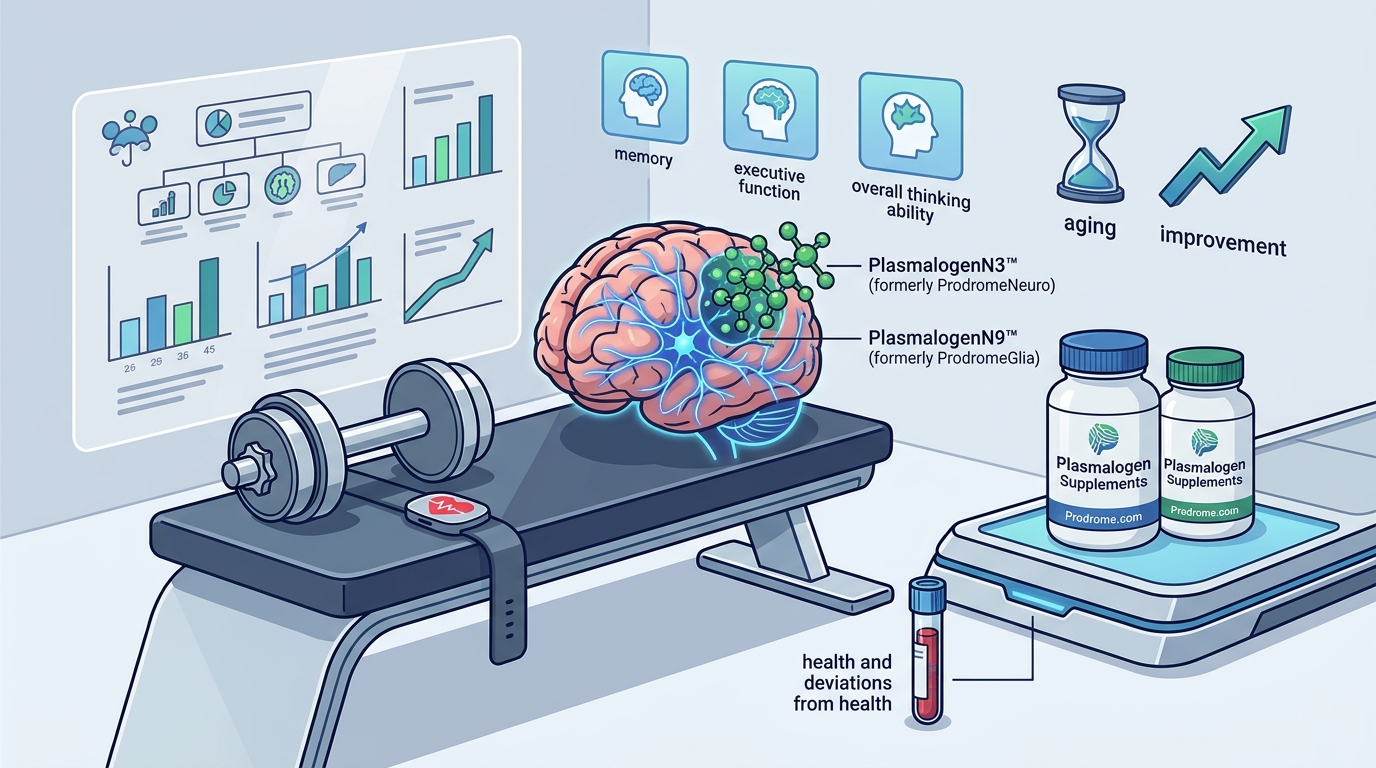
Yes, regular physical activity significantly improves memory and brain function as you age. A comprehensive umbrella review of over 2,700 clinical trials confirms that exercise leads to small-to-moderate improvements in memory, executive function, and overall thinking ability across all ages and health conditions. This evidence supports the view that movement is a foundational pillar of lifelong cognitive health, working alongside nutrition and cellular support to maintain neural resilience.
The Biological Mechanism of Exercise on the Brain
Physical activity influences the brain through several measurable biological pathways. One of the most significant mechanisms is the enhancement of blood flow to key brain regions. Research from the University of Texas Southwestern found that one year of aerobic workouts boosts blood flow into two critical areas associated with memory. Increased perfusion delivers more oxygen and nutrients to neural tissue, supporting the metabolic demands of active brain cells.
Exercise also stimulates the release of neurotrophic factors, such as Brain-Derived Neurotrophic Factor (BDNF). These proteins act as fertilizer for the brain, promoting the growth and maintenance of neurons. In animal models, long-term treadmill exercise has been shown to increase the number of BDNF-positive cells and enhance synaptic plasticity. While these specific cellular metrics are often measured in preclinical studies, the broader principle of exercise-induced neuroplasticity is well-established in human populations.
At the cellular level, the brain relies on specialized lipids to maintain membrane integrity and signal transmission. Plasmalogens are a unique class of ether phospholipids found in high concentrations in brain cell membranes. They help maintain membrane flexibility and protect lipids from oxidative damage. While exercise supports the vascular and metabolic environment, the structural integrity of the cell membrane itself is a distinct layer of brain health that requires specific nutritional attention.
What the Clinical Evidence Shows
The scientific consensus on exercise and cognition is robust and positive. A recent systematic review and meta-analysis of randomized controlled trials compared the effects of aerobic and resistance training on cognitive function in older adults. The results indicated that physical exercise can slow down the decline of cognitive function, with modest improvements observed in attention, processing speed, and executive function. These benefits are not limited to a single demographic; they are observed across various age groups and health statuses.
Specific studies highlight the timeline for these benefits. Researchers at Michigan State University noted that just 12 weeks of consistent exercise caused measurable improvements in memory and cognitive function. This suggests that the brain is responsive to regular movement, even in the short term. The National Institute on Aging also supports the connection between physical activity and brain health, noting that being physically active through regular exercise or household chores offers many benefits for cognitive maintenance.
It is important to distinguish between the benefits of exercise and the structural needs of the brain. Exercise improves the delivery of resources and the efficiency of neural networks. However, the raw materials that build and maintain these networks, such as specific phospholipids, must be available. This is where targeted nutrition becomes a complementary strategy to physical activity.
Complementing Movement with Cellular Lipid Support
While exercise is a powerful tool for brain health, it is not the only factor. The brain is a fatty organ, and its performance depends on the quality of its cellular membranes. Prodrome Science focuses on the role of plasmalogens in this context. PlasmalogenN3™ (formerly ProdromeNeuro) provides omega-3 plasmalogen precursors that support cellular functions relying on DHA-rich membranes, including those found in brain gray matter. These lipids are essential for synaptic structure and efficient communication between neurons.
Similarly, PlasmalogenN9™ (formerly ProdromeGlia) offers omega-9 plasmalogen precursors that support glial cell membranes, which are prominent in brain white matter and myelin. Myelin acts as insulation for nerve fibers, allowing signals to travel rapidly. Maintaining the integrity of this insulation is crucial for fast and accurate information processing. By supporting both gray and white matter lipid environments, a comprehensive approach to brain health addresses both the metabolic benefits of exercise and the structural needs of the nervous system.
For those interested in understanding their specific lipid profile, Prodrome offers the ProdromeScan™ blood test. This tool measures health and deviations from health in lipid biomarkers, providing a baseline for cellular membrane support. It is important to note that these tests are for measuring health status and are not intended to diagnose, treat, cure, or prevent any disease.
Practical Strategies for Integrating Exercise and Nutrition
Integrating regular physical activity into your daily routine is the first step toward supporting long-term brain health. The type of exercise matters less than the consistency. Aerobic activities like walking, swimming, or cycling improve cardiovascular health and brain blood flow. Resistance training, such as weight lifting, has also been shown to benefit cognitive function, particularly in executive processing. Aim for a mix of both to maximize the benefits.
Alongside movement, consider how you support the structural components of your brain. A diet rich in healthy fats provides the building blocks for cell membranes. For those seeking targeted support, plasmalogen supplements like those from Prodrome can help maintain optimal levels of these specialized lipids. These products are designed to support the body's natural ability to maintain healthy cellular membranes, working in tandem with the metabolic boosts provided by exercise.
Health professionals can learn more about integrating these approaches through the Elite Practitioner Program. This program provides training on lipid-based restorative health, helping practitioners guide their clients toward comprehensive brain health strategies that include both lifestyle and nutritional support.
Key Takeaways
- Regular exercise leads to small-to-moderate improvements in memory, executive function, and overall thinking ability across all ages.
- Physical activity boosts blood flow to key brain regions and stimulates the release of neurotrophic factors like BDNF.
- Just 12 weeks of consistent exercise can produce measurable improvements in cognitive function.
- Brain health depends on both the metabolic benefits of exercise and the structural integrity of cellular membranes.
- Plasmalogens are specialized lipids that support membrane flexibility and signal transmission in both gray and white matter.
- PlasmalogenN3™ (formerly ProdromeNeuro) supports gray matter, while PlasmalogenN9™ (formerly ProdromeGlia) supports white matter and myelin.
- A comprehensive approach to brain health combines regular physical activity with targeted nutritional support for cellular lipids.
Frequently Asked Questions
How much exercise is needed to improve brain function?
Research suggests that consistency is more important than intensity. Even moderate activity, such as brisk walking for 30 minutes a day, can provide benefits. Studies have shown improvements in cognitive function after just 12 weeks of regular exercise. The key is to find an activity you enjoy and can sustain over time.
Does resistance training help the brain as much as aerobic exercise?
Yes, both types of exercise are beneficial. While aerobic exercise is often highlighted for its effects on blood flow and BDNF, resistance training has also been linked to improvements in executive function and processing speed. A combination of both may offer the most comprehensive benefits for brain health.
Can supplements replace the need for exercise?
What are plasmalogens and why are they important for the brain?
Plasmalogens are a specialized type of phospholipid found in cell membranes. They are particularly concentrated in the brain, where they help maintain membrane flexibility and protect against oxidative stress. They are essential for the proper function of both gray matter (processing) and white matter (communication).
Is it too late to start exercising if I am already older?
It is never too late to start. Studies have shown that older adults can still experience cognitive benefits from initiating regular physical activity. The brain retains a degree of plasticity throughout life, and regular movement can help maintain and even improve certain cognitive functions, regardless of when you start.
How do I know if I need plasmalogen support?
While plasmalogen levels naturally change over time, individual needs can vary. The ProdromeScan™ blood test can help measure your lipid biomarkers and provide a baseline for your cellular membrane health. This information can be useful when discussing your brain health goals with a healthcare professional. Remember, these tests measure health status and are not diagnostic tools.
Conclusion
Regular exercise is a proven strategy for improving memory and brain function as you age. It works by enhancing blood flow, stimulating neurotrophic factors, and promoting neural plasticity. However, the brain's performance also depends on the structural integrity of its cellular membranes. By combining the metabolic benefits of physical activity with targeted nutritional support for specialized lipids like plasmalogens, you can take a comprehensive approach to lifelong cognitive health. Prodrome Science is dedicated to providing the tools and knowledge to support this holistic view of brain wellness. To explore how you can support your cellular membrane health, visit Prodrome Science today.
These statements have not been evaluated by the Food and Drug Administration. This product is not intended to diagnose, treat, cure, or prevent any disease.