

White matter is the communication backbone of your brain, made up of millions of nerve fibers insulated by a fatty substance called myelin. When myelin breaks down due to aging, oxidative stress, or chronic inflammation, signal speed and cognitive function decline. The good news is that emerging research points to several natural strategies for supporting myelin repair and white matter health. From targeted nutrition and quality sleep to cutting-edge plasmalogen supplementation, this guide covers everything you need to know about protecting and restoring the brain's essential wiring.
What Is Myelin and Why Does It Matter?
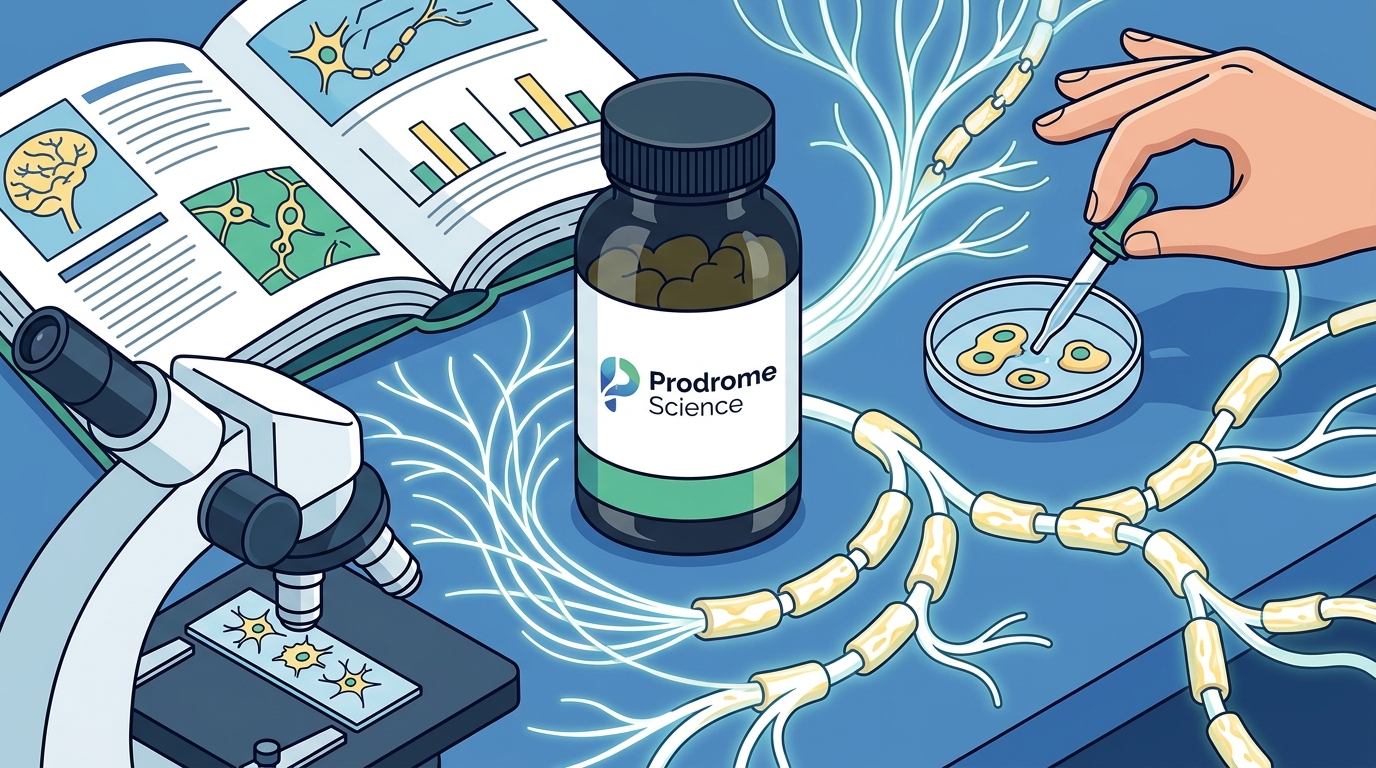
Myelin is a lipid-rich membrane that wraps around nerve fibers (axons) to insulate them and speed up electrical signal transmission. Without healthy myelin, the brain cannot coordinate movement, process memories, or maintain focus efficiently. Oligodendrocytes are the specialized glial cells responsible for producing and maintaining myelin in the central nervous system.
White matter is the tissue composed of these myelinated axons. According to the Cleveland Clinic, white matter allows the exchange of information between different brain regions and requires healthy blood flow and proper nutrients to function well. When myelin deteriorates, signals slow down, contributing to cognitive decline, balance issues, and even mood disorders.
How White Matter Declines With Age
White matter integrity peaks in middle adulthood and gradually declines afterward. Several factors accelerate this process, including poor cardiovascular health, chronic inflammation, and oxidative stress. Research published in Acta Neuropathologica Communications highlights that white matter degeneration and demyelination may be important pathophysiological features of Alzheimer's disease, not just a secondary effect.
Plasmalogen levels also decline with age, and this is significant because plasmalogens are the most abundant phospholipids in myelin. A study in PMC notes that in the brain's white matter, plasmalogens are mainly found within the myelin sheath. As these lipids drop, the structural integrity of myelin weakens, leaving axons vulnerable.
Key Nutrients That Support Myelin Repair
Omega-3 Fatty Acids
Omega-3 fatty acids, particularly DHA, are critical building blocks for neuronal membranes. Research shows they increase myelin production and improve the fluidity of myelin cell membranes. Good dietary sources include wild-caught salmon, sardines, and flaxseeds. Learn more about how DHA supports gray matter on the Prodrome plasmalogens overview page.
B Vitamins and Vitamin D
Vitamin B12 (methylcobalamin) is essential for myelin production, and deficiency can directly cause demyelination. Vitamin D supports immune regulation and myelin maintenance through sun exposure, fatty fish, and supplementation. These nutrients work best as part of a comprehensive brain health strategy.
Antioxidants and Polyphenols
Quercetin is a powerful antioxidant found in berries, grapes, and green tea. Animal research suggests it prevents demyelination and supports remyelination by increasing oligodendrocyte progenitor cells. Lion's mane mushroom also shows promise for stimulating nerve growth factor (NGF), which helps regulate the myelination process.
The Role of Plasmalogens in White Matter Health
Plasmalogens are a vital class of phospholipids that make up approximately 20% of total brain phospholipid content. Their unique vinyl-ether bond gives them powerful antioxidant properties, allowing them to scavenge reactive oxygen species that would otherwise damage myelin membranes. Research from ResearchGate confirms that myelin membranes are particularly enriched in plasmalogens, which protect internodal myelin from oxidative damage.
A landmark PMC study demonstrated that plasmalogen deficiency causes generalized hypomyelination across multiple CNS regions, and that restoring plasmalogen levels rescued myelination in both cell cultures and animal models. This is where targeted supplementation becomes relevant. ProdromeGlia is an omega-9 plasmalogen precursor specifically formulated to support plasmalogen availability in glial cell membranes, which are prominent in brain white matter and myelin. When paired with ProdromeNeuro, an omega-3 (DHA) plasmalogen precursor for gray matter neurons, it offers a comprehensive approach to whole-brain lipid support.
MRI case studies presented by Dr. Deryck Goodenowe in Japan showed that after 30 months of plasmalogen precursor supplementation, patients experienced increases in cortical thickness, gray matter volume, and restoration of white matter microstructure. These findings underscore the potential of plasmalogen science for brain health.
Lifestyle Strategies for Myelin Regeneration
Quality Sleep
Sleep is not optional for myelin repair. Animal studies show that the production of oligodendrocytes, the cells that build myelin, doubles during sleep and peaks during REM sleep. Prioritize 7 to 9 hours of quality rest each night and keep a consistent sleep schedule to support this repair process.
Regular Exercise
Research from the Mayo Clinic suggests that a sedentary lifestyle combined with high saturated fat intake reduces myelin-forming cells, but exercise training can help reverse this. Both aerobic exercise and resistance training boost brain-derived neurotrophic factor (BDNF), which regulates myelination.
Stress Reduction
Chronic stress elevates cortisol, which damages myelin over time. Practices like meditation, yoga, and mindfulness help lower cortisol and create a more favorable environment for myelin maintenance. Combining stress management with proper nutritional supplementation offers a stronger foundation for long-term brain resilience.
Comparing Natural Approaches to Myelin Support
| Approach | Mechanism | Evidence Level | Key Benefit |
|---|---|---|---|
| Omega-3 Fatty Acids (DHA) | Membrane fluidity, myelin production | Human and animal studies | Supports neuronal membrane structure |
| Plasmalogen Precursors (e.g., ProdromeGlia) | Restores glial membrane plasmalogens | Animal models, MRI case studies | Directly targets white matter and myelin lipids |
| Vitamin B12 | Myelin synthesis cofactor | Clinical observation | Prevents demyelination from deficiency |
| Exercise | Increases BDNF, oligodendrocyte activity | Animal and human studies | Reverses sedentary-related myelin loss |
| Quality Sleep (7-9 hrs) | Doubles oligodendrocyte production | Animal studies | Peak myelin repair during REM sleep |
| Quercetin | Antioxidant, OPC proliferation | Animal models | Prevents demyelination after injury |
| Lion's Mane Mushroom | Stimulates NGF production | Preclinical studies | Supports neuroregeneration |
Key Takeaways
- Myelin is the protective lipid sheath that insulates nerve fibers and enables rapid brain communication.
- White matter decline accelerates with aging, inflammation, and plasmalogen deficiency.
- Plasmalogens are the most abundant phospholipids in myelin and serve as natural antioxidants that protect against oxidative damage.
- ProdromeGlia provides omega-9 plasmalogen precursors specifically designed to support white matter and myelin-rich tissues.
- Sleep, exercise, and stress reduction all promote oligodendrocyte activity and myelin formation.
- Key nutrients like omega-3s, vitamin B12, vitamin D, and quercetin each contribute to myelin repair through different mechanisms.
- A combined approach of targeted supplementation and healthy lifestyle habits offers the strongest support for long-term myelin integrity.
Frequently Asked Questions
Can myelin be naturally regenerated?
Yes, the brain retains the ability to produce new myelin throughout life through a process called remyelination. Oligodendrocyte precursor cells can differentiate into mature myelin-producing cells when given the right nutritional and environmental support.
What are plasmalogens?
Plasmalogens are a class of ether-linked phospholipids that are critical structural components of cell membranes, especially in the brain, heart, and immune cells. They account for roughly one in five phospholipids in human tissue and are particularly concentrated in myelin.
How does ProdromeGlia support white matter?
ProdromeGlia is formulated as an omega-9 (oleic acid) plasmalogen precursor designed to replenish plasmalogens in glial cell membranes. Glial cells maintain the myelin sheath and support the brain's white matter infrastructure. Learn more on the ProdromeGlia product page.
What is the difference between ProdromeGlia and ProdromeNeuro?
ProdromeNeuro targets neuronal (gray matter) membranes with DHA-based omega-3 plasmalogen precursors, while ProdromeGlia targets glial (white matter) membranes with oleic acid-based omega-9 precursors. Many people use both for comprehensive brain support.
Does exercise help rebuild myelin?
Research suggests that regular aerobic and resistance exercise increases BDNF levels, which regulate myelination. Studies also show that exercise can reverse myelin loss caused by sedentary behavior and high-fat diets.
How much sleep do I need for myelin repair?
Aim for 7 to 9 hours of quality sleep per night. Animal research shows that oligodendrocyte production peaks during REM sleep, making deep, uninterrupted rest essential for myelin maintenance.
Are there foods that support myelin health?
Yes. Fatty fish rich in omega-3s, eggs containing choline and phospholipids, leafy greens with folate, and berries loaded with antioxidants all contribute to myelin-supporting nutrition. However, dietary sources alone may not fully restore depleted plasmalogen levels.
When should I talk to a doctor about white matter concerns?
If you experience unexplained cognitive changes, balance problems, or mood shifts, consult a neurologist. White matter lesions can be detected on MRI and may indicate conditions that benefit from early intervention.
Your Next Step
Supporting white matter and myelin integrity requires a proactive, multi-faceted approach. If you are ready to explore how plasmalogen supplementation can complement your brain health strategy, visit the ProdromeGlia product page to learn how omega-9 plasmalogen precursors are designed to nourish the very cells that build and maintain your brain's myelin. Your brain's wiring deserves targeted support.