

Traditional medicine often waits for symptoms to manifest before intervening, but the biochemical reality of aging begins decades earlier. Recent data indicates that cellular membrane integrity is the primary driver of systemic health, and its decline is a silent precursor to chronic disease. According to research led by neuroscientist Dayan Goodenowe, PhD, the decline of specific lipids in the brain and body is a critical, measurable event that occurs long before clinical diagnosis. This guide details how to identify these hidden risks through advanced biomarker testing and targeted lipid supplementation. (Prodrome)
What Are Plasmalogens and Why Do They Matter?
To understand age reversal, you must first understand the cellular foundation. Plasmalogens are a specific class of ether phospholipids that are essential components of cell membranes. Plasmalogens are the building blocks of healthy cells, including building and strengthening the myelin sheath in neuronal cells. They are found in every cell of the body, but they are particularly abundant in the brain, heart, and immune system.
These molecules serve as the body's first line of defense against oxidation. They act as antioxidant free radical that acts as the body's first line of defense against oxidation, disease and aging. By sacrificing themselves to neutralize free radicals, plasmalogens protect the more critical structural components of your cells from damage. When plasmalogen levels decline, cells become vulnerable to oxidative stress, leading to inflammation, mitochondrial dysfunction, and eventual cell death.
The decline of plasmalogens is not uniform. White matter plasmalogens provide structural support for myelin and membrane integrity, while grey matter plasmalogens offer functional support for signaling and neurotransmission. This distinction is crucial for understanding how different diseases manifest and how they can be tested for.
The Science of Aging: Membrane Integrity and Oxidative Stress
Aging is fundamentally a process of lipid depletion. As we age, our bodies become less efficient at producing plasmalogens. This decline is accelerated by chronic inflammation, poor diet, and environmental toxins. The result is a "leaky" cellular membrane that fails to communicate effectively with its environment.
One of the most significant findings in lipid science is the correlation between blood plasmalogen levels and longevity. People with high blood plasmalogens were 80% less likely to experience dementia and are proven to live longer. This statistic highlights the potential for early intervention to alter the trajectory of age-related decline.
Furthermore, plasmalogens are critical for mitochondrial function. They protect the mitochondria from lipid peroxidation, ensuring that your cells continue to produce energy efficiently. When this protection fails, energy production drops, leading to fatigue, cognitive decline, and metabolic disorders. Understanding this mechanism is key to testing for early signs of metabolic aging.
Advanced Testing Methodologies for Lipid Biomarkers
Standard blood tests often miss the early stages of lipid depletion because they do not measure plasmalogens specifically. To accurately assess your risk for age-related diseases, you need specialized testing that focuses on lipid biology.
The Limitations of Standard Lipid Panels
Traditional lipid panels measure cholesterol and triglycerides. While important, these markers do not reflect the structural integrity of your cell membranes. A person can have "normal" cholesterol levels but severely depleted plasmalogens, leaving them vulnerable to oxidative damage. This is why many people with normal bloodwork still experience rapid cognitive decline.
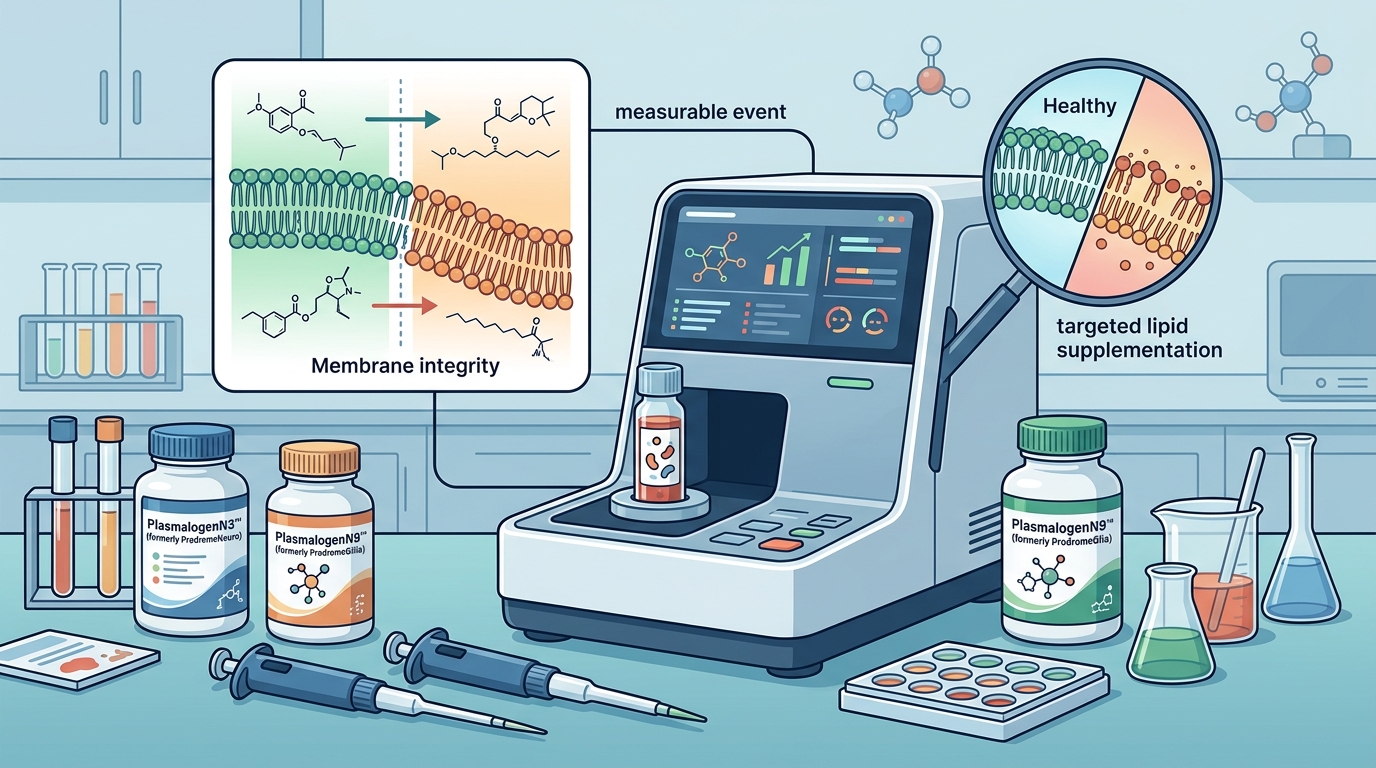
Mass Spectrometry and Lipidomics
Advanced lipidomics uses mass spectrometry to identify and quantify specific lipid species in the blood. This technology allows for the precise measurement of plasmalogens, providing a clear picture of your cellular health. By analyzing these specific markers, clinicians can identify deficits before they manifest as symptoms.
ProdromeScan™: A New Standard in Biomarker Testing
ProdromeScan™ is a blood test kit designed to measure plasmalogen levels directly. This test provides a quantitative assessment of your white and grey matter plasmalogen status. It allows individuals and health professionals to track changes over time and evaluate the efficacy of interventions.
ProdromeScan™ vs. Traditional Blood Work
Choosing the right test is essential for accurate diagnosis and effective treatment. The following table compares the capabilities of ProdromeScan™ with traditional blood work.
| Feature | ProdromeScan™ | Traditional Blood Work |
|---|---|---|
| Primary Focus | Plasmalogen levels and lipid biology | Cholesterol, glucose, and general inflammation |
| Early Detection | High sensitivity to membrane depletion | Low sensitivity to pre-symptomatic lipid decline |
| Specificity | Targets ether phospholipids specifically | Measures broad metabolic markers |
| Actionable Data | Guides targeted plasmalogen supplementation | Often leads to generic lifestyle advice |
| Accessibility | Specialized testing via Prodrome | Widely available at any lab |
While traditional blood work is useful for monitoring general health, it lacks the granularity needed for age reversal strategies. ProdromeScan™ offers a direct window into the lipid biology that drives aging. For more details on the differences, you can review the science behind plasmalogen testing.
Interpreting Your Lipid Profile for Age Reversal
Once you have your test results, understanding the numbers is the next step. Low plasmalogen levels indicate a need for immediate intervention. The goal is to restore these levels to those seen in younger individuals.
White Matter Plasmalogens
White matter plasmalogens are associated with structural integrity. Low levels here are often linked to neurological conditions and cognitive decline. Restoring these levels may support nerve signaling and myelin health.
Grey Matter Plasmalogens
Grey matter plasmalogens are linked to functional signaling. Deficits in this area may impact neurotransmitter release and receptor activity. Targeted supplementation can help support these functions.
Monitoring Progress
Age reversal is a process, not an event. Regular testing is essential to monitor progress. By tracking plasmalogen levels over time, you can adjust your supplementation protocol to ensure optimal results. Many users find that consistent supplementation leads to measurable improvements in energy and cognitive clarity.
Key Takeaways
- Plasmalogens are critical: They are essential for cell membrane integrity and antioxidant defense.
- Decline is silent: Plasmalogen levels drop significantly with age, often before symptoms appear.
- Testing is key: Standard blood tests do not measure plasmalogens; specialized tests like ProdromeScan™ are required.
- Intervention works: Targeted supplementation can help restore plasmalogen levels and support cellular health.
- Longevity link: Higher blood plasmalogen levels are associated with a reduced risk of dementia and longer lifespan.
- Two types matter: White and grey matter plasmalogens serve different but equally important roles in brain health.
- Early action: Addressing lipid depletion early can prevent downstream chronic diseases.
Frequently Asked Questions
What is the difference between plasmalogens and regular phospholipids?
Plasmalogens are a specific type of ether phospholipid with a unique chemical structure that provides superior antioxidant protection compared to standard phospholipids.
How does ProdromeScan™ work?
ProdromeScan™ is a blood test that uses advanced lipidomics to quantify plasmalogen levels in your blood, providing a direct measure of your cellular lipid status.
Can plasmalogen levels be restored?
Yes, targeted supplementation with plasmalogen-rich compounds can help restore blood levels, supporting cellular repair and function.
Who should consider plasmalogen testing?
Individuals interested in longevity, cognitive health, or those with a family history of neurodegenerative diseases should consider testing.
Is plasmalogen testing covered by insurance?
Most insurance plans do not cover specialized lipid testing like ProdromeScan™ as it is considered a wellness or research tool.
How often should I test my plasmalogens?
Testing every 6 to 12 months is recommended to track progress and adjust supplementation protocols effectively.
What are the symptoms of low plasmalogens?
Symptoms can include brain fog, fatigue, poor memory, and increased susceptibility to oxidative stress, though many people are asymptomatic in early stages.
Take Control of Your Biological Age
Understanding your biochemical markers is the first step toward true age reversal. By leveraging advanced testing and targeted lipid science, you can protect your cells and optimize your health for decades to come. Do not wait for symptoms to appear. Start your journey toward cellular resilience today.
Explore the science of plasmalogens and discover how Prodrome Science is redefining health through lipid biology. Shop our plasmalogen supplements to begin supporting your body's natural repair mechanisms.