

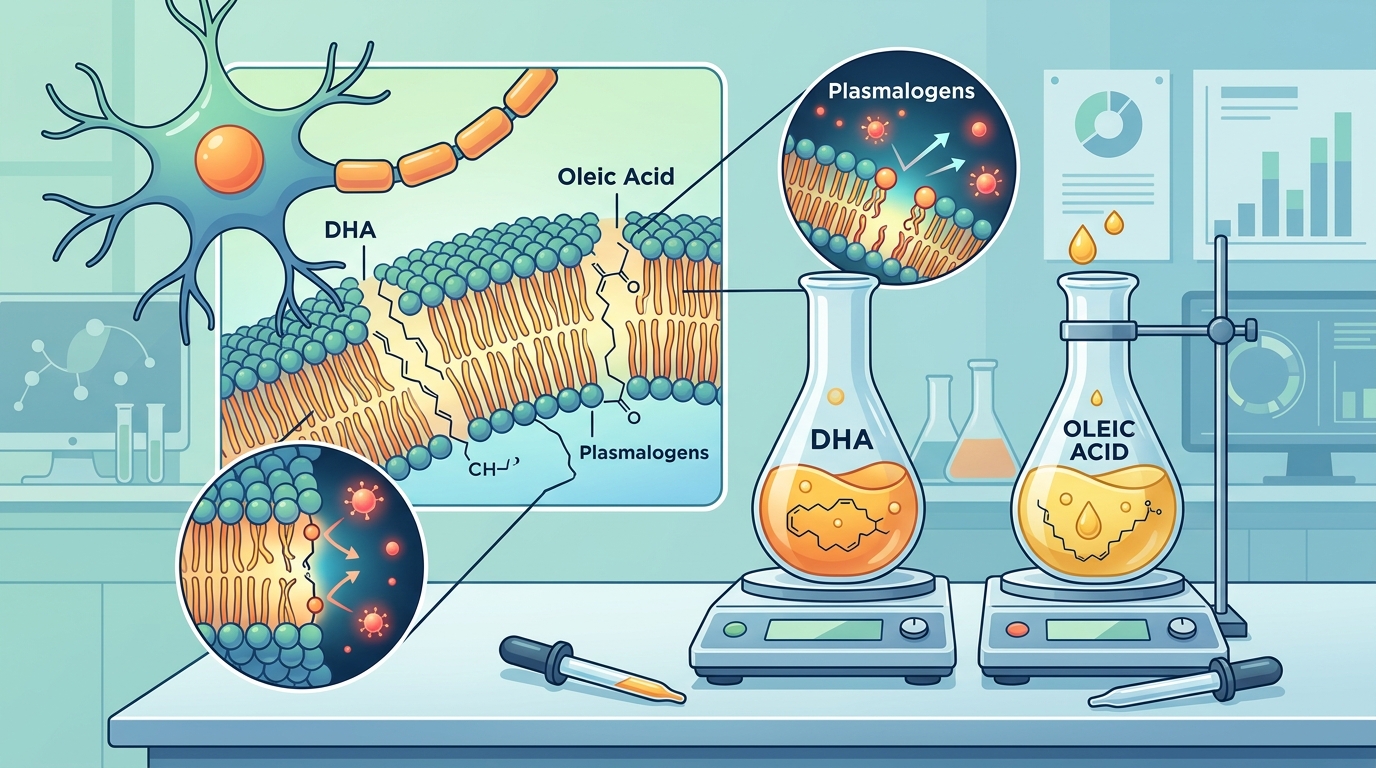
Cellular health relies on a precise balance of specialized lipids, yet most people focus only on general "omega-3" intake without distinguishing between structural and functional fats. Plasmalogens are a key part of that structure, acting as the first line of defense against oxidative stress in every one of your 30 trillion cells. While DHA and oleic acid are both essential fatty acids, they serve fundamentally different roles in maintaining membrane integrity and neuronal signaling. Understanding the difference is critical for anyone looking to support cognitive longevity and metabolic resilience. (Prodrome)
What Are Plasmalogens and Why Do They Matter?
Before comparing DHA and oleic acid, it is vital to understand the lipid class that connects them. Plasmalogens are a specific type of ether phospholipid found in high concentrations in the brain, heart, and immune cells. They are not just structural components; they are active participants in cellular defense.
Plasmalogens are critical to all cells because they protect against lipid peroxidation, a process where free radicals damage cell membranes. When plasmalogen levels decline with age, the brain becomes more vulnerable to oxidative stress and inflammation. This decline is a primary driver of cognitive aging and neurodegenerative conditions. Research indicates that people with high blood plasmalogens were 80% less likely to experience dementia and are proven to live longer. This statistic highlights why maintaining lipid health is not optional but essential for longevity.
Prodrome Science has spent over 30 years researching lipid biology to help health professionals understand these mechanisms. Their work focuses on advancing how we support lipid biology, starting at the membrane. By understanding the interplay between different fatty acids, we can better support the body's natural repair processes.
The Structural Role of DHA in Brain Health
DHA, or docosahexaenoic acid, is a long-chain omega-3 fatty acid. It is perhaps the most well-known lipid in the conversation about brain health. DHA is a key component of neuronal cell membranes, where it helps maintain fluidity and flexibility.
Grey matter plasmalogens play a key role in how brain cells communicate. They support neurotransmitter release, receptor activity, and overall signaling. DHA works in tandem with these plasmalogens to ensure that signals can pass efficiently between neurons. Without adequate DHA, membranes can become rigid, slowing down communication and potentially leading to cognitive decline.
ProdromeGlia™ is designed to support white matter plasmalogens, which provide structural support for myelin. While DHA is crucial for grey matter function, the structural integrity of the myelin sheath is equally important for rapid nerve signaling. This is the focus of specialized lipid therapies that aim to restore both grey and white matter health.
Recent studies in lipid science continue to explore how DHA supplementation can influence brain volume and function. However, DHA alone is not a complete solution. It must be integrated into a broader lipid strategy that includes plasmalogens and other protective fats.
The Functional Role of Oleic Acid in Metabolism
Oleic acid is a monounsaturated omega-9 fatty acid. It is the primary component of olive oil and is found in many plant and animal fats. Unlike DHA, oleic acid is not typically classified as an essential fatty acid because the body can produce it. However, dietary intake plays a significant role in its availability and function.
Oleic acid is known for its stability and resistance to oxidation. This makes it an excellent carrier for other nutrients and a stable energy source for cells. It helps maintain the fluidity of cell membranes without the high susceptibility to damage that polyunsaturated fats like DHA have.
Plasmalogens are the building blocks of healthy cells, including building and strengthening the myelin sheath in neuronal cells. Oleic acid supports this process by providing a stable lipid environment that prevents the premature oxidation of these critical structures. It acts as a buffer, protecting the more delicate polyunsaturated fats from oxidative damage.
Understanding the role of oleic acid is important for those looking to optimize their lipid profile. It is not a replacement for DHA or plasmalogens but a complementary component that supports overall cellular resilience.
DHA vs. Oleic Acid: Key Differences
While both DHA and oleic acid are vital for health, they operate in different ways. The following table summarizes their key differences and roles in cellular health.
| Feature | DHA (Docosahexaenoic Acid) | Oleic Acid (Omega-9) |
|---|---|---|
| Type | Polyunsaturated Omega-3 | Monounsaturated Omega-9 |
| Primary Role | Neuronal membrane fluidity and signaling | Membrane stability and oxidation resistance |
| Brain Impact | Direct support for grey matter function | Indirect support via myelin protection |
| Oxidation Risk | High (requires protection) | Low (highly stable) |
| Source | Fatty fish, algae | Olive oil, avocados, nuts |
This comparison shows that DHA is more directly involved in the dynamic processes of brain signaling, while oleic acid provides the stable foundation necessary for those processes to occur without damage. Both are necessary for a complete lipid profile.
Why Blood Testing Changes the Conversation
Many people supplement with DHA without knowing their actual lipid status. This is where targeted testing becomes essential. ProdromeScan™ is a blood test kit designed to measure plasmalogen levels and other lipid biomarkers. It provides a clear picture of your cellular health and helps identify deficiencies before symptoms appear.
According to lipid science research, standard blood work often misses lipid abnormalities. Your bloodwork might look normal while your cells are already under stress. This is because standard panels do not measure specialized lipids like plasmalogens. ProdromeScan™ fills this gap by providing detailed insights into your lipid biology.
By understanding your specific lipid profile, you can make informed decisions about supplementation. For example, if your plasmalogen levels are low, you might benefit from ProdromeGlia™ or PlasmalogenN3™. If your DHA levels are adequate, adding more might not provide additional benefits. This personalized approach ensures that you are supporting your body in the most effective way possible.
Prodrome Science is committed to a single focus: advancing how health professionals understand and support lipid biology. Their tools and protocols are designed to help you take control of your cellular health. By integrating testing with targeted nutrition, you can optimize your lipid profile for long-term brain and body health.
Key Takeaways
- Plasmalogens are critical to all cells, providing protection against oxidative stress and supporting membrane integrity.
- DHA is a structural lipid essential for neuronal membrane fluidity and grey matter function.
- Oleic acid is a stable lipid that protects against oxidation and supports myelin health.
- People with high blood plasmalogens were 80% less likely to experience dementia, highlighting the importance of lipid health.
- ProdromeScan™ offers a way to measure plasmalogen levels and other lipid biomarkers for personalized health insights.
- ProdromeGlia™ focuses on white matter plasmalogens, supporting myelin structure and stability.
- PlasmalogenN3™ supports grey matter plasmalogens, aiding in neuronal signaling and neurotransmitter function.
Frequently Asked Questions
What is the main difference between DHA and oleic acid?
DHA is a polyunsaturated omega-3 fatty acid that supports neuronal membrane fluidity, while oleic acid is a monounsaturated omega-9 fatty acid that provides stability and resistance to oxidation.
Can I get plasmalogens from food?
Plasmalogens are found in small amounts in foods like organ meats and egg yolks, but dietary intake is often insufficient to maintain optimal levels, especially as we age. Supplementation is often necessary.
What is ProdromeScan™?
ProdromeScan™ is a blood test kit that measures plasmalogen levels and other lipid biomarkers to help assess cellular health and guide supplementation strategies.
How do plasmalogens protect the brain?
Plasmalogens protect the brain by acting as antioxidants, preventing lipid peroxidation, and supporting the integrity of neuronal membranes and myelin sheaths.
Is DHA more important than oleic acid for brain health?
Both are important but serve different roles. DHA is directly involved in brain signaling, while oleic acid supports the structural stability of membranes. A balanced approach is ideal.
What is ProdromeGlia™?
ProdromeGlia™ is a supplement designed to support white matter plasmalogens, which are critical for myelin structure and nerve signaling.
Why is lipid testing important?
Standard blood tests do not measure specialized lipids like plasmalogens. Testing provides a more accurate picture of cellular health and helps identify deficiencies early.
Optimize Your Lipid Health Today
Understanding the difference between DHA and oleic acid is just the beginning. To truly optimize your brain health, you need to know your lipid profile. Prodrome Science offers the tools and expertise to help you take control of your cellular health. Visit prodrome.com to explore their range of plasmalogen supplements and blood test kits. Take the first step toward a healthier, more resilient brain by booking a consultation or purchasing ProdromeScan™ today.