

Modern lipid science reveals that brain health is not driven by a single nutrient but by the complex interplay of membrane phospholipids. Research indicates that the structural integrity of neuronal membranes relies heavily on the precise ratio of specific fatty acids. While DHA and oleic acid are often discussed in general wellness circles, their roles in the context of plasmalogen biology are distinct and non-interchangeable. Understanding this difference is vital for anyone seeking to support cognitive longevity.
The Structural Foundation: DHA
Docosahexaenoic acid (DHA) is a long-chain omega-3 fatty acid that serves as a primary structural component of neuronal membranes. It is not merely a fuel source but a critical architectural element that dictates membrane fluidity. This fluidity is essential for the proper functioning of ion channels and receptors that facilitate neural communication. (Prodrome)
DHA is highly concentrated in the brain and retina. Its presence allows cell membranes to remain flexible, which is necessary for signal transduction. When membrane fluidity is compromised, neural signaling slows down. This process is often accelerated by oxidative stress, which damages the delicate polyunsaturated bonds in DHA. This is where the role of plasmalogens becomes critical, as they act as sacrificial antioxidants to protect DHA from degradation. (Prodrome Plasmalogen Supplements for)
Without adequate DHA, the brain loses its ability to maintain the physical structure required for high-speed information processing. This is why DHA is often the first nutrient discussed in cognitive health, yet it is insufficient on its own for long-term membrane stability. (Cart)
Metabolic Flexibility: Oleic Acid
Oleic acid is a monounsaturated omega-9 fatty acid that plays a different but equally vital role in cellular health. It is a major component of the lipid bilayer and is known for its stability against oxidation. Unlike the highly reactive DHA, oleic acid provides a robust structural backbone that resists damage from free radicals.
According to lipid metabolism studies, oleic acid helps maintain the integrity of cell membranes under stress. It is often derived from sources like olive oil and is associated with cardiovascular health. In the context of brain health, oleic acid contributes to the overall saturation level of the membrane, preventing it from becoming too fluid or too rigid.
The balance between polyunsaturated fats like DHA and monounsaturated fats like oleic acid determines the physical state of the cell membrane. Too much unsaturation without adequate protection leads to oxidative damage. Too much saturation leads to stiffness and impaired signaling. Oleic acid acts as a stabilizer, ensuring that the membrane remains functional across a range of physiological conditions.
The Plasmalogen Synergy
Plasmalogens are a specific class of phospholipids that are uniquely abundant in the brain and heart. They are characterized by a vinyl-ether bond at the sn-1 position, which makes them highly susceptible to oxidation. This vulnerability is precisely why they are so important. They act as a shield for other critical lipids, including DHA.
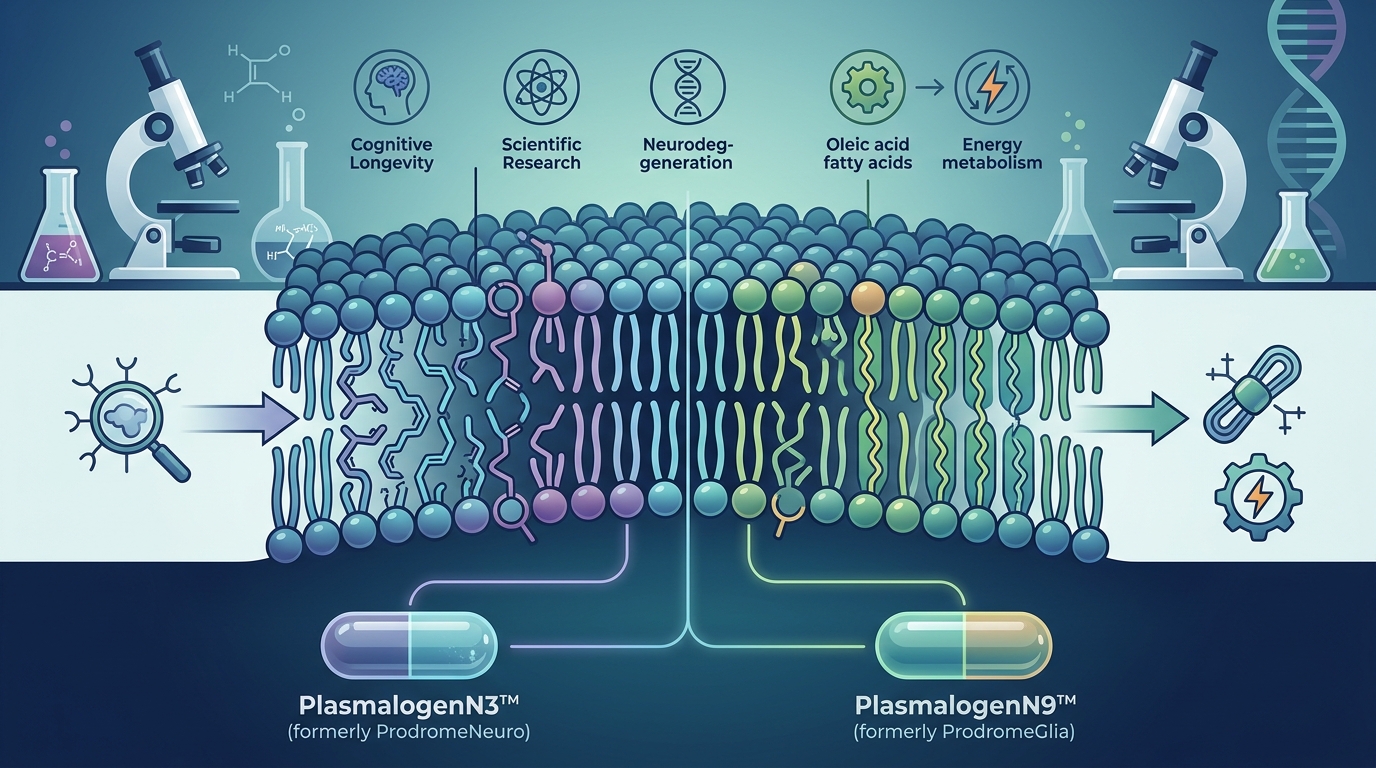
PlasmalogenN3™ and other targeted supplements are designed to support this endogenous production. The synergy between DHA, oleic acid, and plasmalogens creates a resilient membrane environment. DHA provides the fluidity, oleic acid provides the stability, and plasmalogens provide the antioxidant defense. This triad is essential for maintaining cognitive function as we age.
Research led by neuroscientist Dayan Goodenowe, PhD, highlights that plasmalogen levels decline significantly with age. This decline is often accompanied by a reduction in DHA availability. The combination of these factors creates a perfect storm for cognitive decline. Supporting this system requires a holistic approach that addresses all three components.
Consequences of Lipid Imbalance
When the balance between DHA and oleic acid is disrupted, or when plasmalogen levels drop, the consequences for brain health are severe. Oxidative stress increases, leading to inflammation and neuronal damage. This process is a key driver of neurodegenerative conditions.
Studies suggest that individuals with lower plasmalogen levels often exhibit reduced cognitive performance. The lack of adequate antioxidant protection leaves DHA vulnerable to peroxidation. This results in the loss of membrane integrity and impaired neural signaling. The brain becomes less efficient at processing information and more susceptible to environmental stressors.
Furthermore, the inability to maintain proper lipid ratios can affect mood and emotional regulation. The brain is an organ of fat, and its health is directly tied to the quality of its lipid composition. Addressing these imbalances is not just about preventing disease but about optimizing cognitive potential.
Comparative Analysis
| Feature | DHA (Omega-3) | Oleic Acid (Omega-9) | Plasmalogens |
|---|---|---|---|
| Primary Role | Membrane Fluidity | Membrane Stability | Antioxidant Defense |
| Chemical Structure | Polyunsaturated | Monounsaturated | Vinyl-Ether Phospholipid |
| Oxidation Risk | High | Low | Very High (Sacrificial) |
| Brain Concentration | Very High | Moderate | High (Declines with Age) |
| Supplementation Goal | Support Structure | Maintain Balance | Restore Levels |
Key Takeaways
- DHA is essential for neuronal membrane fluidity and signal transduction.
- Oleic acid provides oxidative stability to the lipid bilayer.
- Plasmalogens act as sacrificial antioxidants to protect DHA.
- Plasmalogen levels decline significantly with age, impacting cognitive health.
- ProdromeGlia™ is formulated to support plasmalogen synthesis.
- ProdromeScan™ allows for monitoring of lipid biomarkers.
- A balanced intake of omega-3 and omega-9 is critical for membrane integrity.
Frequently Asked Questions
What is the main difference between DHA and oleic acid?
DHA is a polyunsaturated omega-3 fatty acid that primarily contributes to membrane fluidity, while oleic acid is a monounsaturated omega-9 fatty acid that provides structural stability and resistance to oxidation.
Why are plasmalogens important for DHA protection?
Plasmalogens are highly susceptible to oxidation and act as a sacrificial shield. They neutralize free radicals before they can damage the more critical and less replaceable DHA molecules within the neuronal membrane.
Can I get enough DHA and oleic acid from diet alone?
While diet provides these fatty acids, the ability to incorporate them into plasmalogens and maintain optimal levels declines with age. Supplementation may be necessary to support the complex lipid biology of the aging brain.
What is ProdromeScan™?
ProdromeScan™ is a blood test kit designed to measure specific lipid biomarkers, including plasmalogen levels, to help individuals and health professionals assess cellular health status.
How does lipid science relate to brain aging?
Lipid science shows that the accumulation of oxidative damage in neuronal membranes is a key driver of brain aging. Maintaining the balance of DHA, oleic acid, and plasmalogens helps mitigate this damage.
Is oleic acid an omega-3?
No, oleic acid is an omega-9 fatty acid. Omega-3s like DHA are polyunsaturated, while omega-9s are monounsaturated. Both are important but serve different roles in the body.
What is the role of Dr. Dayan Goodenowe in this field?
Dr. Dayan Goodenowe is a neuroscientist and the founder of Prodrome Science. He has spent over 30 years researching lipid biology and plasmalogen metabolism, leading to the development of targeted nutritional protocols.
Optimize Your Lipid Profile
Understanding the distinct roles of DHA and oleic acid is just the beginning. The true key to cognitive longevity lies in supporting the plasmalogen system that protects these vital lipids. By leveraging advanced lipid science, you can take proactive steps to maintain brain health.
Explore the Prodrome product line to find the right protocol for your needs. Consider starting with a ProdromeScan™ to assess your current status. For personalized guidance, visit the Prodrome Professionals directory to connect with a certified expert. Take control of your lipid biology today.