

Understanding the specific roles of different fatty acids is critical for maintaining cognitive longevity. While many focus solely on omega-3s, the interplay between docosahexaenoic acid (DHA) and oleic acid forms the structural foundation of healthy cellular membranes. Recent lipidomic research indicates that the ratio and availability of these specific lipids directly influence membrane fluidity and neuronal signaling efficiency. This article dissects the unique contributions of each molecule to help you make informed decisions about your brain health protocol. (Prodrome)
Understanding Plasmalogens and Lipid Biology
Before diving into the specific comparison, it is essential to understand the broader context of lipid biology. Plasmalogens are a specific class of ether phospholipids found in high concentrations in the brain and heart. They are not merely structural components but active participants in cellular defense and signaling.
Plasmalogens are specialized lipids that protect cell membranes from oxidative damage and support neurotransmitter function. Without adequate plasmalogen levels, the brain's ability to communicate and repair itself diminishes significantly. This is where the debate between DHA and oleic acid becomes relevant, as both are precursors or supportive agents in the synthesis and maintenance of these critical membranes.
Prodrome Science has dedicated over 30 years to researching lipid metabolism and its impact on neurodegeneration. Their work highlights that simply taking one type of fat is insufficient. Instead, a holistic approach that includes plasmalogen support, such as Prodrome's plasmalogen supplements, is necessary for optimal brain health.
The Structural Role of DHA
Docosahexaenoic acid (DHA) is an omega-3 fatty acid that is perhaps the most well-known nutrient for brain health. It is a long-chain polyunsaturated fatty acid that makes up a significant portion of the phospholipids in the brain's gray matter.
DHA is a primary structural component of neuronal membranes, providing the fluidity necessary for signal transmission. This fluidity allows ion channels and receptors to function correctly, ensuring that neurons can fire and communicate efficiently. A deficiency in DHA has been linked to cognitive decline and impaired memory function in various clinical studies.
However, DHA is highly susceptible to oxidation. Because it contains multiple double bonds, it can become damaged by free radicals, leading to cellular stress. This is why DHA must be paired with antioxidants and other stabilizing lipids to maintain its integrity within the cell membrane.
The Metabolic Role of Oleic Acid
Oleic acid is a monounsaturated omega-9 fatty acid. It is the most abundant fatty acid in olive oil and is also found in avocados and nuts. Unlike DHA, oleic acid has a single double bond, making it much more stable against oxidation.
Oleic acid is a key component of myelin, the protective sheath that surrounds nerve fibers. Myelin acts as an insulator, allowing electrical impulses to transmit quickly and accurately along the nerve axons. Without sufficient oleic acid, myelin integrity can suffer, leading to slower neural processing speeds.
Furthermore, oleic acid plays a crucial role in the synthesis of plasmalogens. It helps maintain the structural integrity of the ether linkage in plasmalogen molecules. Research suggests that adequate oleic acid intake supports the body's ability to produce and retain plasmalogens, which are critical for protecting the brain from age-related decline.
Comparing DHA and Oleic Acid
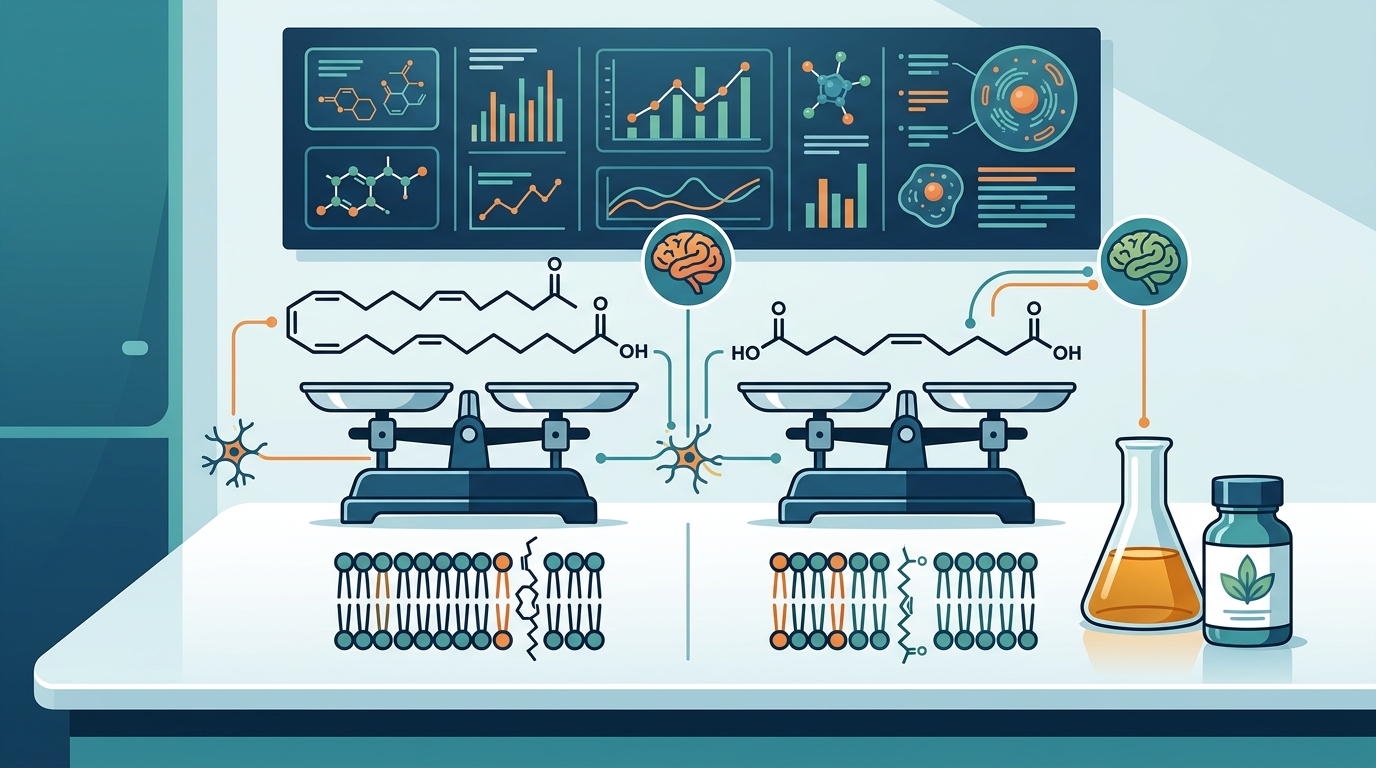
While both DHA and oleic acid are essential for brain health, they serve different primary functions. Understanding these differences is key to optimizing your lipid profile.
| Feature | DHA (Omega-3) | Oleic Acid (Omega-9) |
|---|---|---|
| Chemical Structure | Polyunsaturated (multiple double bonds) | Monounsaturated (single double bond) |
| Primary Brain Role | Membrane fluidity and synaptic signaling | Myelin sheath integrity and stability |
| Oxidative Stability | Low (highly susceptible to damage) | High (resistant to oxidation) |
| Plasmalogen Support | Structural component of the membrane | Supports synthesis and ether linkage stability |
| Common Sources | Fatty fish, algae oil | Olive oil, avocados, nuts |
The data shows that DHA is critical for the dynamic aspects of brain function, such as learning and memory. In contrast, oleic acid provides the static stability required for long-term neural health. Both are non-negotiable for a robust lipid profile.
The Synergistic Effect on Brain Health
Neither DHA nor oleic acid works in isolation. The brain requires a balanced ratio of various fatty acids to maintain homeostasis. This is where the concept of lipid synergy becomes important.
When DHA and oleic acid are present together, they create a more resilient cellular environment. Oleic acid helps stabilize the DHA within the membrane, reducing the risk of oxidative damage. This stabilization allows DHA to perform its signaling functions more effectively over a longer period.
Prodrome's approach to brain health emphasizes this synergy. Their ProdromeGLIA-PC+ formulation is designed to support the entire lipid ecosystem, including the precursors needed for plasmalogen synthesis. By addressing the root cause of lipid depletion, rather than just supplementing individual fats, they offer a more comprehensive solution.
Additionally, the ProdromeScan blood test kit allows individuals to monitor their plasmalogen levels and adjust their lipid intake accordingly. This personalized approach ensures that you are getting the right balance of DHA, oleic acid, and other critical nutrients.
Key Takeaways
- DHA is essential for membrane fluidity: It ensures neurons can communicate rapidly and efficiently.
- Oleic acid supports myelin integrity: It provides the stability needed for long-term neural health.
- Plasmalogens are critical for defense: They protect brain cells from oxidative stress and inflammation.
- Synergy is key: DHA and oleic acid work best together to create a stable and functional lipid environment.
- Monitoring is important: Regular testing of lipid levels can help optimize your brain health protocol.
- Prodrome offers targeted solutions: Their products are designed to support the entire lipid biology pathway.
- Professional guidance is recommended: Consult with a healthcare provider to determine the best lipid strategy for your needs.
Frequently Asked Questions
What is the main difference between DHA and oleic acid?
DHA is a polyunsaturated omega-3 fatty acid that primarily supports membrane fluidity and synaptic signaling. Oleic acid is a monounsaturated omega-9 fatty acid that primarily supports myelin sheath integrity and provides oxidative stability.
Can I get enough DHA and oleic acid from diet alone?
While foods like fatty fish and olive oil contain these fats, achieving optimal levels for brain health, especially for plasmalogen support, often requires targeted supplementation. Many individuals struggle to get sufficient plasmalogen precursors from diet alone.
Why are plasmalogens important for brain health?
Plasmalogens are specialized lipids that protect cell membranes from oxidative damage and support neurotransmitter function. They are critical for maintaining the structural integrity of brain cells and preventing age-related decline.
How does Prodrome support lipid biology?
Prodrome offers a range of products, including plasmalogen supplements and diagnostic tools like the blood test kit, to help individuals optimize their lipid profiles and support brain health.
Is it safe to take DHA and oleic acid together?
Yes, DHA and oleic acid are often taken together because they have a synergistic effect. Oleic acid helps stabilize DHA, reducing the risk of oxidation and enhancing its benefits for brain health.
What is the recommended dosage for plasmalogen supplements?
Dosage recommendations vary based on individual needs and health status. It is best to consult with a healthcare provider or refer to the guidelines provided by Prodrome Science for personalized advice.
How can I monitor my plasmalogen levels?
You can monitor your plasmalogen levels using the ProdromeScan blood test kit. This test provides detailed insights into your lipid profile and helps guide your supplementation strategy.
Start Your Lipid Optimization
Optimizing your brain health requires a comprehensive approach to lipid biology. By understanding the distinct roles of DHA and oleic acid, and by supporting your plasmalogen levels, you can take proactive steps toward cognitive longevity. Explore Prodrome's plasmalogen supplements to find the right protocol for your needs. Visit the science blog to learn more about the latest research in lipid metabolism.